Victims failed at every step of justice system, report says
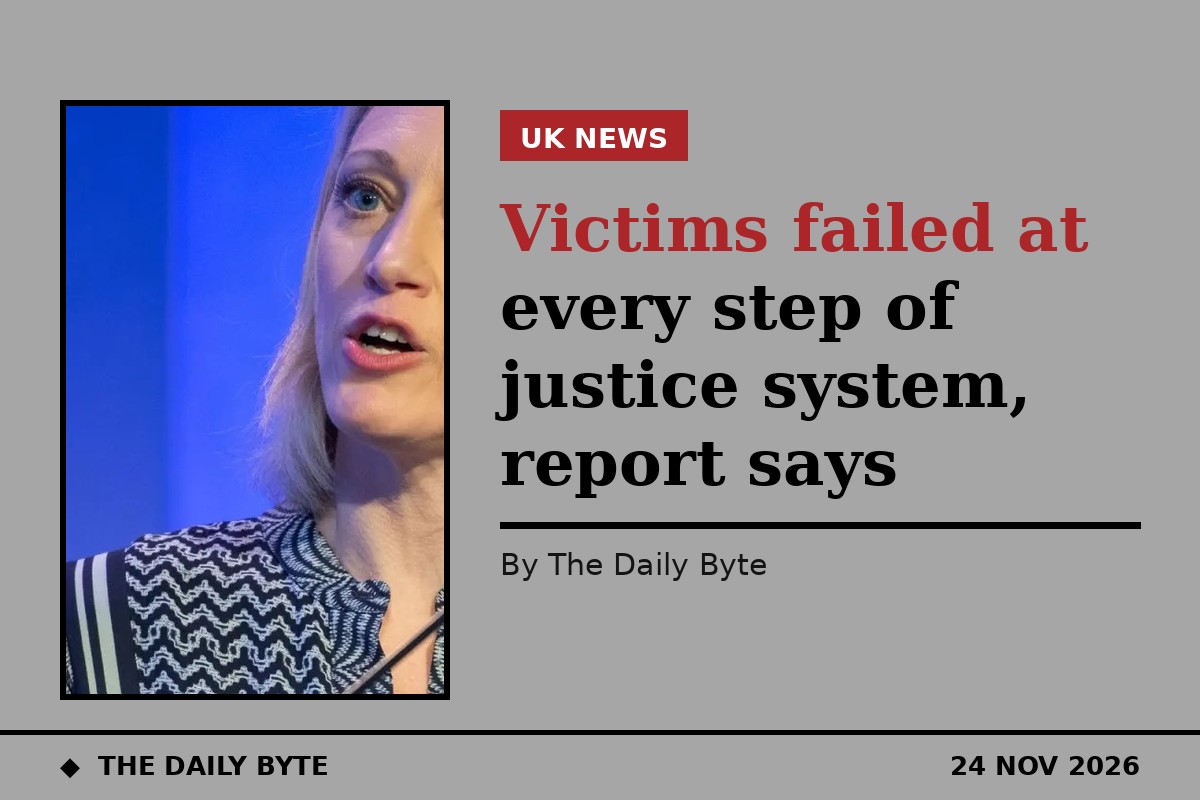
Crime victims in England and Wales are being failed at every step of the criminal justice system, according to a major new report published on Tuesday. The Victim Survey 2026, published by Claire Waxman, the Victims' Commissioner for England and Wales, is based on responses from 6,248 people aged 16 and over who had been a victim of crime, or reported a crime, since 2021. It describes a system in crisis, with poor police communication, limited access to support and unprecedented court delays leaving victims to navigate the process largely alone.
Almost three in ten victims — 28 per cent — chose not to report the crime to the police at all. Non-reporting was highest among victims of online harm, at 63 per cent, followed by hate crime at 54 per cent and fraud at 50 per cent. More than a third of rape and sexual assault victims, 39 per cent, did not report. The figures were higher still for Black victims, at 38 per cent, and Asian victims, at 45 per cent. Reasons for staying silent included a lack of trust in the police, fear of not being believed, fear of repercussions and, in some cases, not realising that what had happened was a crime.
Poor communication and little support
Among victims who did report, 46 per cent were dissatisfied with the communication they received from the police. Of that group, 85 per cent said they would not report a crime again. More than half of victims, 51 per cent, had to telephone the police themselves for updates about their case, and only a third said they were kept informed by the Witness Care Unit about how their case was progressing after charge.
Support was hard to reach even for those who did come forward. Only 15 per cent of victims received a needs assessment, and just 13 per cent were referred to victim services. Fewer than six in ten, 58 per cent, received some form of support within a month of being referred. Only around one in seven victims, 14 per cent, knew about their rights under the Victims' Code, which sets out what each criminal justice agency must do for victims and the time frame in which it must do it.
Court delays leave lives on hold
Delays in court were one of the most damaging findings. Almost half of victims, 47 per cent, attended court only to find their case had been postponed, and 28 per cent said their trial opened more than a year after it was first scheduled. At the end of June, the Crown Court backlog stood at a record 80,829 cases, and 23,706 cases — around a third of the total — had been outstanding for more than a year, according to coverage of the report.
The human cost is set out in the words of victims themselves. One rape victim told researchers she was only told at 5.15pm on a Friday that her trial would start on the Monday morning, and that she met the prosecuting barrister two minutes before giving evidence. Another said the delays left her life on hold: “It feels like my life was put on hold for another year, my mental health certainly suffered and while my abuser has been charged, he's free until we go to trial.” Waxman said too many victims were left “chasing updates, fighting for support, and navigating a process that compounds, rather than alleviates, the trauma of crime”.
Five recommendations — and the government's response
The 116-page report makes five recommendations aimed at a joined-up, victim-centred approach, including an end-to-end review of victims' experiences, outcomes, risks and support across the criminal justice system. Waxman said victims experienced the justice process as “a siloed system rather than a coordinated journey”, and the report concluded that, despite some examples of excellent practice, victims “remain largely invisible” in a system built around agencies and processes rather than people, as The Times reports.
Katie Kempen, chief executive of the charity Victim Support, called the findings a “damning indictment of the criminal justice system's failings”, adding that victims should not be paying the price for a system in crisis. Victims minister Alex Davies-Jones said the government had inherited a growing court backlog and prisons almost full, and pointed to £550 million invested in victims' services over three years and action to tackle the backlog. A new Victims' Code will be published next year, she said, to make it easier for victims to understand what to expect and to feel supported.