Vietnam scraps death penalty for six offences
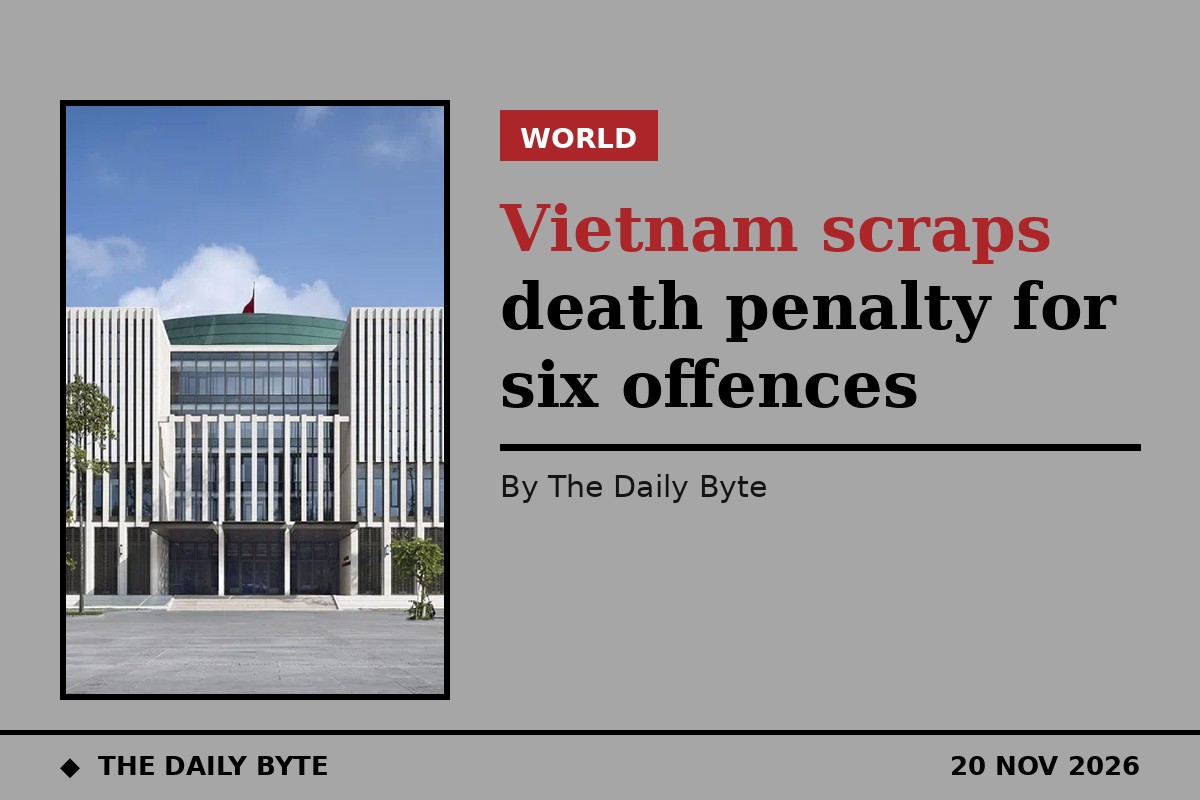
Vietnam's National Assembly has voted to abolish the death penalty for six offences, including illegal drug trafficking, in a significant narrowing of capital punishment in the country.
The revised Penal Code was approved on Friday, 20 November, and will take effect on 1 March 2027. It reduces the number of crimes punishable by death in Vietnam from ten to four.
The six offences no longer carrying the death penalty are illegal trafficking of narcotic substances, rape of a person under 16, rioting, crimes against humanity, war crimes, and terrorism aimed at opposing the people's administration. The maximum sentence for those offences becomes life imprisonment.
Four crimes remain capital offences
After the change, the death sentence will be available for only four crimes: treason, murder, terrorism, and the illegal production of narcotic substances. The revised code, which runs to 25 chapters and 417 articles, passed with 463 of the 472 deputies present voting in favour.
Death sentences already handed down for the six offences but not yet carried out will be commuted to life imprisonment under the revised rules.
A debated reform
The decision to remove drug trafficking and the rape of a person under 16 from the list of capital offences prompted debate during the legislative process. Some lawmakers argued that capital punishment should be retained because of the seriousness of those crimes.
The government proposed the changes in August as part of a revision of the criminal code presented to parliament. Public Security Minister Luong Tam Quang told the National Assembly at the time that the draft code would retain capital punishment for only four crimes, and presented the changes as consistent with contemporary legislative trends and Vietnam's interest in strengthening international judicial cooperation.
The reform follows amendments that took effect in July 2025, which removed the death penalty for eight other offences, including embezzlement and activities aimed at overthrowing the government.
One of the world's most active users of the death penalty
Vietnam is among the countries that carry out the most executions, although the authorities do not publish official figures. The country uses lethal injection, and Amnesty International estimated that more than 1,200 people were on death row at the end of 2023.
Removing drug trafficking from the roster of capital crimes is the most consequential part of the change, because drug offences have historically accounted for a large share of death sentences in Vietnam. Retaining the death penalty for the illegal production of narcotics, however, shows that Hanoi is not abandoning its tough approach to drugs.
The change also matters beyond Vietnam's borders. Countries that have abolished the death penalty often refuse to extradite suspects to states where they could face execution, and narrowing the list of capital crimes can ease judicial cooperation. For now, though, the death penalty remains in place for the four offences the state considers most serious, and the reform is a narrowing of its use rather than a step towards full abolition.


