Viettel, Singtel Start Building Vietnam Cable Link
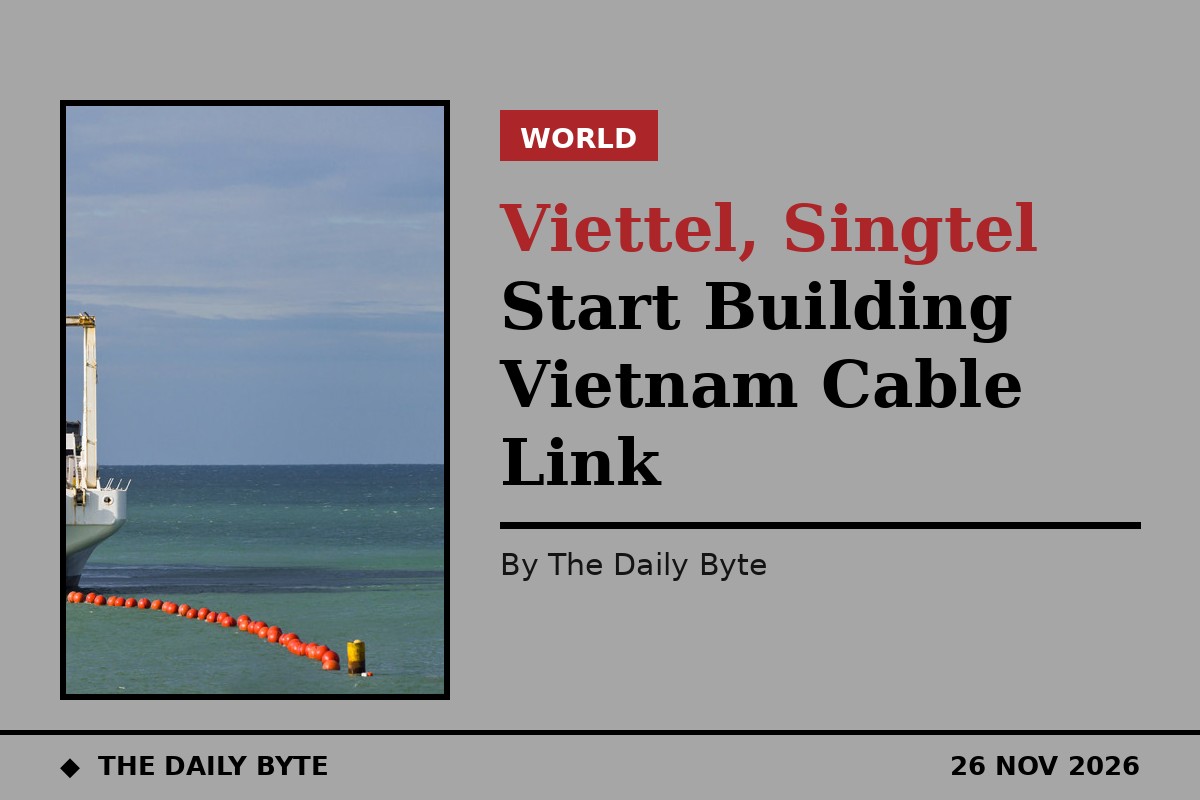
Vietnam's military-run telecoms group Viettel and Singapore Telecommunications, known as Singtel, have started building a new submarine cable linking Vietnam, Thailand and Singapore, Viettel said on Thursday 26 November 2026.
Construction of the Vietnam-Thailand-Singapore cable, known as VTS, began at a ceremony in Ho Chi Minh City, where the consortium also signed commercial and construction contracts for the project. The cable will stretch about 2,500 kilometres and have a design capacity of 600 terabits per second, with completion targeted for the fourth quarter of 2030.
The project is the first international submarine cable initiated and owned by a Vietnamese company, Viettel said. It follows a memorandum of understanding signed by Viettel and Singtel in April 2024 to develop a direct submarine cable connection between Vietnam and Singapore.
A faster, shorter route to Singapore
The Vietnam-Singapore section alone will run about 1,200 kilometres and carry 240 terabits per second, about two and a half times the combined capacity of Vietnam's international cable systems currently in operation. Viettel said the direct route makes VTS the shortest submarine cable connecting Vietnam to Singapore.
The cable will use eight fibre pairs and next-generation wavelength-division multiplexing technology. Viettel expects data to travel between the two countries and back in about 12 milliseconds, around 50 percent lower than the average for existing cables, a difference that matters for cloud services, financial trading and other uses where delay is costly.
Who is building the cable
The VTS consortium is co-led by Viettel and Singtel. Other partners include Vietnam's VNPT and FPT Telecom, Viettel IDC and Thailand's AIS. Japan's NEC Corporation and Singapore-based ASEAN Cableship are the project's contractors, and will supply and lay the cable system.
The cable adds to a crowded regional race to build undersea capacity. Demand for international bandwidth across Southeast Asia has grown sharply as data centres, cloud computing and artificial intelligence services expand, and several countries in the region have suffered outages when older cables were damaged.
Why Vietnam wants its own cables
Viettel currently takes part in five of Vietnam's eight international submarine cable systems and carries around 65 percent of the country's international connectivity capacity, it said. The group aims to be involved in about 10 international cable systems by 2030, including routes designed and led by Vietnamese firms.
Until now, Vietnamese companies have mostly contributed capital to cable projects led by others and used the capacity available to them. With VTS, Viettel led the route planning and design, decisions that determine where the cable lands, how it is configured and how it performs.
The project also fits Vietnam's national submarine cable plan through 2030, which calls for more international routes and for Vietnamese firms to take a leading role in building them. For Singtel, the cable strengthens its position in regional connectivity at a time when Singapore is competing to remain Southeast Asia's main hub for data traffic.


