Virgin Galactic shares plunge 31% on $250m sale
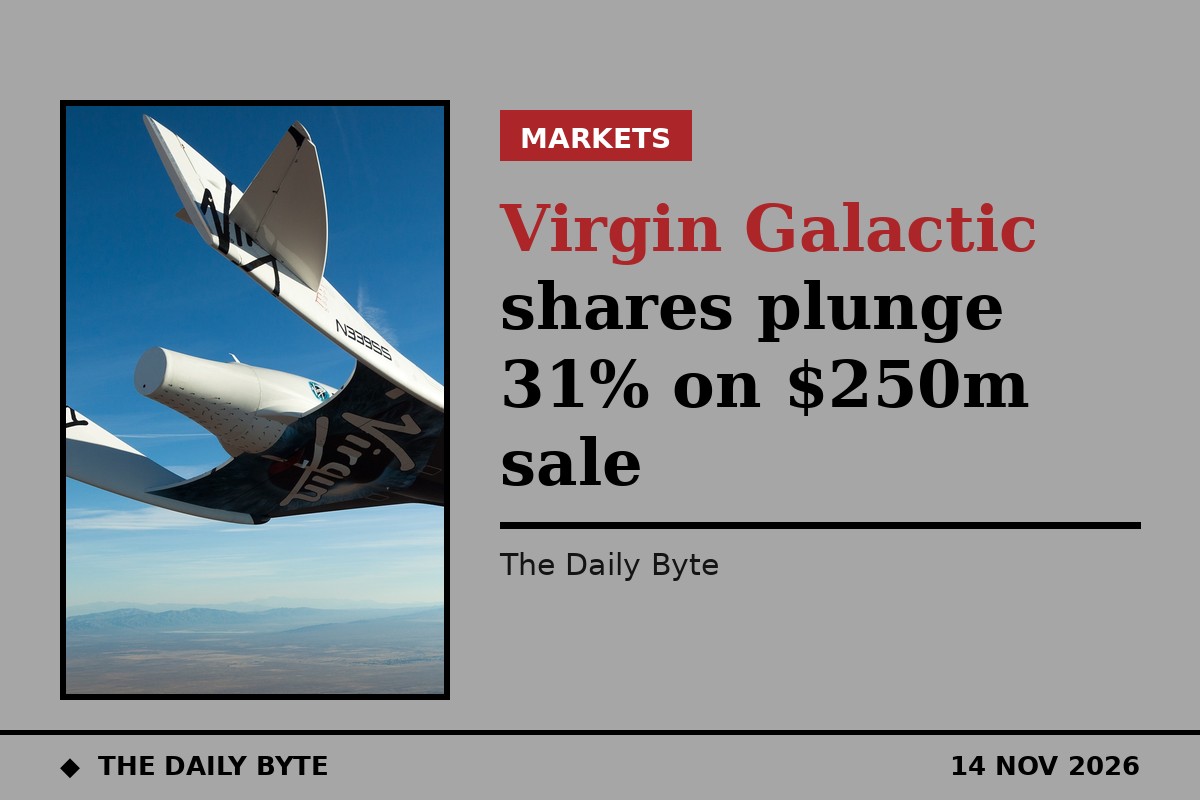
Virgin Galactic shares plunged 31.1% to $1.84 on Friday 13 November after the space tourism company reported third-quarter results and said it plans to sell up to $250 million of new stock, market closing data showed. The fall wiped close to a third off the company's value in a single session.
The result itself was better than expected. Virgin Galactic reported a loss of $0.39 per share on sales of $430,000 for the quarter, beating forecasts of a $0.47 loss per share on sales of about $232,000, The Motley Fool reported. But investors focused instead on the financing plan and on how long they must wait for the company to start flying paying customers again.
First commercial flight not until 2027
Virgin Galactic has not flown paying customers since it retired its last Unity spaceplane in June 2024. Its Apeiron spacecraft, the first of its Delta-class series of spaceplanes, is not expected to make its first commercial spaceflight before early in the second quarter of 2027, with a second spaceplane joining in late in the second quarter or early in the third quarter of 2027.
The company also trimmed expectations for how often the two spaceplanes will fly, now predicting about 150 flights a year combined by the end of 2028. That matters because Virgin Galactic's value depends on flying the spacecraft as often as possible, and a lower flight rate means cash burn is likely to continue for longer.
Cash position and the $250 million plan
Virgin Galactic ended September with $184 million in cash, cash equivalents and marketable securities, and it expects negative free cash flow of $80 million to $90 million in the current quarter. The $250 million at-the-market share sale is intended to fund operations through the ramp-up of commercial service and to help the company reach positive free cash flow. Selling new shares spreads ownership across more shares, which usually pushes the price down, and that dilution was the immediate trigger for Friday's sell-off.
The company also confirmed a limited release of seats priced at $850,000 each, up from $750,000 previously. For now, though, investors face an expensive wait: the first glide flight of the new spacecraft is expected in January, and paying flights are still at least six months away.


