Visitor levy Bill introduced to Parliament
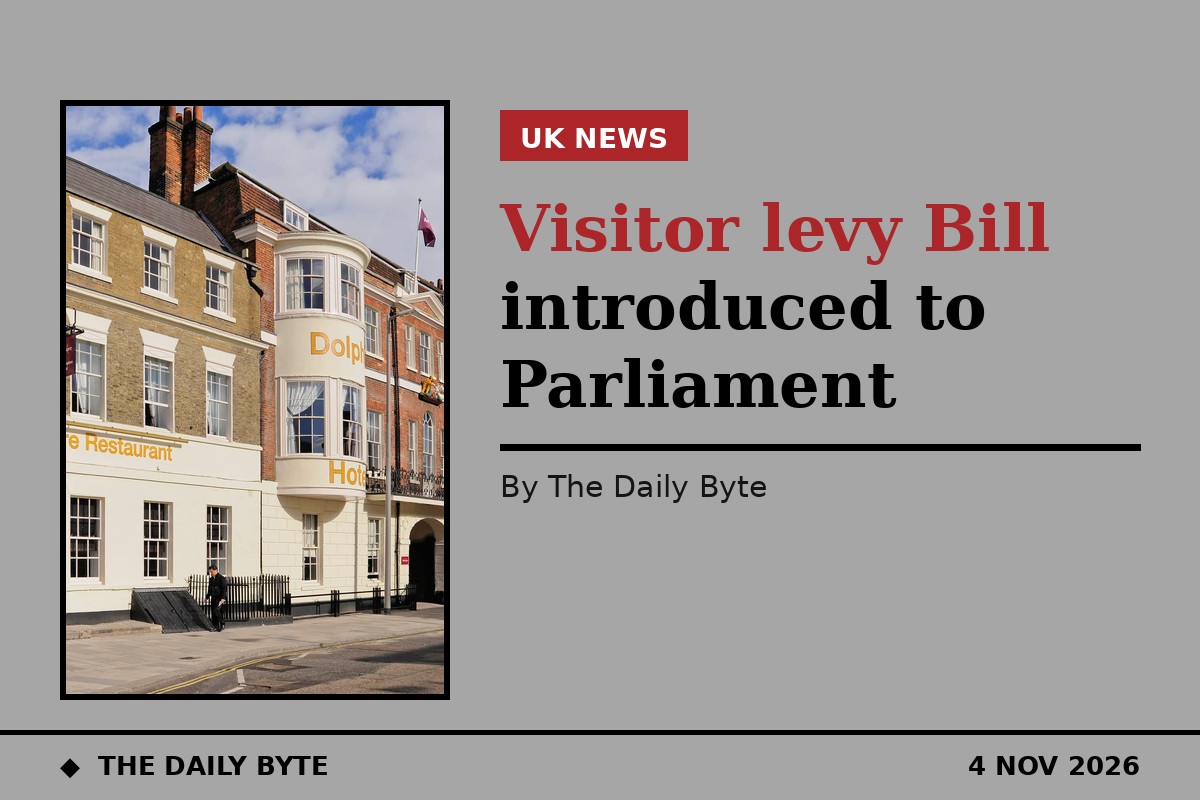
The Visitor Levy Bill has been formally introduced in the House of Commons, the Government announced on 4 November 2026. The Bill would give mayors and local leaders in England the power to introduce a small fee on overnight stays, with the money raised staying in the local area.
How the levy would work
The levy would be charged as a percentage of the cost of accommodation, rather than as a flat fee, so people choosing cheaper accommodation would pay less, the Government says. Ten mayors have committed that any levy introduced in their areas would be no higher than 5%. The levy would apply only to the first 28 consecutive days of a stay, with longer stays treated as long-term accommodation. Hotels and other accommodation providers would be responsible for accounting for and paying the levy.
Protections and local decisions
Before introducing a levy, a mayoral or foundation strategic authority would first have to publish a draft plan and an impact assessment, and consult local people and businesses. National exemptions would apply to student accommodation, care homes, children's homes and school boarding houses, while local leaders could set additional limited exemptions, for example for camping pitches. Occasional hosts, such as people who only rent out a spare room from time to time, would only pay the levy if they earn above a set amount, which local leaders could adjust to reflect their local tourism market. In foundation strategic authorities, which are non-mayoral public bodies, a levy could only go ahead with unanimous support.
What the money would fund, and the criticism
The Government says revenue could be invested in high streets, public spaces including public toilets and parks, cultural events, security and destination promotion, and it describes the Bill as the most significant step in making fiscal devolution a reality. The hospitality trade body UKHospitality criticised the plans, saying the Bill gives mayors uncapped powers and imposes no legal requirement for revenue to be reinvested in hospitality or tourism. It cited independent Oxford Economics analysis finding that a 5% levy would cost 33,000 jobs, increase taxation on holidaymakers by 1.6 billion pounds and reduce Treasury receipts by almost 700 million pounds. Introduction of a Bill is the first parliamentary step: it is not yet law, and the levy rates and start dates would depend on later parliamentary stages and local decisions.
Sources: GOV.UK, New visitor levy powers to put money back into local communities, 4 November 2026; The Caterer, Parliament introduces Visitor Levy Bill, 4 November 2026; Morning Advertiser, Visitor levy Bill introduced to Parliament, 4 November 2026.