VIX Heads for Biggest Monthly Jump Since Covid
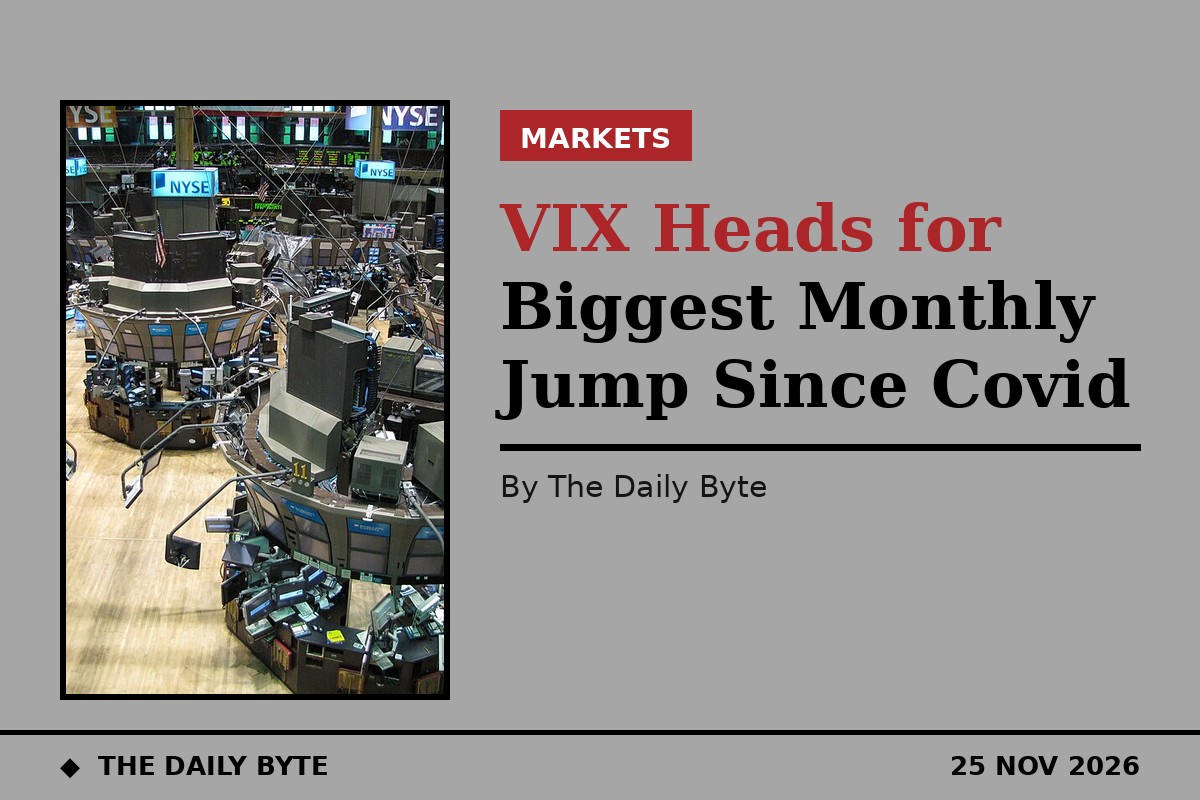
Wall Street's fear gauge is heading for one of its biggest monthly jumps since the Covid-19 crash, as a renewed sell-off in technology shares and fresh tariff threats leave investors scrambling for protection. The VIX, the index that tracks expected volatility in the S&P 500, has soared by more than 60 percent in November, according to a Reuters analysis, putting it on track for one of its largest monthly rises since February 2020.
The gauge was trading just under 32 on Wednesday, up about 20 percent on the day, Investopedia reported, after touching 40 during last Friday's sell-off. Levels above 30 are widely read as a sign of high stress in the market, and the jump suggests investors are struggling to price how markets will behave while interest rates may keep rising.
Nasdaq nears bear market
The tech-heavy Nasdaq fell about 4 percent on Wednesday and is now down almost 20 percent from its record high in early October, flirting with bear-market territory, Reuters reported. The renewed selling has wiped out the gains from Monday's rally, when the index jumped 6.5 percent, and chip stocks have been hit hardest of all: the Philadelphia Semiconductor Index has fallen 50 percent from its June record, including a 21 percent drop in November alone.
The Roundhill Magnificent Seven exchange-traded fund, which holds the big technology names, is down 8 percent. Jonathan Unwin, UK head of portfolio management at wealth manager Mirabaud, said on Wednesday that the firm has been reducing its exposure to stocks this week and last, describing markets as "at an inflection point".
Tariffs add to the strain
The latest leg down came as the US proposed country-specific tariffs on goods from 14 major trading partners, including India, Japan and the European Union, while applying an additional 20 percent tariff on imports from China. "We still have not dealt with the fresh shock of Nvidia and tech and now we have tariffs," Aneeka Gupta, equity strategist at WisdomTree, told Reuters. "Up until today it felt like we might get a Santa Claus rally ... but the AI trade is faltering and that remains the central pillar for stocks."
Investors are also questioning whether the huge, often debt-funded spending on artificial intelligence infrastructure will pay off, and whether lofty valuations are justified. Anthropic's shares have fallen well below their recent listing price without the usual rush of buyers returning to beaten-down stocks, a pattern Kathleen Brooks, research director at XTB, described as a warning sign. "Some have called Anthropic the silent killer of the AI trade," she said.
Safe havens in demand
Money has instead flowed into assets seen as safer. Benchmark US 10-year Treasury yields fell 6 basis points to 4.84 percent, and 10-year German debt yields fell 4 basis points to 3.22 percent. Even with Switzerland in the tariff crosshairs, the Swiss franc strengthened against most major currencies.
European equity markets, which carry far less exposure to big technology companies, are emerging as a possible hedge, Gupta said. "During the recent tech selloff, Europe has been one of the few regions to benefit," she said. "It has been an important avenue for investors to offset risk." US markets are closed on Thursday for Thanksgiving and have a shortened trading day on Friday, leaving investors with little time to reposition before the holiday break.