Volvo trains humanoid robots at Ghent plant
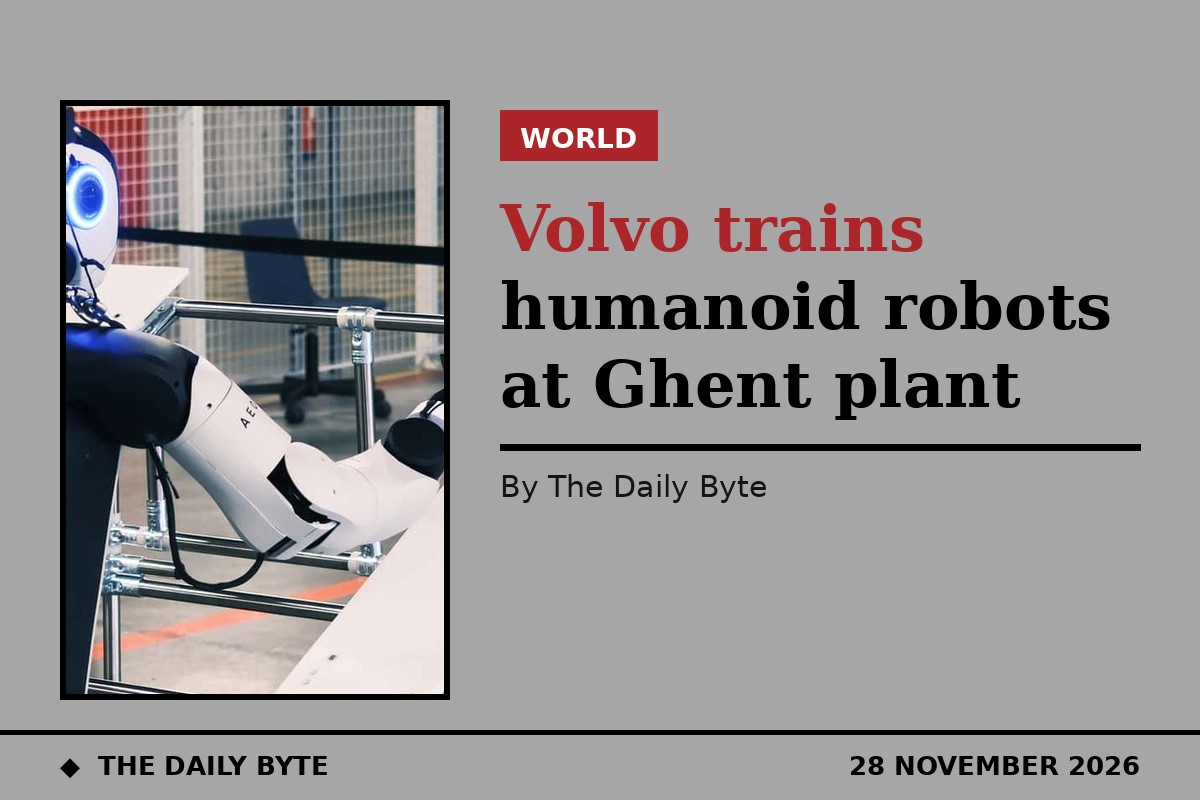
Volvo Cars has brought humanoid robots onto the factory floor at its plant in Ghent, Belgium, where the machines are being trained on real production tasks in the first test of its kind at any of the carmaker's factories.
The robots, known as AEON and built by the robotics division of Swedish technology group Hexagon, are being trained and validated on industrial work with the aim of supporting employees in repetitive and ergonomically demanding jobs. Volvo announced the programme on 26 November, saying Ghent was the first of its plants to try humanoid robots.
Learning by copying people
For now the robots are learning rather than producing. Volvo's own team is teaching them through imitation learning, in which a machine learns a task by copying how a person performs it. The first assignment is to pick up components and place them into two fixtures with high precision. As each step is validated, the work will become harder, with more parts to handle, movement around the production area and interaction with the plant's automated systems.
The training lays the groundwork for a factory pilot in the first half of 2027, when more AEON units will arrive in Ghent to take on a wider range of tasks. Volvo aims to put the robots into real production from mid-2027, although that timetable depends on the training and validation going to plan.
AEON is designed to fit into a production line built for people. The robot is 1.65 metres tall and weighs 60 kilograms. Instead of feet it moves on wheels, reaching speeds of up to 2.4 metres per second, and it can carry loads of up to 10 kilograms. Cameras and sensors help it capture its surroundings and handle parts with precision.
Built to fit existing production lines
Magnus Nilsson, Volvo Cars' chief manufacturing officer, said the humanoid design meant the robot could fit into production as it stands today, alongside teams and existing automation. "Our aim is for humanoid robots to take on some of the most physically demanding tasks and help make work more ergonomic for our people," he said.
Arnaud Robert, president of Hexagon Robotics, said working closely with Volvo's teams allowed the company to make sure AEON performed real-world tasks that supported the manufacturing process. Hexagon launched AEON in June 2025, and Volvo is among the first carmakers to test it on a live production site.
The programme is part of Volvo's wider investment in advanced manufacturing, as carmakers look for ways to automate jobs where parts do not always land in exactly the same place. Fixed robotic arms have been a fixture of car plants for decades, but pick-and-place work has been harder to automate because it requires a machine to adapt to variation.
Volvo is not alone in turning to humanoid machines. Tesla, General Motors, Ford and Rivian are all testing robots that can work alongside people on factory floors, and several manufacturers have begun trials in which humanoids handle components, move materials or assist with assembly.
Ghent is one of Volvo's two European car plants, and the choice of the Belgian site for the first trial puts it at the centre of the company's manufacturing plans. If the pilot succeeds, humanoid robots could become a regular presence on Volvo production lines, taking on the tasks that place the greatest physical strain on workers while employees move to work that needs judgement and experience.


