Von der Leyen Sets Terms for Russia Peace Talks
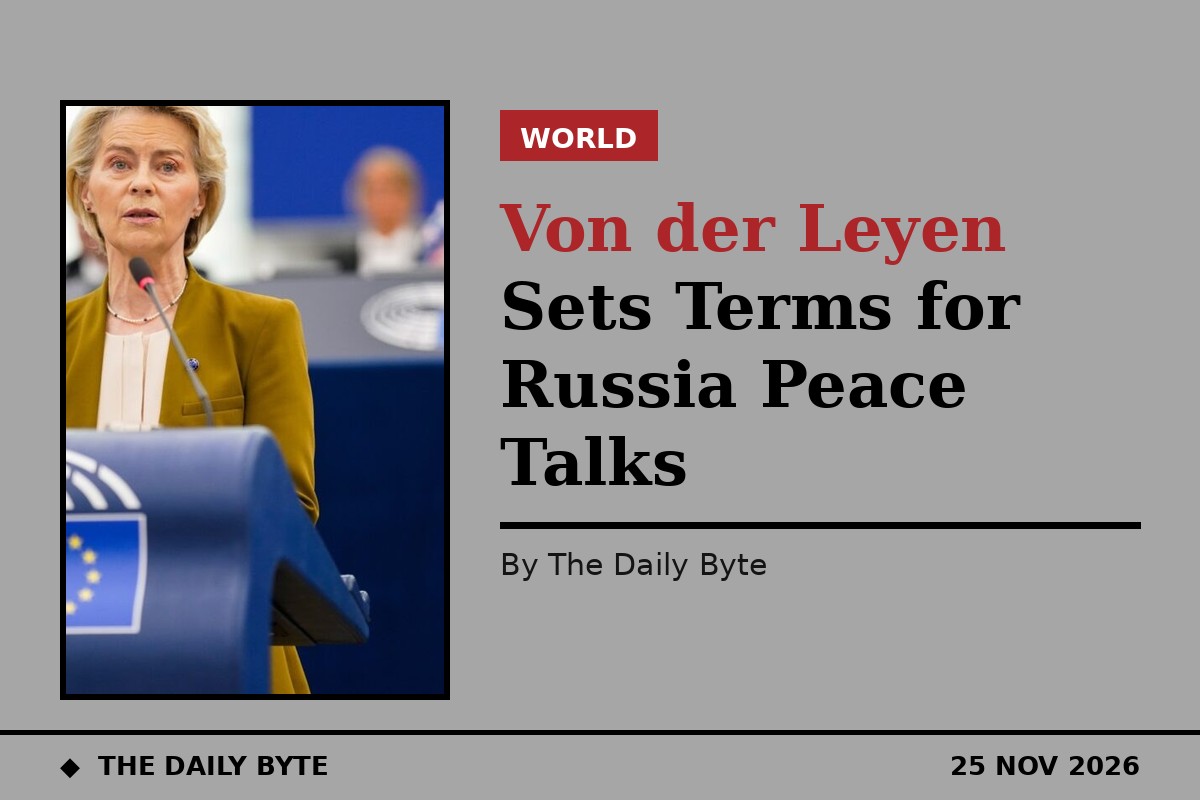
European Commission President Ursula von der Leyen has set out the European Union's conditions for judging whether Russia is serious about peace in Ukraine, telling the European Parliament in Strasbourg on Wednesday 25 November that Brussels will measure Moscow by its actions, not its words.
The two tests she named are a halt to attacks on Ukraine's energy infrastructure for the whole winter, and guaranteed free passage for ships through the Black Sea to Ukrainian ports. She also confirmed that Europe will take part in the next round of negotiations, with a strong European team joining the talks.
A winter energy truce as the test
“We will judge progress by Russia's actions, not simply by its words,” von der Leyen told MEPs. The call for a winter energy truce builds on backing from the Coalition of the Willing, the group of Ukraine's supporters that met in Berlin on 19 November and supported a European role in future negotiations alongside a winter ceasefire and de-escalation in the Black Sea.
Russia has repeatedly struck Ukraine's power grid and heating systems as winter approaches, and Ukrainian officials have warned of a difficult cold season. A truce covering energy infrastructure would be the clearest early signal of whether Moscow intends to negotiate in good faith, in von der Leyen's framing.
Money, sanctions and EU membership
Von der Leyen also restated the EU's financial commitment to Kyiv. On 18 November the Commission proposed a new support instrument of up to €45 billion for Ukraine in 2027 — up to €25 billion for defence and up to €20 billion for the state budget — covering roughly two-thirds of Ukraine's estimated €70 billion external financing gap for the year. The proposal still needs approval from the European Parliament and the Council. She told MEPs that Europe has provided Ukraine with more than €235 billion since Russia launched its full-scale invasion.
On sanctions, she said the Commission has already proposed a 22nd package of measures against Russia, and gave assurances that the EU would not ease pressure on Moscow until a just and lasting peace safeguarding Ukraine's sovereignty is achieved. On accession, she said the EU is moving towards opening the final two clusters of Ukraine's membership negotiations before the end of this year.
According to von der Leyen, any future peace agreement must not only end the fighting but also provide Ukraine with long-term security guarantees and ensure Europe plays a leading role in post-war reconstruction.
| Fact | Detail |
|---|---|
| Speech | European Parliament plenary, Strasbourg, 25 November 2026 |
| Test 1 | Halt attacks on Ukraine's energy infrastructure for the whole winter |
| Test 2 | Free passage for ships through the Black Sea to Ukrainian ports |
| EU role | A strong European team to join the next round of talks |
| 2027 funding | Up to €45 billion proposed 18 November (up to €25 billion defence, up to €20 billion budget) |
| Accession | Final two negotiation clusters to open before the end of 2026 |
FAQ
What exactly is von der Leyen demanding from Russia? Two concrete steps: stop attacking Ukraine's energy infrastructure for the whole winter, and guarantee safe passage for commercial shipping through the Black Sea to Ukrainian ports.
Will Europe sit at the negotiating table? Yes, according to von der Leyen: a strong European team will take part in the next round of talks, following the Coalition of the Willing's backing for a European role at its Berlin meeting on 19 November.
Is the €45 billion for Ukraine agreed? Not yet. The Commission proposed the instrument on 18 November; it still requires approval from the European Parliament and the Council.


