Warsaw Bans Weapons for Independence Day March
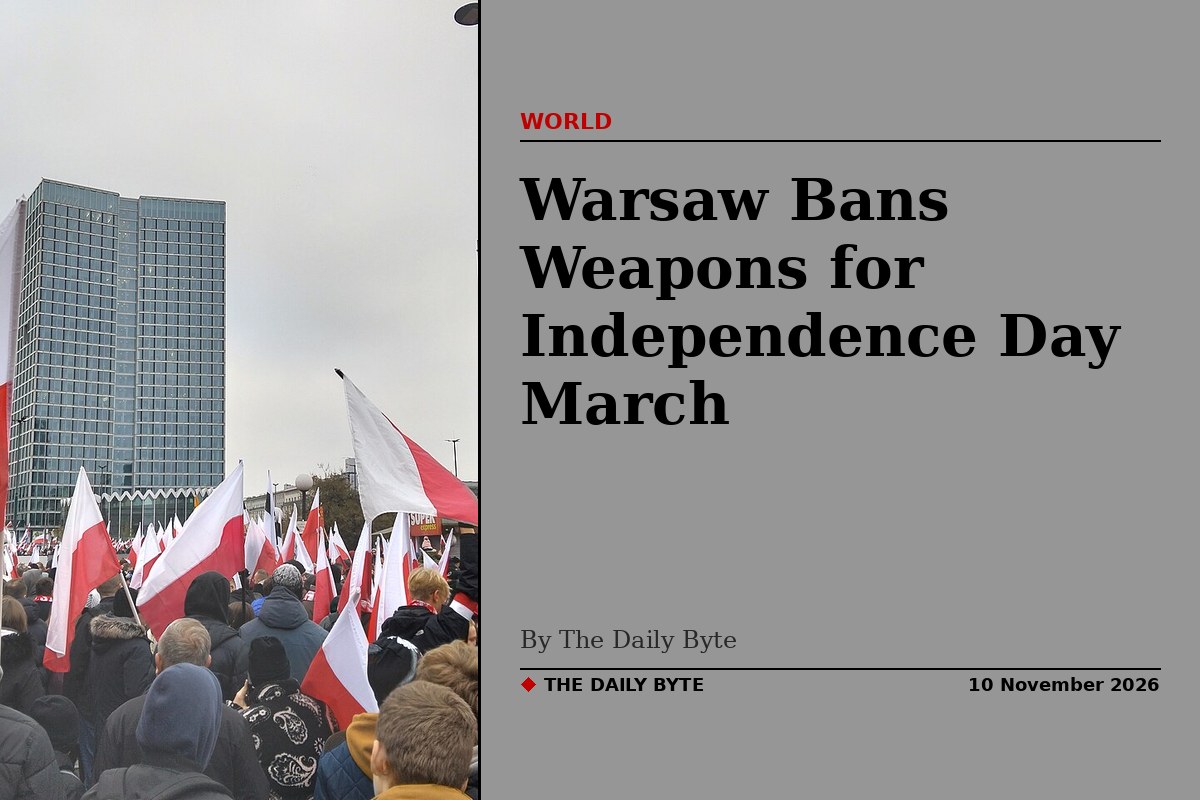
Warsaw will ban the carrying of weapons across the whole capital on Wednesday 11 November, as Poland marks National Independence Day with marches and ceremonies in the city.
The one-day restriction covers all types of weapons and also bans moving unloaded weapons through the city. It applies throughout Warsaw, rather than only at ceremony venues or along march routes.
What the ban covers
The regulation was signed by Poland's Minister of the Interior and Administration, Marcin Kierwiński, on 4 November and published in the Journal of Laws on 6 November. It takes effect on 11 November.
Police said the measure is intended to protect people attending the National Independence Day celebrations. It applies to lawful weapons holders covered by the Weapons and Ammunition Act, and unloading a weapon does not by itself make it permissible to move it through the city.
Exemptions apply to specified security duties and diplomatic personnel. Police warned that carrying a weapon in breach of the ban is punishable by a fine or detention under Article 51(2)(10) of the Weapons and Ammunition Act.
The Masovian voivode, the regional governor, has separately banned the carrying, moving and use of pyrotechnic products in Warsaw on the day.
Security after the Kraków shooting
The measures come after a shooting in Kraków last week in which six people were killed, an attack Prime Minister Donald Tusk has called terrorism. The gunman later died in hospital. The capital is on heightened alert, and concrete barriers have gone up at entrances to Krakowskie Przedmieście.
Despite the attack, Tusk has said no one intends to ban the Independence March itself, and asked participants to avoid aggressive behaviour and show respect for the police securing the march. President Karol Nawrocki has said he will attend.
The march is due to assemble at Dmowski Roundabout at 14:30 and set off at 14:30, following Jerozolimskie Avenue and Poniatowski Bridge before ending on the grounds of the National Stadium. Organisers expect a large turnout, with some predicting record numbers.
A tense anniversary
Poland's Independence Day, on 11 November, marks the country's return to the map of Europe in 1918 after 123 years of foreign rule. The annual Independence March in Warsaw, organised by the Independence March association since 2010, regularly draws tens of thousands of people.
Police said they would deploy adequate forces, including experienced preventive units, to secure the march and other events planned for the day, and would monitor the information space for disinformation.


