Gemini Spots Wildfire Calls in Under 30 Seconds
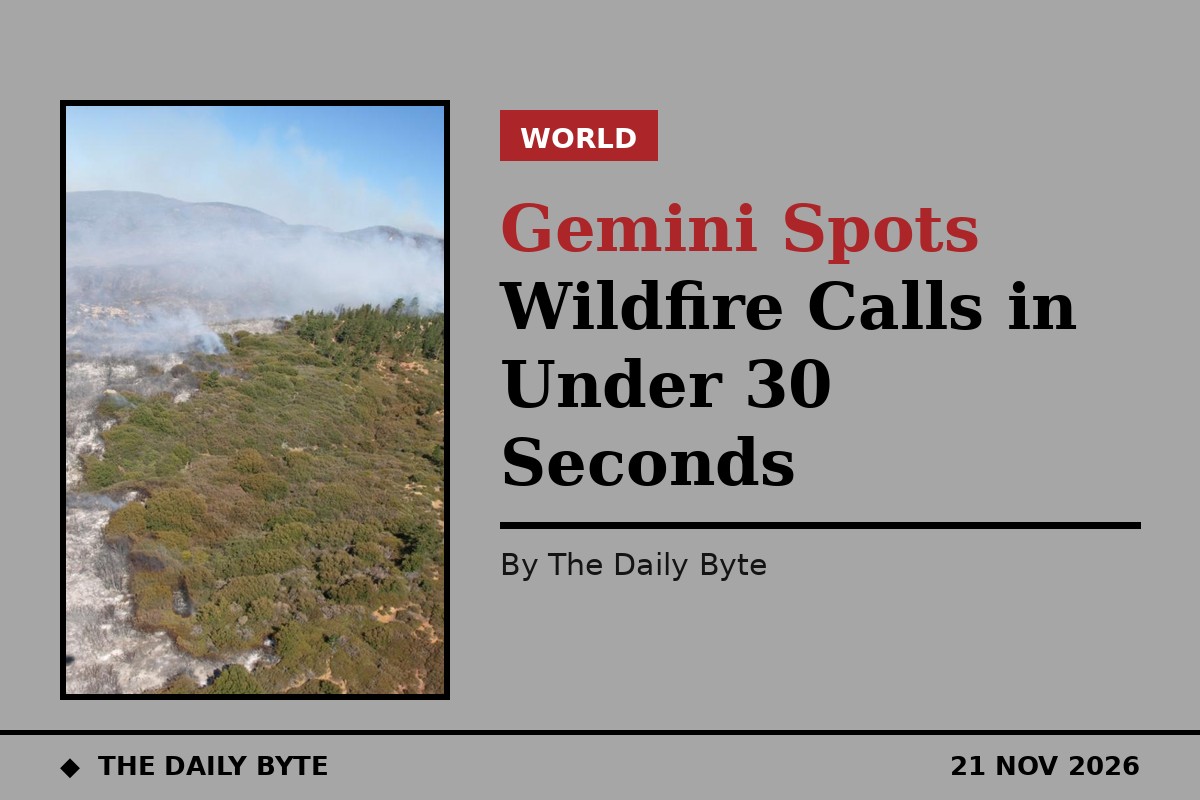
Wildfire alerts are getting faster thanks to an artificial intelligence tool that listens to fire radio. Watch Duty, a nonprofit wildfire alert app staffed by firefighters and dispatchers, has built a Gemini-powered tool with Google engineers that turns noisy radio traffic into clean, searchable text and spots new wildfire dispatches in under 30 seconds.
Google described the work in a blog post published on 20 November. A dedicated team of Google engineers and researchers spent six months embedded full-time with Watch Duty through the Google.org Fellowship, using more than 20,000 hours of past radio recordings to build the tool. It strips out heavy static and translates specialised firefighting terminology into text that volunteers can search, so they can focus on verifying incidents and getting alerts out.
Why radio was the bottleneck
Watch Duty's reporters monitor up to 20 radio feeds each by hand, listening through static, wind and engine noise for the first mention of a new fire. In areas with no other automated dispatch detection, a fire could be missed simply because nobody was listening at that moment. The new tool closes that gap: it watches the feeds continuously and sends reporters a signal in less than 30 seconds when a dispatch matches a new fire.
The numbers Google reports show how much the transcription has improved. On degraded VHF radio audio, the word error rate fell from 38 percent to 22.34 percent. The system now transcribes more than 200 hours of radio speech a day from about 400 active feeds, and it has been designed and tested to handle more than 10,000 feeds at once. Volunteer reporter satisfaction with the radio transcription tools rose from 35.3 percent to 92.3 percent, according to Google.
Tested during a real fire
The tool was put to the test during a live fire in July 2026. When the Railroad Fire ignited at night in Washington state, the first 911 dispatch went out over local fire radio buried in static. The Gemini-powered tool transcribed it and flagged it in under 30 seconds, giving Watch Duty's team the time to verify the fire and send a Critical Alert, which breaks through do-not-disturb settings on phones in urgent situations.
It was Watch Duty's first-ever nighttime Critical Alert, and Google says it helped residents evacuate before flames reached homes. The alert was the first of its kind for the organisation at night, when people are asleep and a fast-moving fire is at its most dangerous. The head start mattered because the dispatch was the only early signal: the fire had started overnight, when fewer eyes were on it.
Part of a wider partnership
The radio tool is the latest step in a multi-year collaboration between Google and Watch Duty. The partnership also includes 2 million dollars in Google.org funding from 2024, Watch Duty features in Search during recent United States fires, and a raised Firebase messaging limit as the app's audience passed 16 million people. Google says the work is aimed at helping Watch Duty scale its mission across all 50 states.
There are limits to what the figures prove. They come from Google's own account of the project, and no independent evaluation of the tool or of the alert process has been published. The results describe a faster route from dispatch to alert rather than a proven change in outcomes, and the Railroad Fire is a single example. But for an app whose volunteers listen to crackling radios around the clock, a reliable signal in under 30 seconds is a practical change: fewer fires missed, and warnings that reach sleeping residents sooner.


