Foundayo Pill Cuts Sleep Apnoea Episodes by 44%
Eli Lilly's once-daily weight-loss pill Foundayo cut sleep apnoea episodes by up to 44% in a late-stage trial, results announced on Monday, 9 November 2026, show. The findings, published in the journal JAMA, raise the prospect of a tablet alternative to the breathing machines many patients struggle to use every night.
Foundayo, known generically as orforglipron, is already licensed in the UK for weight management and type 2 diabetes, where it is available only on private prescription while the National Institute for Health and Care Excellence (NICE) appraises it for NHS use. It is not yet approved anywhere as a treatment for sleep apnoea, and Lilly said it plans to submit the new trial data to the US Food and Drug Administration (FDA) before the end of 2026 to seek an expanded use.
What the ATTAIN-OSA trials found
The ATTAIN-OSA programme enrolled 712 adults with a body mass index of 27 or higher and moderate-to-severe obstructive sleep apnoea, across two parallel double-blind, placebo-controlled studies lasting 52 weeks.
In the first study, of 363 people who were unable or unwilling to use positive airway pressure (PAP) therapy, those taking orforglipron had on average 17.8 fewer breathing interruptions per hour, compared with 4.5 fewer in the placebo group. That is a 43.8% relative reduction in the apnoea-hypopnoea index, the standard measure of how often breathing stops or partly stops during sleep.
In the second study, of 349 people who kept using PAP therapy, the pill cut breathing events by 17.3 per hour against 5.3 on placebo, a 27.5% relative reduction. Both trials met their main goals, with results reaching high statistical significance.
The drug also eased the oxygen starvation that makes sleep apnoea dangerous. A measure called hypoxic burden, which tracks how deep and how long blood oxygen falls, dropped by 55.9% in people not using PAP and by 45.8% in those who were. Participants on the drug lost an average of 28 pounds (about 12.7 kg), roughly 11% of their body weight, and saw falls in systolic blood pressure and in hs-CRP, a marker of inflammation.
Not a cure for everyone
Doctors who wrote an accompanying JAMA editorial urged caution. Dr Damien Stevens and Dr Diego Mazzotti, of the University of Kansas Medical Center, noted that a large share of participants still had moderate-to-severe sleep apnoea at week 52, even after the improvement. They described oral incretin drugs as an addition to existing treatments, not an automatic replacement for them.
The trials also had limits. People with type 1 or type 2 diabetes were excluded, so the results do not directly cover a large group of patients who have both obesity and sleep apnoea. The 52-week follow-up leaves open questions about long-term durability, adherence and weight regain, and the studies were not designed to prove fewer heart attacks or strokes. The research was fully funded by Eli Lilly.
Side effects were common and mostly gut-related. Gastrointestinal problems affected 68% to 71% of people taking orforglipron, against about 37% on placebo, with nausea, diarrhoea, constipation, vomiting and indigestion the most frequent complaints. More people on the drug than on placebo stopped treatment because of side effects.
Why a pill matters for sleep apnoea
Obstructive sleep apnoea happens when throat muscles relax during sleep and block the airway, cutting off airflow and dropping blood oxygen. Around 936 million adults aged 30 to 69 worldwide are estimated to live with some form of it, with nearly 425 million having moderate-to-severe disease, according to an analysis in The Lancet Respiratory Medicine. Left untreated, it raises the risk of resistant high blood pressure, irregular heartbeat, stroke, heart failure and metabolic syndrome.
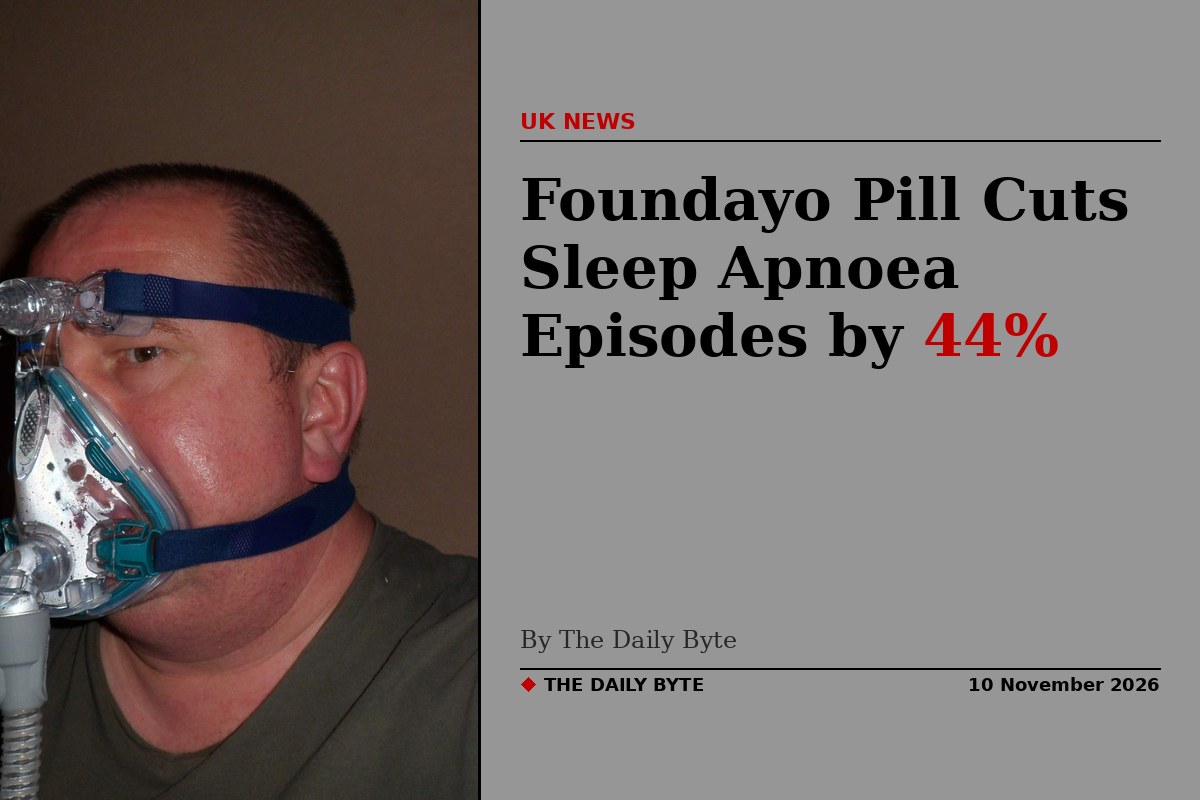
Continuous positive airway pressure (CPAP) machines have been the standard treatment for decades, blowing pressurised air through a mask to hold the airway open. But many people abandon them because of mask discomfort, claustrophobia, dry nose or skin irritation. A daily tablet that tackles excess weight, the leading modifiable driver of airway collapse, would give those patients another option.
Foundayo would not be the first weight-loss drug used for sleep apnoea. In December 2024 the FDA approved Lilly's injectable drug Zepbound (tirzepatide) for moderate-to-severe sleep apnoea, based on its SURMOUNT-OSA trials. The new results suggest a pill could follow, although regulators still have to weigh the evidence, and patients should not change their current sleep treatment without medical advice.