What Causes Hiccups? Triggers and Cures
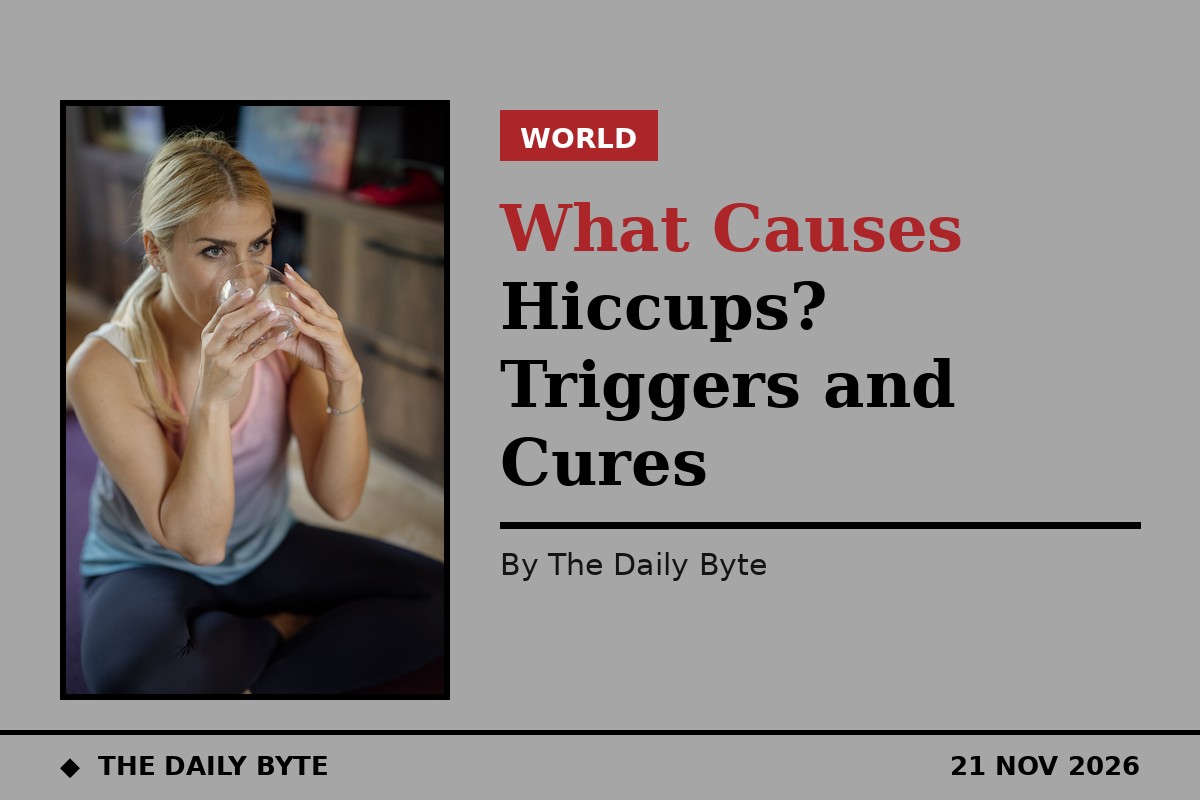
A hiccup is a sudden, involuntary spasm of the diaphragm — the large sheet of muscle at the base of your lungs that powers breathing — followed a split second later by your vocal cords snapping shut. The spasm pulls air sharply into the lungs, and the closing cords cut that air off with a snap: that snap is the “hic” sound. Most bouts last only a few minutes, stop on their own, and need no treatment at all.
There is often no obvious reason why you get hiccups, according to the NHS, but certain things commonly set them off, including eating and drinking, stress and strong emotions such as excitement. This explainer sets out what happens in the body when you hiccup, what triggers a bout, which home remedies the NHS lists and whether they work, when hiccups can be a sign of something more serious, and the story of the man who hiccupped for 68 years.
What exactly happens when you hiccup?
Every hiccup has two parts. The first is an involuntary movement of the diaphragm, the muscle that separates the chest from the abdomen and does most of the work of breathing. Normally the diaphragm contracts smoothly when you breathe in and relaxes when you breathe out. In a hiccup it contracts suddenly and sharply, all on its own. The second part is a quick closing of the vocal cords, the folds of tissue at the top of the throat that control the flow of air. The sudden intake of air hits the closed cords, and the “hic” is the sound of that collision.
Behind the spasm is a reflex arc: a loop of nerves running between the diaphragm, the brain and the throat. The diaphragm is controlled mainly by the phrenic nerves, which run from the neck down to the muscle, and the vagus nerves, which carry signals between the brain and the organs of the chest and abdomen. When something irritates the diaphragm or those nerves — a full stomach pressing upwards, acid splashing into the gullet, or a sudden chill — the signal travels to the brainstem, the part of the brain that handles automatic functions such as breathing. The brainstem fires back the order to contract, the diaphragm jerks, the cords close, and you hiccup. Because the loop can keep re-firing, one hiccup is often followed by another, several seconds apart, until the irritation settles.
The medical name for hiccups is singultus, from the Latin for a gasp or a sob. It is a fitting name: a hiccup is, in effect, a gasp that has been interrupted halfway through.
What triggers hiccups?
Most hiccups start and stop without an obvious cause, but the triggers doctors list are consistent across the NHS, MedlinePlus and other medical sources. They all have one thing in common: they irritate the diaphragm or the nerves that control it.
| Trigger | Why it can set hiccups off |
|---|---|
| Eating too quickly | Swallowing air and gulping food can irritate the diaphragm |
| Eating too much | A full, stretched stomach presses up against the diaphragm |
| Hot or spicy food | Heat and spice can irritate the nerves around the stomach |
| Fizzy drinks | Gas stretches the stomach, which may irritate the diaphragm |
| Alcohol | Alcohol irritates the stomach lining and can disturb the nerves |
| Excitement or stress | Strong emotions change breathing patterns and can trigger the reflex |
| Sudden temperature change | A sharp chill, or something very cold straight after something hot, can set it off |
| Chewing gum or smoking | Both make you swallow extra air |
A big meal out is the classic setting, because it combines several triggers at once: eating quickly, eating a lot, spicy or rich food, alcohol and fizzy drinks. The same logic explains why hiccups so often follow a large, rushed lunch — and why they usually fade once the stomach has had time to settle.
Do home remedies actually work?
Every family has its own cure for hiccups: a fright from a friend, drinking from the wrong side of the glass, holding your breath until you burst. The NHS lists the self-help measures people most commonly try, and it is candid about them: although many people find these things helpful for stopping hiccups, there is no evidence that they work for everyone.
The measures the NHS lists are: breathe into a paper bag, without putting it over your head; pull your knees up to your chest and lean forward; sip ice-cold water; swallow some granulated sugar; bite on a lemon or taste vinegar; and hold your breath for a short time. They all work on the same rough idea — interrupting the reflex loop, either by changing the pattern of breathing, stimulating the nerves in the throat and gullet, or simply distracting the brainstem circuit that keeps firing. Sipping ice-cold water, the remedy illustrated in the photograph above, is the one most people reach for first, and it is also the simplest to try.
The NHS also lists what to avoid if hiccups keep coming back: do not drink alcoholic, fizzy or hot drinks; do not chew gum or smoke, because both make you swallow air; do not eat spicy food; do not eat food very quickly; and do not eat or drink something very cold immediately after something hot. None of these measures is a cure, and a remedy that works for one person may do nothing for the next — but avoiding the triggers is the most reliable way to cut down how often a bout starts.
When hiccups will not stop
Ordinary hiccups last a few minutes. The NHS advises seeing a GP if they last longer than 48 hours, or if they keep coming back very often and are affecting your life. Hiccups that last more than two days are called persistent hiccups, and they can have an underlying cause that needs finding.
The causes doctors look for fall into four groups. The first is damage to, or irritation of, the vagus nerves or phrenic nerves — the nerves that supply the diaphragm — which can be caused by reflux, an infection, or pressure from something pressing on a nerve. The second is a disorder of the central nervous system, such as a tumour or infection, which can disrupt the brain’s normal control of the hiccup reflex. The third is a metabolic problem, when the body’s chemistry is out of balance: diabetes, kidney failure and imbalances in salts such as calcium and magnesium are all on the list. The fourth is medicines: steroids, benzodiazepines, some anti-sickness drugs and the Parkinson’s drug levodopa are among those that can bring on long-lasting hiccups, as can surgery on the abdomen or a general anaesthetic.
A GP who sees someone with persistent hiccups will first try to find and treat the cause — treating the reflux, or changing the medicine, usually settles the hiccups. If there is no obvious cause, the NHS says a GP may be able to prescribe a medicine called chlorpromazine to treat them, although it does not work for everyone. The key point is the timescale: a bout that passes in minutes is a nuisance; a bout that passes two days is a reason to get checked.
The man who hiccupped for 68 years
The longest attack of hiccups ever recorded belongs to Charles Osborne, a farmer from Iowa in the United States, and it lasted 68 years. It began on 13 June 1922, when Osborne was weighing a 350-pound hog he was preparing for slaughter and fell with the animal on top of him. He felt nothing at the time, but a doctor later believed he had burst a tiny blood vessel in his brain, damaging the small area of the brainstem that normally holds the hiccup reflex in check. From that day on, he hiccupped.
At first he hiccupped about 40 times a minute; as the years passed the rate settled to about 20 a minute, day and night. In total he hiccupped an estimated 430 million times. The condition ruined his sleep and made eating solid food difficult, and he spent decades trying cures sent to him by well-wishers — he once estimated he had received some 4,000 letters of advice. None of them worked. He became a minor celebrity instead, appearing on the radio show Ripley’s Believe It or Not! in 1936, on The Tonight Show Starring Johnny Carson in 1982, and in the Guinness Book of Records as the man with the longest attack of hiccups.
Then, for no reason anyone could explain, the hiccups stopped — one morning in February 1990, after 68 years, they simply did not come back. Osborne died about a year later, in May 1991, at the age of 97. His case remains the longest ever confirmed by Guinness World Records, and no one has come close to it since. It is also a reminder of how the reflex works: damage one small part of the brainstem circuit, and a reflex that normally fires for a few minutes can run for a lifetime.
Frequently asked questions
Are hiccups dangerous? Almost never. Ordinary hiccups are harmless and pass within minutes. See a GP if they last longer than 48 hours, or if they keep coming back and start affecting your life, because in rare cases a long bout can be caused by a medical condition or a medicine you are taking.
What is the medical name for hiccups? Singultus, from the Latin word for a gasp or a sob. Doctors use the term for the same reflex: a sudden spasm of the diaphragm followed by the vocal cords snapping shut.
Why do fizzy drinks cause hiccups? The gas in a fizzy drink stretches the stomach, and a stretched stomach can press on and irritate the diaphragm. Eating too much has the same effect, which is why big, gassy meals are a common trigger.
Sources: NHS, MedlinePlus, Guinness World Records, Spire Healthcare.


