What Is a Bomb Cyclone? Explained
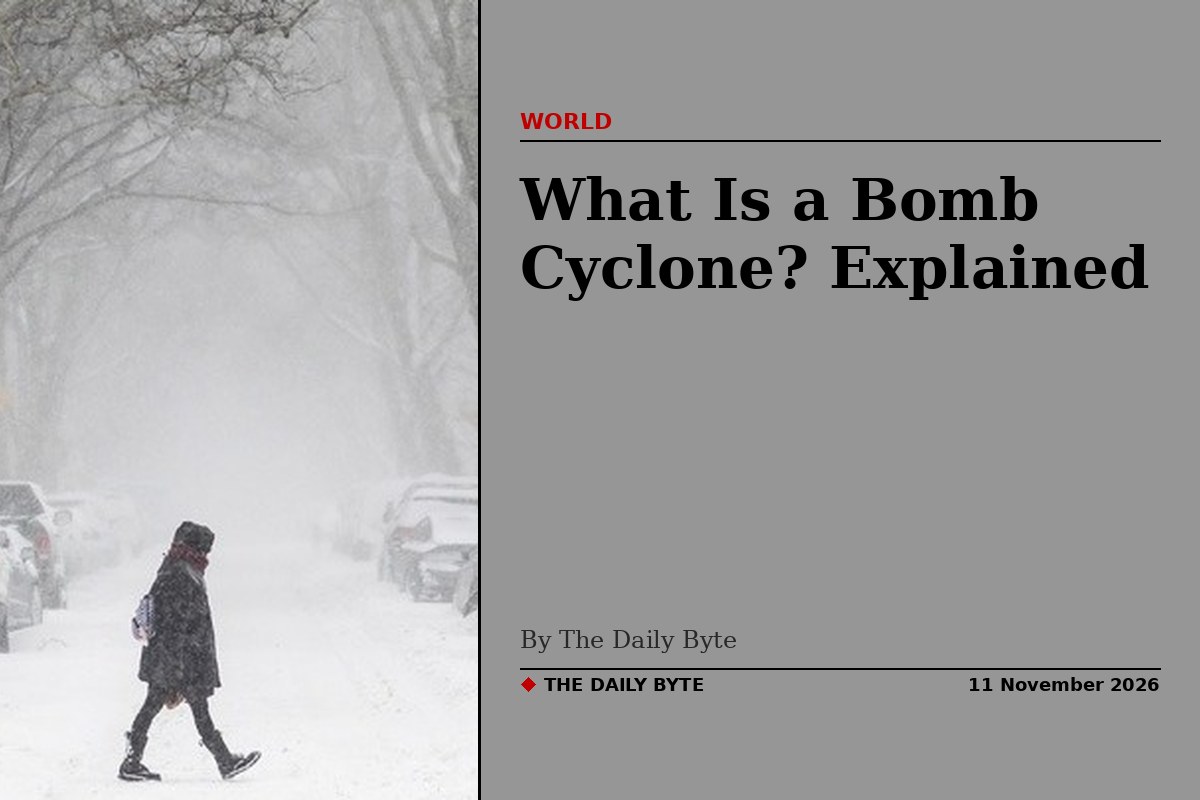
A bomb cyclone is a storm that strengthens explosively fast. It is a mid-latitude cyclone whose central air pressure falls by at least 24 millibars in 24 hours, a process meteorologists call bombogenesis. The name sounds dramatic, but it describes the speed of the storm's intensification, not an explosion.
The term is in the news this week after the US National Weather Service called Monday's storm a "classic bomb cyclone/nor'easter off the Northeast coast". It dumped up to two feet (60 cm) of snow from Maryland to Maine and left more than 500,000 customers without power, the Associated Press reported.
How does a bomb cyclone form?
It forms when frigid Arctic air collides with warmer, moist air, often over warm ocean water. The sharp temperature contrast feeds the low-pressure system, and as its central pressure plunges, its winds strengthen. At 60 degrees latitude the threshold is a 24-millibar fall in 24 hours; at New York City's latitude it is about 17.8 millibars, according to NOAA.
What damage can a bomb cyclone cause?
Because the storm strengthens so quickly, it can deliver heavy rain, blizzard conditions and intense winds in a short time, bringing down trees, cutting power and making travel dangerous. Bomb cyclones happen mainly in autumn and winter, and in North America they are most common off Alaska, the Pacific Northwest and the Great Lakes.
Is a bomb cyclone the same as a hurricane?
No. A hurricane is a tropical cyclone that forms over warm ocean water and spins around a warm core, while a bomb cyclone is a mid-latitude storm driven by clashing cold and warm air. Even so, bomb cyclones can produce winds of 74 to 95 mph (120 to 155 km/h), similar to a Category 1 hurricane.


