What Is a Heat Pump? How It Works Explained
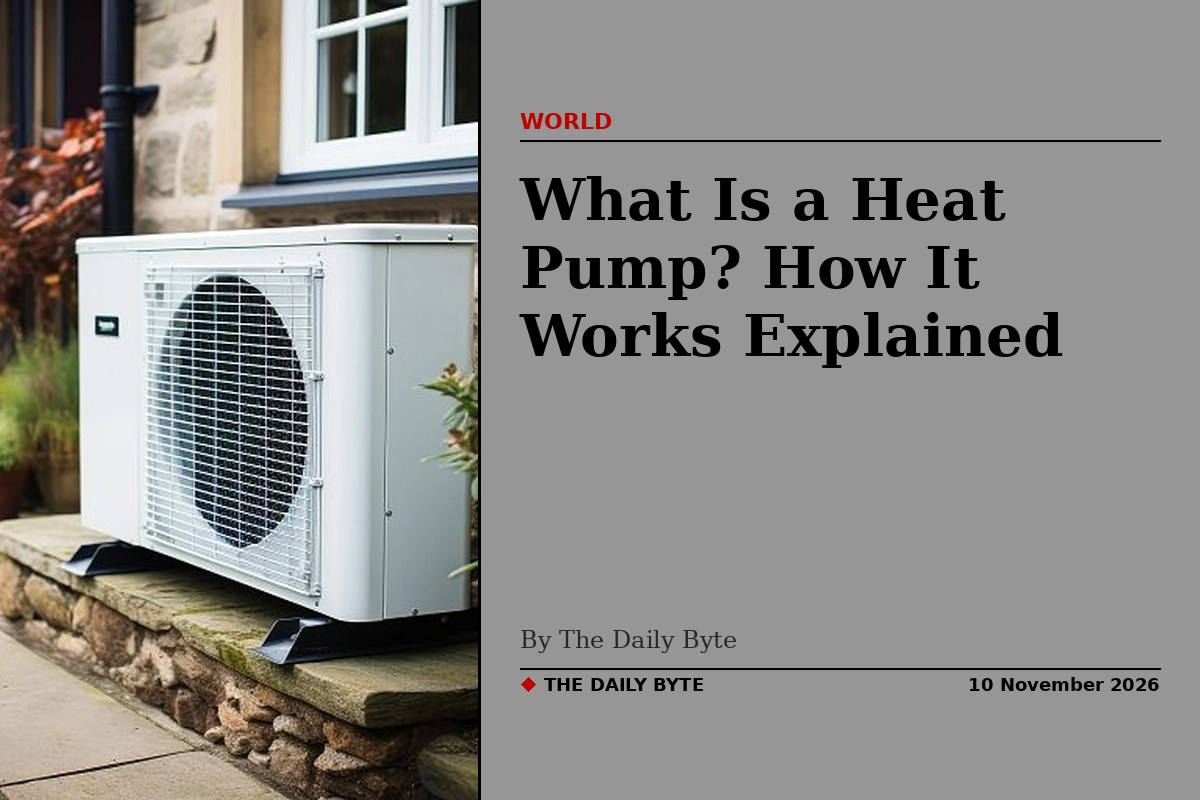
A heat pump is a low-carbon heating device that moves heat from the air, the ground or water outside your home into your heating system, instead of burning fuel to create heat. It runs on electricity, works a bit like a fridge in reverse, and can heat your home and your hot water. In the UK, heat pumps are the main alternative to a gas or oil boiler, and the government supports them with grants of up to £7,500 in England and Wales. This guide explains what a heat pump is, how it works, the types available, what it costs and whether one suits your home.
What is a heat pump?
A heat pump is an electric heating system that collects low-grade heat from the environment and raises its temperature so it can warm a building. Unlike a gas boiler, which burns fuel, or an electric heater, which turns electricity directly into heat, a heat pump transfers heat that is already present outdoors. Even on a cold day, the air and the ground hold usable heat, because they are warmed by the sun and by the earth itself. The Energy Saving Trust, an independent organisation that advises UK households on energy, describes a heat pump as a device that absorbs heat from the air or ground using electricity, compresses it to raise its temperature and then releases that heat indoors.
Most heat pumps in UK homes are air source heat pumps, which sit outside the house and look like a large outdoor unit with a fan. A smaller number are ground source heat pumps, which draw heat from pipes buried in the garden or from a deep borehole. Both types connect to the same kind of wet central heating system as a gas boiler, using radiators or underfloor heating, and both can also heat hot water when paired with a cylinder. A third type, the air-to-air heat pump, blows warm air into rooms through a wall unit and cannot heat water.
How does a heat pump work?
A heat pump works through a four-step refrigeration cycle, the same principle that keeps a fridge cold, run in reverse. The Energy Saving Trust sets out the cycle in four stages. First, a liquid refrigerant, a chemical similar to the fluid in a fridge, absorbs heat from the air or the ground and evaporates into a gas. Second, a compressor squeezes that gas, which raises its temperature sharply. Third, the hot gas passes through a heat exchanger and releases its heat into the water of the central heating system, warming the home. Fourth, the gas cools and condenses back into a liquid, ready to start the cycle again.
In an air source heat pump, fans blow outdoor air across the heat exchanger so the refrigerant can pick up heat. In a ground source heat pump, a mixture of water and antifreeze, known as brine, circulates through underground pipes called a ground loop, collecting heat from the soil before it reaches the heat exchanger. Because the ground stays at a fairly steady temperature all year, ground source systems are less affected by cold snaps than air source systems. The process repeats continuously while the heating is on, and the pump only stops when the thermostat says the home is warm enough.
One common question is whether a heat pump works when it is freezing outside. The answer is yes. Heat pumps can extract heat from air well below freezing, although they work harder and less efficiently as the outside temperature falls. The Energy Saving Trust notes that even in below-freezing temperatures, heat pumps are able to extract some of the remaining heat from outside. In very cold weather, some systems use a small amount of direct electric heating as a back-up, which is one reason a well-designed system and good insulation matter.
What are the types of heat pump?
There are three main types of heat pump for homes, and the right choice depends on the property, the space available and the budget.
Air source heat pumps are the most common type in the UK and suit most types of home. An outdoor unit, roughly the size of a large suitcase, is mounted on a wall or on the ground outside. Air-to-water models heat water for radiators, underfloor heating and hot water, and are the closest like-for-like replacement for a gas boiler. Air-to-air models heat the air in a room directly and cannot heat water, so they are less common as a whole-home solution.
Ground source heat pumps draw heat from the ground through a loop of pipes buried in trenches or sunk into a borehole. They tend to be more efficient than air source heat pumps because ground temperatures are stable, but they cost considerably more to install and need a large garden for a horizontal loop or space and permission for a borehole. They are often chosen for larger properties, rural homes and new builds.
Water source heat pumps take heat from a nearby lake, river or borehole water supply. They work on the same principle as ground source systems and are efficient, but they are only an option for homes with a suitable water source close by, and they need the right permissions. In practice, most UK households choosing a heat pump will be deciding between air source and ground source.
How efficient are heat pumps?
Because heat pumps move heat rather than generate it, they are much more efficient than traditional heating. The Energy Saving Trust says that for every unit of electricity a heat pump uses, it can deliver three to four times as much heat, an efficiency of 300 to 400 per cent. By comparison, an A-rated gas boiler converts about 90 per cent of its fuel into usable heat, with the rest lost. The ratio of heat produced to electricity used is called the Coefficient of Performance, or CoP. A heat pump with a CoP of 3.0 gives out three units of heat for every unit of electricity it uses.
Real-world efficiency varies through the year, because a heat pump works harder when it is cold outside. That is why installers also talk about the Seasonal Coefficient of Performance, or SCoP, and the Seasonal Performance Factor, or SPF, which average efficiency across a whole heating season. A well-designed system in a well-insulated home will score far better than a poorly designed one, which is why the Energy Saving Trust and the industry body MCS stress using a certified installer who sizes the system for the specific home. Heat pumps also deliver heat at lower temperatures than a gas boiler, so they run most efficiently with larger radiators or underfloor heating, and over longer periods at a steady temperature, rather than in short, hot bursts.
How much does a heat pump cost?
Heat pumps cost more to install than a replacement gas boiler, and the price depends on the type of system and the size of the home. The Energy Saving Trust puts a typical air source heat pump at around £12,000, and a typical ground source heat pump at around £15,000, rising to around £57,000 if a borehole has to be dug. Running costs depend on the price of electricity, the efficiency of the system and how well insulated the home is. Because electricity currently costs more per unit than gas in the UK, a heat pump does not automatically cut heating bills, even though it uses energy more efficiently. Savings are largest when a heat pump replaces old electric heating or an old oil boiler, and smallest when it replaces a modern gas boiler.
Other costs to budget for include larger radiators or underfloor heating if the existing radiators are too small for low-temperature heating, a hot water cylinder if the home does not already have one, and occasional servicing. Heat pumps generally need less maintenance than boilers, with an annual check recommended, and a well-maintained unit can last 20 years or more. Households on a time-of-use electricity tariff can also cut running costs by running the pump when electricity is cheapest, and pairing a heat pump with solar panels can reduce bills further, although that is a separate investment.
What grants are available in the UK?
In England and Wales, the Boiler Upgrade Scheme is the main government grant for heat pumps. GOV.UK states that property owners can get £7,500 towards an air source heat pump or a ground source heat pump, including water source heat pumps and shared ground loops, £2,500 towards an air-to-air heat pump and £5,000 towards a biomass boiler in limited circumstances. Until March 2027, an extra £1,500 is available towards an air source or ground source heat pump where the property is heated by oil or LPG and has no mains gas connection, taking the total to £9,000. Only one grant is available per property, and the grant is a contribution towards the cost, not the full price.
To qualify, you must own the property, which can be your home, a second home, a business property or a property you rent out, and you must be replacing a fossil fuel heating system such as oil, gas, electric or LPG heating. You cannot get a grant to replace an existing low-carbon heating system, and hybrid systems that keep a gas boiler alongside a heat pump are not eligible. Since 28 April 2026, a valid Energy Performance Certificate has not been a mandatory requirement to apply. You do not apply yourself: an MCS-certified installer gets quotes for the work and applies on your behalf through Ofgem, which administers the scheme, and the grant is deducted from your quote. The installer must commission the heat pump within 120 days of applying, or it will not be eligible. The scheme covers England and Wales and has been extended to 2030. Scotland and Northern Ireland have their own separate arrangements, so households there should check Home Energy Scotland or local guidance instead.
Is a heat pump right for your home?
A heat pump suits most homes, but it works best in a well-insulated property with space for the outdoor unit and, for ground source systems, space for the ground loop. Homes with underfloor heating or large radiators get the best efficiency, because heat pumps heat water to lower temperatures than boilers. Older, draughty homes can still use a heat pump, but they may need insulation work first and larger radiators, which adds to the cost. Flats can use heat pumps too, although finding space for the outdoor unit and getting permission from a freeholder or management company can be more complicated.
Before committing, get quotes from at least two or three MCS-certified installers, ask each one to carry out a proper heat-loss survey of your home, and check exactly what the quote covers, including radiators, the hot water cylinder and any electrical upgrades. Ask about the expected seasonal efficiency of the proposed system, the noise level of the outdoor unit and where it will sit, and confirm that the installer will apply for the Boiler Upgrade Scheme grant on your behalf. Grants and scheme rules can change, so confirm the current position on GOV.UK before signing a contract. A heat pump is a long-term investment: the upfront cost is high, but for many households it means lower carbon emissions, no gas boiler to maintain and heating that is ready for a grid that is steadily getting cleaner.
Frequently asked questions
Do heat pumps work in winter? Yes. Heat pumps extract heat from the air or ground even in below-freezing temperatures, although they use more electricity when it is very cold. Ground source systems are less affected by cold weather than air source systems.
How long does a heat pump last? A well-maintained heat pump can last 20 years or more, which is longer than a typical gas boiler. The outdoor unit and the compressor are the parts most likely to need attention over time.
Can a heat pump heat hot water? Yes, air-to-water and ground source heat pumps can heat hot water when paired with a hot water cylinder. Air-to-air heat pumps cannot heat water, so they need a separate water heater.
Do I need planning permission for a heat pump? In most cases, an air source heat pump is classed as permitted development in England and does not need planning permission, but there are conditions on size, position and noise, and the rules differ in Scotland, Wales and Northern Ireland, and for listed buildings and conservation areas. Check with your local planning authority before installing.
Will a heat pump save me money? It depends. Savings are usually largest when replacing old electric heaters or an old oil boiler, and smaller when replacing a modern gas boiler. Efficiency, insulation, electricity prices and any grant all affect the result, so ask your installer for a running-cost estimate for your home.
Sources: GOV.UK, Apply for the Boiler Upgrade Scheme; Energy Saving Trust, Heat pumps: how they work, costs and savings. Grant amounts and scheme rules were correct as published on GOV.UK on 10 November 2026; confirm the current position on GOV.UK before signing a contract.


