What Is a Hybrid Sukuk? Explained
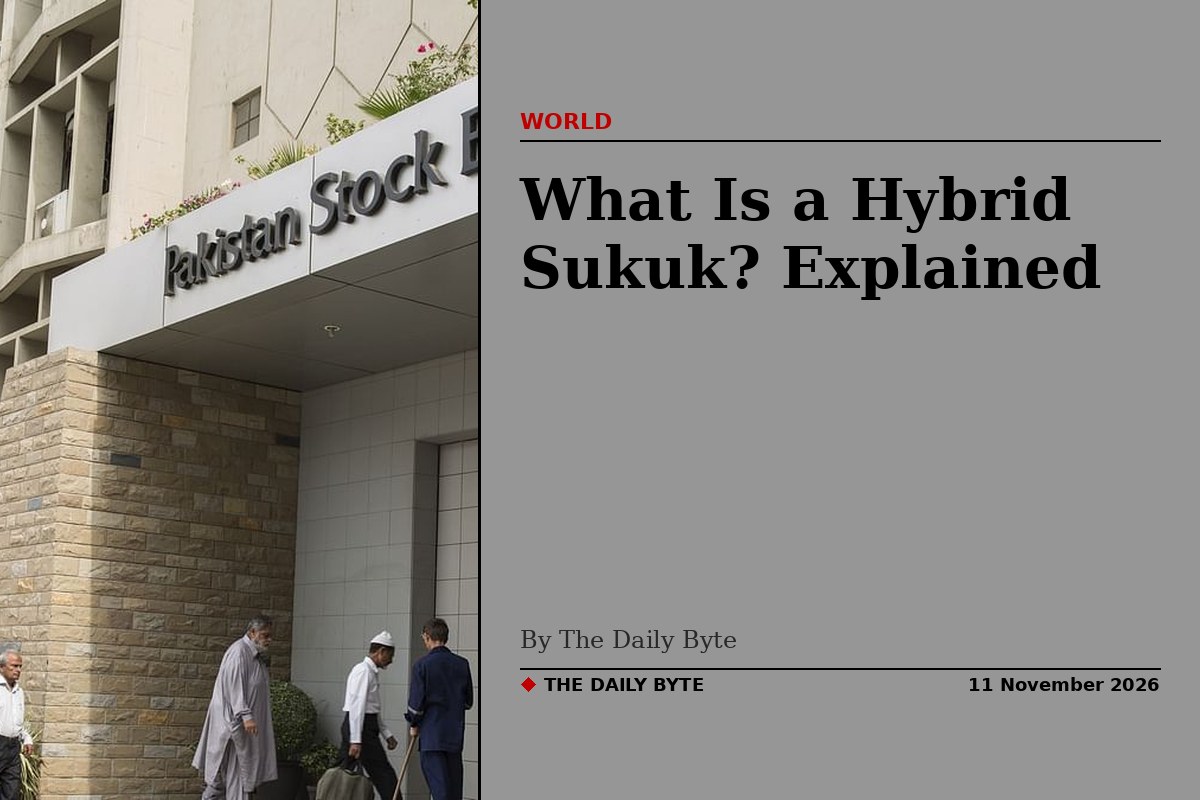
A hybrid sukuk is a Shariah-compliant government bond that blends two Islamic finance contracts: Ijarah, or leasing, and commodity murabaha, or cost-plus trade. Pakistan's version combines an Ijarah sale-and-lease-back deal with a commodity murabaha deal, and investors hold an undivided share in the underlying assets rather than lending money at interest. The 24th auction of the Government of Pakistan Hybrid Sukuk takes place on 11 November 2026 through the Pakistan Stock Exchange.
How does a hybrid sukuk work?
Of the money raised, 55 per cent goes to the Ijarah sale-and-lease-back leg and 45 per cent to the commodity murabaha leg. The sukuk are issued at a discount from face value, and the profit — driven by the rental income from the leased assets and the murabaha trade — is fixed for the life of the sukuk and paid at maturity. The bonds are tradable on the Pakistan Stock Exchange. The issuer is the Pakistan Domestic Sukuk Company, a subsidiary of the Ministry of Finance, and the structure and Shariah compliance are overseen by joint financial advisers including Meezan Bank, Dubai Islamic Bank Pakistan, BankIslami and Bank Alfalah. The issue is governed by the Government of Pakistan Sukuk Rules 2008, as amended in 2023.
What is happening at the 24th auction?
The auction on 11 November 2026 covers three-month and six-month Fixed Rate Return sukuk, with a target of Rs25 billion for each tenor and settlement on 12 November, according to the Pakistan Stock Exchange auction calendar. The three-month sukuk mature on 4 February 2027 and the six-month paper on 13 May 2027. Bids follow a "pay as you bid" method, and small investors can take part through non-competitive bids, capped at 0.25 per cent of the target or Rs500 million, whichever is lower. Demand has been strong: when the first short-term hybrid sukuk were issued, the three-month auction drew bids of more than Rs153 billion against a Rs25 billion target — oversubscribed about 3.2 times — at a weighted average yield of 11.4413 per cent. The next auction after this one is scheduled for 25 November 2026.
Hybrid sukuk explained: your questions answered
- Is a hybrid sukuk halal? Yes. It is structured to comply with Shariah law, with returns coming from asset rental and trade rather than interest, and its compliance is overseen by Islamic banks.
- How is a sukuk different from a conventional bond? A bond is a loan that pays interest; a sukuk gives the holder a share in real assets and pays a return from those assets.
- Who can buy at the auction? Clearing members of the Pakistan Stock Exchange can bid for their own accounts, their investors and funds under management, including through non-competitive bids.


