What Is a Landlord Licence? UK Rules Explained
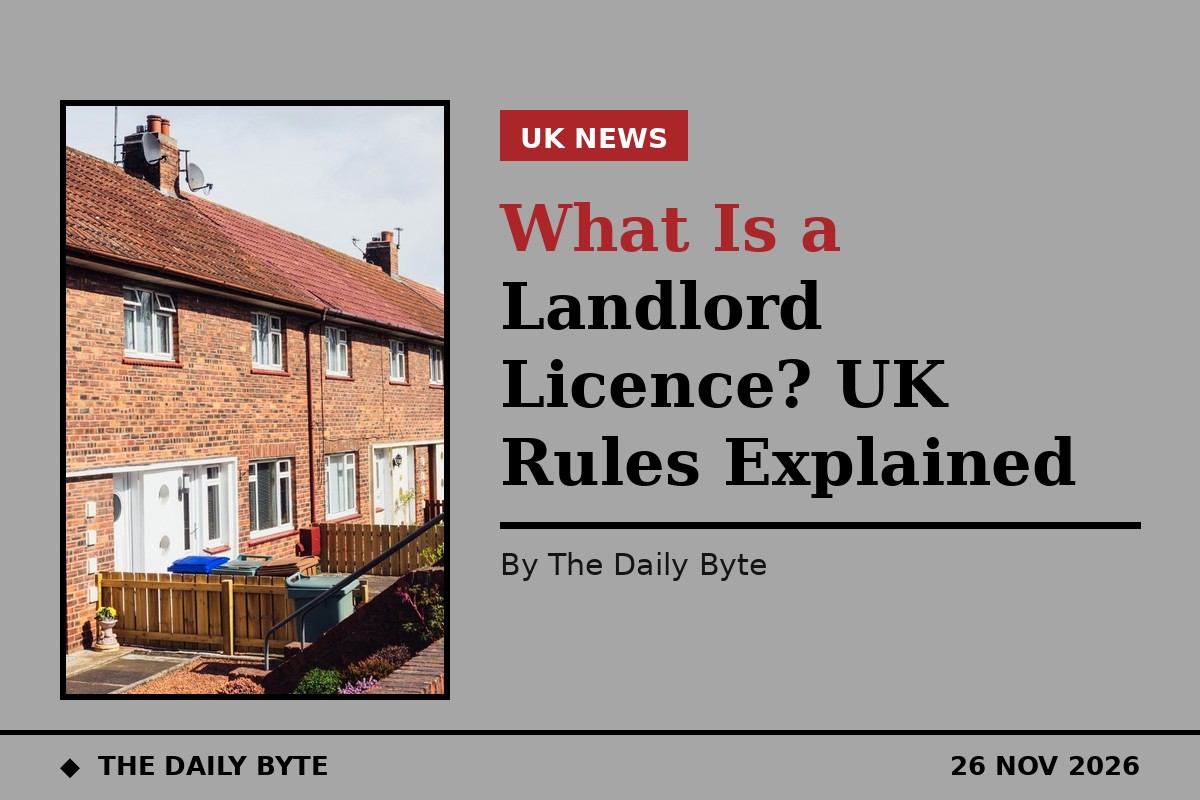
A landlord licence is a permit from the local council that a landlord must hold before letting certain rented homes in England and Wales. The most common type is a mandatory licence for a large house in multiple occupation, known as an HMO, but councils can also require licences for smaller shared houses and for ordinary rented homes in designated areas. Whether you need one depends on the property, the number of people living in it and the postcode, not on a single national rule.
The rules come from the Housing Act 2004, and there are three separate schemes. Confusing them is the most common mistake landlords make: a licence for one scheme does not cover the others, and a property that needs no licence in one street may need one a mile away. This guide explains each scheme, how to check whether your property is caught, what applying involves, and what happens if you let without a licence you needed.
The three licensing schemes at a glance
England has three licensing schemes for private landlords. Mandatory HMO licensing is national law and applies everywhere in England. Additional HMO licensing and selective licensing are local schemes that only apply where the council has designated an area. A property never needs both an HMO licence and a selective licence: if it needs a mandatory or additional HMO licence, it is licensed under the HMO rules instead.
Mandatory HMO licensing covers a house in multiple occupation let to five or more people who form two or more separate households and share a kitchen, bathroom or toilet. Additional licensing covers smaller HMOs, typically three or four sharers, in areas the council has designated. Selective licensing covers any privately rented home in a designated area, including a single family in a two-bedroom terrace. Each scheme comes from a different part of the Housing Act 2004: mandatory licensing under section 55, additional licensing under section 56, and selective licensing under section 80.
What counts as a house in multiple occupation?
GOV.UK defines a house in multiple occupation as a property rented out by at least three people who are not from one household, for example a family, but who share facilities such as the bathroom and kitchen. The full legal tests are in section 254 of the Housing Act 2004. A household is a single person or members of the same family, so a couple plus three friends is four households, while a family of six is one household.
Most shared houses meet the definition through the standard test, which applies where the living accommodation is not a self-contained flat and the occupants share basic amenities. Converted buildings and certain self-contained flats can also be HMOs under separate tests. The number of storeys no longer matters: since the 2018 reforms, one- and two-storey HMOs are caught just as taller ones are, and the headcount includes children.
Mandatory HMO licensing: the national scheme
You must have a licence if you are renting out a large HMO in England or Wales. GOV.UK says a property is a large HMO if all of the following apply: it is rented to five or more people who form more than one household, some or all of the tenants share a toilet, bathroom or kitchen, and at least one tenant pays rent, or their employer pays it for them. Even if your property is smaller and rented to fewer people, you may still need a licence depending on the area, so you should always check with the council.
A licence is valid for a maximum of five years, you must renew it before it runs out, and you need a separate licence for each HMO you run. The licence holder, whether that is you or your managing agent, must be considered a fit and proper person, which means, for example, having no relevant criminal record or breach of landlord law. The council may add conditions to the licence, such as improving the standard of the facilities, and if you disagree with a condition you can appeal to the First-tier Tribunal.
The conditions every HMO licence carries include sending the council an updated gas safety certificate every year, installing and maintaining smoke alarms, and providing safety certificates for electrical appliances when requested. Minimum room sizes also apply: a sleeping room must be at least 6.51 square metres for one person over the age of 10, and 10.22 square metres for two people. The house must be suitable for the number of occupants, properly managed and adequately fireproofed.
Additional licensing: smaller HMOs in designated areas
A council can widen HMO licensing in its own area. Under section 56 of the Housing Act 2004, it may designate all or part of its district as subject to additional licensing for a description of HMOs it specifies in the designation. In practice this usually catches smaller shared houses of three or four occupants who form two or more households and share a kitchen, bathroom or toilet, which are HMOs but do not need a mandatory licence.
Because additional licensing is local, the only reliable way to know whether it applies is to check with the council for the area where the property sits. Designations last for a maximum of five years and must be renewed if the council wants the scheme to continue. A designation is a public document, and councils must keep a public register of licensed HMOs.
Selective licensing: ordinary rented homes in designated areas
Selective licensing is the scheme most often misunderstood, because it has nothing to do with shared houses. Under section 80 of the Housing Act 2004, a council may designate all or part of its district for selective licensing, and inside that area almost every privately rented home needs a licence, including a flat let to a single person, a couple or a family. It is about location, not headcount: inside a designation, a one-tenant flat needs a licence just as a shared house does.
A council can designate an area where there is low housing demand or a significant and persistent problem with anti-social behaviour. Later regulations widened the grounds to include poor property conditions, high levels of migration, high levels of deprivation and high levels of crime. Larger designations still need confirmation from central government, while smaller ones proceed under a general approval. More than 100 English councils run selective schemes, so a buy-to-let house inside one needs a licence even with a quiet family living in it.
How to check whether your property needs a licence
There is no single national portal that answers the question for every address, so the check has to be done locally. Ask the council that collects the council tax for the property, not a national website: every designation is published by the local housing authority, and only that authority can confirm whether a scheme covers a particular postcode. Many councils publish a scheme map or a postcode checker on their licensing pages.
Work through the decision in this order. First, do five or more people live there, forming two or more households? If yes, mandatory HMO licensing applies wherever the property is, and you need a licence. Second, is it a smaller HMO of three or four sharers from different households? If yes, check whether the council runs an additional licensing scheme covering that address. Third, whatever the property type, is the address inside a selective licensing designation? If yes, you need a licence for an ordinary family let too. If none of these apply, no licence is needed today, but new designations start every year, so recheck when you buy, when tenants change and at least annually across a portfolio.
How to apply, and what it costs
You apply to the local council for the area where the property is. GOV.UK says you should apply for the licence yourself, although a managing agent can apply on your behalf. Each council sets its own application requirements and fixes its own fee, so there is no national price. For example, Rushmoor Borough Council charges 1,108 pounds for a five-year licence for a five-person HMO, rising with the number of occupants, while East Riding of Yorkshire Council charges 1,205 pounds for a five-year licence for a five-bedroom property, plus 25 pounds per additional bedroom. Other councils charge different amounts, and some split the fee into two parts, one at application and one when the licence is granted.
When you apply, the council will want evidence that the house is suitable for the number of people on the application, that it has adequate facilities and fireproofing, and that it is managed satisfactorily. Typical documents include a plan of the property showing room sizes and uses, a landlord's gas safety certificate, evidence that appliances and furnishings are safe, and a basic disclosure certificate for the licence holder. The council must decide whether to grant the licence, and the licence states its conditions and the maximum number of occupants. If the council refuses, or imposes conditions you dispute, you can appeal to the First-tier Tribunal.
What happens if you let without a licence
Letting a property that requires a licence without holding one is a criminal offence. A landlord operating a licensable property without a licence risks prosecution with an unlimited fine, or a civil penalty of up to 40,000 pounds imposed by the council without a court hearing. The civil penalty cap rose from 30,000 pounds to 40,000 pounds on 1 May 2026 under the Financial Penalties (Housing Offences and Breach of Banning Orders) Regulations 2026.
The financial consequences do not stop there. Tenants of an unlicensed property can apply to the First-tier Tribunal for a rent repayment order, which can require the landlord to repay up to 12 months of rent. A council can also apply for a banning order against a landlord who has committed serious housing offences, and an unlicensed HMO cannot be used as the basis for a valid eviction notice under section 21 of the Housing Act 1988. In short, the cost of a licence is almost always far less than the cost of being caught without one.
Tenants: how to check whether your home should be licensed
Tenants can check too. Ask the council whether the property has a licence: councils must keep a register of licences in force, and it is open to the public. If you live in a shared house with five or more occupants from different households, or in an area with a selective licensing scheme, and the council has no licence on record, you can report it to the council's private sector housing team. You do not need a solicitor to do this, and you can also ask the council whether the property meets the licensing conditions on room sizes, fire safety and facilities.
What is changing: the new national landlord database
Licensing is separate from the national landlord database and redress requirements arriving under the Renters' Rights Act 2025, which apply regardless of licensing. The government's new "Register your rental property" service, the private rented sector database, begins rolling out across England from 15 December 2026, starting in the West Midlands, where landlords have until 14 March 2027 to register. Landlords of assured or regulated tenancies will have to register themselves and each property, pay an annual fee of 65 pounds per property, and renew each year, using a GOV.UK One Login. Registration is being introduced region by region, with a three-month window once each region is called forward.
Wales and Scotland run their own systems and are not covered by the English licensing schemes described here: Wales has Rent Smart Wales, and Scotland has its own landlord registration scheme. Northern Ireland has separate housing law again. This guide covers England, with the GOV.UK HMO licence page covering England and Wales.
Frequently asked questions
Do I need a licence for a single family let? Only if the property is inside a selective licensing designation. Outside a designated area, a single household let does not need a licence, whatever the size of the house.
Does a licence cover my whole portfolio? No. A licence is granted for one named property, and you need a separate licence for each HMO you run. Fees are charged per property, not per landlord.
How long does a licence last? A maximum of five years. The council can grant a shorter one, and you must renew before it runs out. There is no automatic renewal.
Can my managing agent apply for me? Yes. GOV.UK says you should apply yourself, but a managing agent can apply on your behalf. The licence holder must still be a fit and proper person, and you remain responsible for compliance.
What if my council has no additional or selective scheme? Then only mandatory HMO licensing applies in your area. Check again at least once a year, because councils introduce new designations regularly and a scheme can start without you being told directly.
Sources
This guide is based on GOV.UK's "House in multiple occupation licence" page, the Housing Act 2004, council licensing pages from East Riding of Yorkshire and Rushmoor, and the government's Housing Hub guidance on the "Register your rental property" service. All sources were checked on 26 November 2026. This article is general information, not legal advice, and landlords should confirm the position for a specific property with the relevant local council.


