What Is an Apprenticeship? Explained
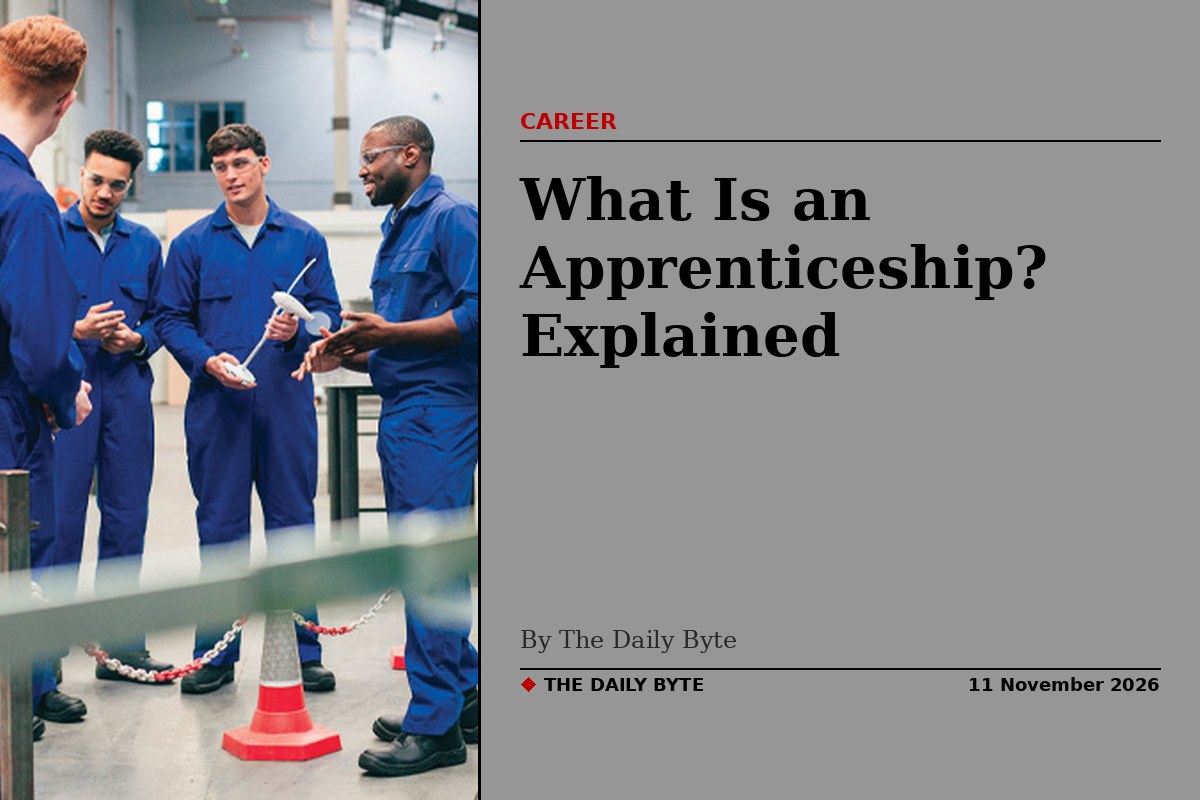
An apprenticeship is a paid job that combines practical training at work with study towards a qualification. As an apprentice you are an employee from day one: you earn a wage, get holiday pay, work alongside experienced staff and spend part of your working week on training related to your role.
Apprenticeships cover hundreds of occupations, from engineering and construction to healthcare, digital technology, finance and hospitality. They are an alternative to full-time study, and they suit school leavers and adults changing career alike. GOV.UK, which runs the official guidance for England, sums it up in one line: apprenticeships combine practical training in a job with study.
How does an apprenticeship work?
An apprentice splits their time between doing the job and learning how to do it better. GOV.UK says that at least 20% of an apprentice’s normal working hours must be spent on training or study related to the role. That training might happen at the workplace, at a college or training provider, or online, and it can be weekly, monthly or in a separate block of time.
Apprenticeships can take from 8 months to 6 years to complete, depending on the type and level. Each apprenticeship follows an approved standard that sets out the knowledge, skills and behaviours the apprentice must learn, and most end with an assessment to confirm they have met the standard.
What are the apprenticeship levels?
Apprenticeships have equivalent educational levels, set out by GOV.UK as follows:
- Level 2, Foundation and Intermediate: equivalent to GCSE level.
- Level 3, Advanced: equivalent to A level.
- Levels 4, 5, 6 and 7, Higher: equivalent to foundation degree level and above.
- Levels 6 and 7, Degree: equivalent to a bachelor’s or master’s degree.
Some apprenticeships also give an additional qualification, such as a diploma. The right starting level depends on your existing qualifications and experience: someone with relevant qualifications or industry experience may be able to start at a higher level or finish sooner, agreed with the employer and training provider.
Who can start an apprenticeship?
To start an apprenticeship in England, GOV.UK says you need to be 16 or over, living in England, and not in full-time education. You can apply while you are still at school, but you must be 16 or over by the end of the summer holidays to start. Apprenticeship systems in Scotland, Wales and Northern Ireland are run by separate organisations, so the rules and application routes differ outside England.
How much do apprentices get paid?
Apprentices are paid employees and are entitled to the National Minimum Wage, holiday pay and other employee rights. GOV.UK states that the current apprentice rate is £8 per hour for apprentices aged 16 to 18, and for those aged 19 or over who are still in their first year. Apprentices aged 19 or over who have completed their first year are entitled to the National Minimum Wage or National Living Wage rate for their age. Your employment contract should confirm your rate of pay.
Apprentices must be paid for their normal working hours, for training that is part of the apprenticeship, and for study towards English and maths qualifications where those are part of the programme. They also get at least 20 days of paid holiday a year, plus bank holidays.
How do you apply for an apprenticeship?
Applying takes three steps, according to GOV.UK: search for an apprenticeship, sign in or create an account, and complete and submit your application. Vacancies are listed on the official Find an apprenticeship service, and the National Careers Service offers advice on applications and interviews. If an application is unsuccessful, you can ask for feedback, and you can complain if you believe you were treated unfairly because of discrimination.
Apprenticeship vs internship: what is the difference?
An apprenticeship is a real, paid job with structured training and a qualification at the end, lasting months or years. An internship is usually a short period of work experience, often lasting weeks or a few months, designed to give a taste of a profession. An apprenticeship leads to a recognised standard and a career; an internship is generally a stepping stone to help you decide on a career or to build experience for applications.
Frequently asked questions
How long does an apprenticeship take? From 8 months to 6 years, depending on the type and level of the apprenticeship.
Do apprentices get paid? Yes. Apprentices are employees who earn a wage and get holiday pay. The apprentice rate of the National Minimum Wage is currently £8 per hour for 16 to 18-year-olds and for those aged 19 or over in their first year.
Can I apply for an apprenticeship while still at school? Yes, you can apply while at school, but you must be 16 or over by the end of the summer holidays to start.
Are apprenticeships only for school leavers? No. Apprenticeships are open to anyone aged 16 or over who meets the eligibility rules, including adults who want to retrain or move into a new occupation.
Pay rates and eligibility rules can change, so check the official GOV.UK guidance before applying. Sources: GOV.UK, Become an apprentice and Prospects, What is an apprenticeship?