What Is the ASEAN Digital Economy Framework Agreement?
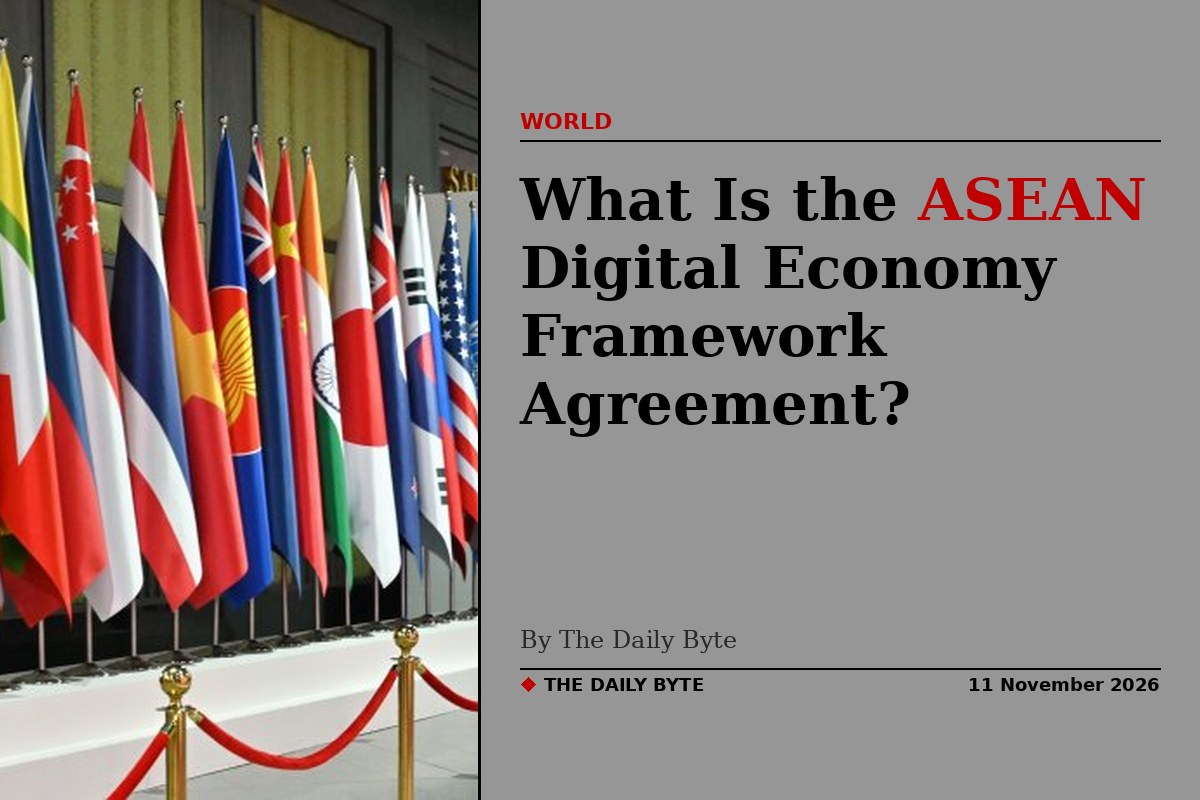
The ASEAN Digital Economy Framework Agreement, known as DEFA, is a deal to create one set of rules for digital trade across Southeast Asia. It is the world's first region-wide, digital-only economic agreement, and it is due to be signed at the 49th ASEAN Summit in Manila in November 2026, during the Philippines' year as chair of the Association of Southeast Asian Nations.
Unlike traditional trade deals, which focus on lowering tariffs on physical goods, DEFA is built around the intangible drivers of the modern economy: cross-border data flows, digital payments, electronic commerce and digital identity. ASEAN estimates that its digital economy could reach US$2 trillion by 2030 if the agreement is implemented effectively.
What is ASEAN?
ASEAN, the Association of Southeast Asian Nations, is an intergovernmental organisation founded in 1967 by Indonesia, Malaysia, the Philippines, Singapore and Thailand. It has since grown to 11 members, with Brunei joining in 1984, Vietnam in 1995, Laos and Myanmar in 1997, Cambodia in 1999 and Timor-Leste in 2025.
The bloc's purpose is to promote economic growth, social progress and cultural development in Southeast Asia through cooperation, and to maintain peace and stability in the region. Its summits bring together the leaders of all 11 member states, along with dialogue partners including the United States, China, Japan, India, Australia and the European Union.
What does DEFA cover?
DEFA is structured around nine core elements that together form the pillars of a regional digital economy. The elements verified in the negotiating framework include digital trade, cross-border e-commerce, payments and e-invoicing, digital identity and authentication, cross-border data flows and data protection, cybersecurity, competition policy, and cooperation on emerging technologies including artificial intelligence.
In practice, that means the agreement aims to make it easier for a business in one ASEAN country to sell online to a customer in another, to be paid through interoperable payment systems, to use electronic invoices and documents instead of paper, and to have its digital identity recognised across borders. It also sets common standards for online consumer protection and dispute resolution, so that a shopper in Jakarta can buy safely from a seller in Bangkok.
One of the ideas under the agreement is the ASEAN Unique Business Identification Number, designed so that one registered business identity is recognised across the bloc, cutting the paperwork involved in cross-border trade. DEFA is also meant to help micro, small and medium enterprises, which make up the vast majority of businesses in Southeast Asia, reach customers beyond their home market.
When will DEFA be signed?
Negotiations on DEFA were substantially concluded in October 2025 and were finalised in Manila in May 2026. The agreement is one of the Philippines' 19 priority economic deliverables during its 2026 chairmanship, and ministers have confirmed it is scheduled for signing at the 49th ASEAN Summit in Manila in November 2026.
The summit, chaired by Philippine President Ferdinand Marcos Jr, is also expected to discuss the South China Sea code of conduct and the situation in Myanmar. The DEFA signing is the headline economic deliverable of the meeting, and it follows the adoption of the ASEAN Digital Masterplan 2026-2030 earlier this year.
Why does DEFA matter?
DEFA matters because Southeast Asia's digital economy is already large and growing fast, but it is fragmented. Eleven countries with different rules on data, payments and online trade make it expensive for businesses, especially small ones, to operate across borders. A single set of rules should lower those costs and make the region more attractive for investment.
For consumers, the agreement should mean safer online shopping, easier cross-border payments and more choice. For governments, it is a chance to set regional standards for digital trade before those standards are set elsewhere. Analysts have compared its potential influence to the way the European Union's data protection rules shaped global practice, although DEFA's impact will depend on how fully it is put into practice.
What happens after the signing?
Signing is not the same as enforcement. Each ASEAN member state will still need to ratify DEFA and bring its own laws into line with the agreement, and realistic benefits are expected to arrive from 2027 onwards rather than overnight. The agreement is designed as a living agreement that can evolve as technology changes, so new rules for areas such as artificial intelligence can be added over time.
That means the Manila signing is a starting point, not a finish line. If governments follow through, DEFA could make buying, selling and paying online across Southeast Asia as straightforward as doing so within a single country. If implementation stalls, it will remain a framework on paper, and the region's digital economy will keep growing under 11 different sets of rules.
DEFA at a glance
| Detail | DEFA |
|---|---|
| Full name | ASEAN Digital Economy Framework Agreement |
| What it is | The world's first region-wide digital-only economic agreement |
| Members covered | All 11 ASEAN member states |
| Negotiations | Substantially concluded October 2025; finalised May 2026 |
| Signing | Due at the 49th ASEAN Summit, Manila, November 2026 |
| Core areas | Digital trade, e-commerce, payments, digital ID, data flows, cybersecurity, AI |
| Digital economy projection | US$2 trillion by 2030, according to ASEAN estimates |


