What Is Asylum in the UK? How to Claim Explained
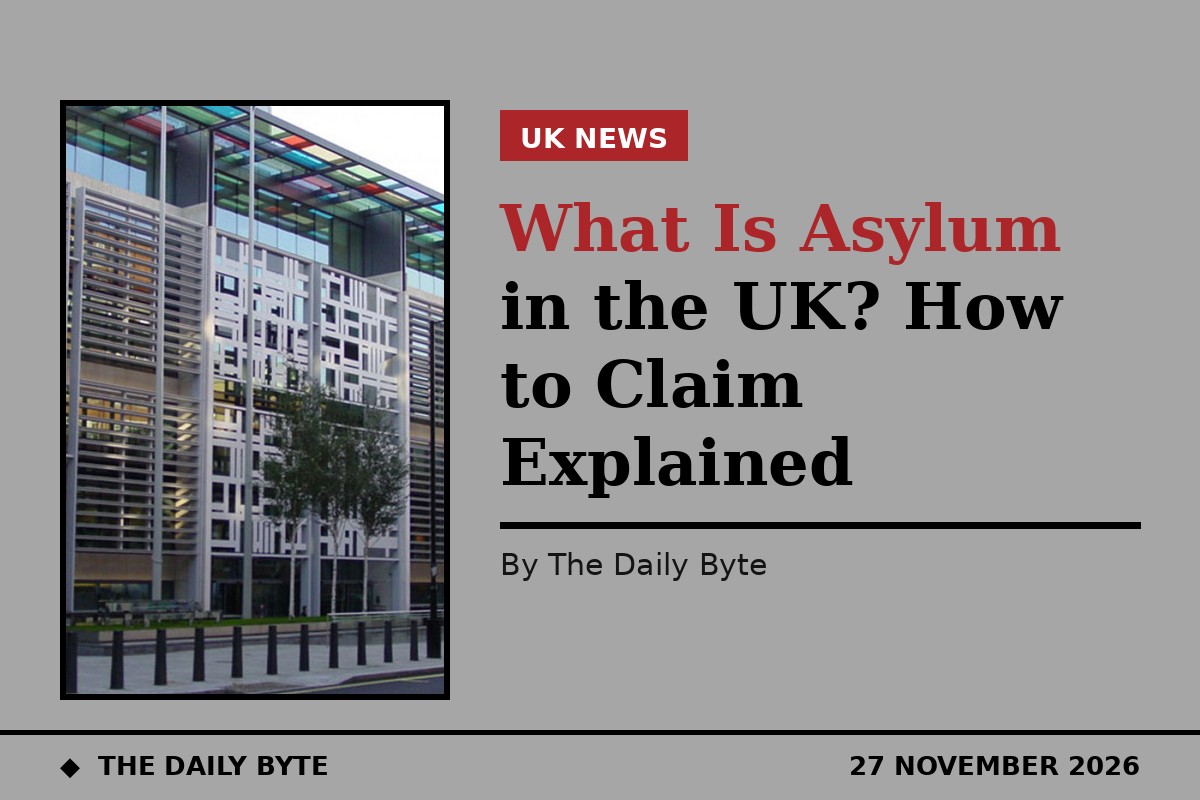
Asylum in the UK is protection for people who have left their own country because they fear persecution and cannot live safely there. You can only claim asylum from inside the UK or at the UK border, and the Home Office decides each claim through screening, a detailed interview and a written decision. While a claim is being decided, most asylum seekers cannot work and cannot claim mainstream benefits, but those who would otherwise be destitute can get Home Office asylum support of £49.18 a week per person, plus accommodation.
This guide explains who can claim asylum, how the process works step by step, what support is available while you wait, what happens if your claim is granted or refused, and what the government's November 2026 reforms would change. It is general information, not legal advice: anyone claiming asylum should get advice from a regulated immigration adviser or solicitor as early as possible.
What is asylum?
Asylum is the process by which a person asks to be recognised as a refugee under the 1951 Refugee Convention. A refugee is someone who is outside their own country and cannot go back because they have a well-founded fear of persecution. The persecution must be linked to one of the reasons set out in the Convention: race, religion, nationality, membership of a particular social group, or political opinion. The UK's own guidance also recognises that characteristics such as gender, gender identity or sexual orientation can put a person at risk.
To qualify, you must be unable to live safely in any part of your own country, and you must have failed to get protection from the authorities there. It is not enough to want a better life or a job in the UK; the claim has to be about a real risk of persecution. The Home Office applies a two-part test, looking both at whether the fear is genuine and whether it is objectively well founded. People who are granted protection receive refugee status or, in some cases, humanitarian protection, which is a separate form of protection for people who face a serious risk of harm even if they do not meet the strict refugee definition.
Who can claim asylum in the UK?
Anyone who is in the UK or at the UK border and fears persecution in their home country can claim asylum. GOV.UK says you should apply when you arrive in the UK, or as soon as you think it would be unsafe for you to return to your own country. Waiting can damage a claim, because the Home Office may ask why you did not claim sooner.
If your application succeeds, dependants named on it — a partner and children under 18 — can usually stay for the same amount of time as you. They do not get refugee status themselves unless they make their own claim for asylum. You must give true information: GOV.UK warns that you can get up to two years in prison, or be required to leave the UK, if you give false information on your application.
There is no visa for coming to the UK to claim asylum. People arrive in many different ways, including on a visa and then claiming once they are here, or by crossing the Channel in a small boat. The route a person took can matter under the government's November 2026 reform proposals, which are explained below, but it does not stop a person from making a claim.
How to claim asylum: step by step
The process has four main stages: registration at a screening interview, a decision on whether the claim can be considered in the UK, a detailed asylum interview with a caseworker, and a written decision. Some people are instead invited to a Single Protection Interview, which combines the screening and the interview in one appointment.
1. Make the claim. At a port or airport, tell a Border Force officer that you want to claim asylum. If you are already in the UK, you book a screening appointment through the Home Office's asylum registration appointment line. Do not turn up without an appointment. Your claim is not formally registered until you attend the screening.
2. Attend the screening. This is a meeting with an immigration officer where you register your claim. You will be photographed and fingerprinted, and interviewed to check who you are and where you are from. You will be asked why you want asylum, and you can bring written evidence to support your claim. Bring identity documents if you have them — passports, travel documents, identity cards, birth and marriage certificates or school records — and documents proving your UK address.
3. Wait for the admissibility decision. After screening, the Home Office decides whether your claim can be considered in the UK or whether it may seek to send you to a safe third country. If it can be considered here, you will be given an asylum registration card, known as an ARC, and you may be sent a questionnaire to complete.
4. Attend the asylum interview. If your claim can be considered in the UK, a Home Office caseworker interviews you in detail about why you cannot return. This is called the substantive interview.
5. Receive the decision. The Home Office sends a written decision. There is no fixed timescale, and GOV.UK says a decision is made as soon as possible, although it can take longer where documents need checking or more interviews are needed. Claims often take several months and sometimes run into years.
What happens at the asylum interview?
The substantive interview is where the Home Office examines the claim in detail. It usually lasts several hours, sometimes split across shorter sessions, and it is normally held by video and recorded. An interpreter is provided if you need one. The caseworker will ask about what happened to you, why you left, what you fear would happen if you returned, and why you could not live safely somewhere else in your own country.
The screening interview is different: it is about identity, route and basic reasons, not a full account. The detailed evidence belongs in the substantive interview, and anything you want considered should be raised there, with supporting documents sent to the Home Office afterwards if the caseworker agrees. Nationals of EU and EEA countries, Switzerland, the USA, Canada, Japan, South Korea, Australia and New Zealand may instead be invited to a Single Protection Interview, which combines screening and the substantive interview, and a decision may follow straight after it.
While you wait: support, housing and work
Most people seeking asylum are not allowed to work while their claim is being considered, and they cannot claim mainstream benefits such as Universal Credit. Instead, those who would otherwise be destitute can apply for asylum support from the Home Office under section 95 of the Immigration and Asylum Act 1999. The standard allowance is £49.18 per person per week, paid onto an ASPEN payment card, for food, clothing, toiletries and other everyday needs — about £7 a day. Where accommodation provides meals, the allowance is £9.95 a week instead. There are extra payments for pregnancy and for young children.
Accommodation is also provided where it is needed, but the person has no choice of location. After initial temporary accommodation, often a hotel or hostel, people are usually moved to dispersal accommodation, generally outside London and the South East. At the end of June 2026, 93,293 people were receiving asylum support across the UK, according to Home Office statistics published in August 2026.
There is a limited route to permission to work. If an initial decision has been outstanding for more than 12 months through no fault of the applicant, the person can apply for permission to work, but since the Immigration Rules change known as HC 1691, the job must generally be at degree level or above, in the occupations listed in Appendix Skilled Occupations. Volunteering is allowed, subject to the distinction between genuine volunteering and unpaid employment. While waiting, you must attend reporting events as directed, keep the Home Office informed of any change of address or circumstances, and send any further evidence agreed at interview. Since March 2026, the Home Office can suspend or stop asylum support if it has reasonable grounds to believe a person or family member worked without the right to work.
What happens if your claim is granted?
If the Home Office accepts that you qualify for refugee status or humanitarian protection, you get permission to stay in the UK. You can then work, claim benefits and, in the case of refugee status, apply for family reunion. The Home Office generally ends asylum support 42 days after the grant letter is issued, which is the move-on period for leaving Home Office accommodation, registering for benefits and finding housing.
The length of the grant has changed. For claims decided on or after 2 March 2026, successful applicants are granted 30 months' permission to stay, rather than the five years that was previously standard, under the rules change known as HC 1691. Their status is then reviewed, rather than leading automatically to settlement. This is part of a wider move to temporary protection, explained below.
What happens if your claim is refused?
If your claim is refused, you can usually appeal to an independent tribunal, the First-tier Tribunal, where an immigration judge hears the case afresh. Your decision letter will say whether you have the right of appeal and what the deadline is. If you are in the UK, you generally have 14 days from the date you received the decision letter to appeal; if you are outside the UK, the deadline is 28 days. The tribunal fee is £82 without a hearing and £144 with a hearing, and you may not have to pay if you get asylum support or legal aid. Legal aid may be available for asylum cases, and you should seek advice immediately, because the deadline is short.
People whose claims are refused but who cannot return to their home country may still qualify for support under section 4 of the 1999 Act, paid on a payment card, under strict conditions. If no appeal is possible and no further submissions are accepted, the Home Office will expect the person to leave the UK, and can take steps to remove them.
The November 2026 reforms: what is proposed
In early November 2026, Home Secretary Shabana Mahmood announced the government's "Restoring Order and Control" plan, described as the biggest overhaul of the asylum system in decades. The proposals would end the automatic path to permanent settlement after five years. Instead, refugees would be granted temporary status, reviewed every 30 months, and expected to return if their home country is later judged safe.
A written parliamentary answer on 24 November 2026 set out the settlement position. Refugees admitted through designated safe and legal routes would qualify for settlement after five years. Refugees who claimed asylum in the UK — those on what the government calls Core Protection — would normally face a 20-year pathway to settlement, although they could earn a shorter pathway through sustained work, education or training. Where a person entered the UK illegally, an additional 10 years would ordinarily apply, unless they are protected by Article 31 of the Refugee Convention. The government also intends to end the legal duty to provide asylum seekers with guaranteed housing and financial support, except for those who are destitute, and to end the use of hotels for asylum accommodation by 2029.
These are announced proposals, not all of which are yet in force. The government said it would publish further guidance setting out technical and operational detail ahead of implementation. The 30-month grants for claims decided on or after 2 March 2026 are already in force under HC 1691. Anyone affected should check the current GOV.UK guidance and get regulated advice, because the rules in this area are changing quickly.
Frequently asked questions
Can I claim asylum if I arrived on a visa? Yes. You can claim asylum once you are in the UK if you become unable to return safely, for example because conditions in your home country have changed. You should claim as soon as you think it would be unsafe to return, and you book a screening appointment through the Home Office.
Can asylum seekers work in the UK? Not usually. You cannot normally work while your claim is being considered. After your claim has been outstanding for more than 12 months through no fault of your own, you can apply for permission to work, but the job must generally be at degree level or above under the current rules.
How much asylum support do you get? The standard rate is £49.18 per person per week on an ASPEN card, or £9.95 a week where meals are provided with the accommodation. Accommodation is provided separately where you qualify for it.
How long does an asylum claim take? There is no fixed timescale. GOV.UK says a decision is made as soon as possible, but claims typically take several months and sometimes run into years, particularly where documents need checking or more interviews are needed.
What happens if my asylum claim is refused? You can usually appeal to the First-tier Tribunal. If you are in the UK, you generally have 14 days from receiving the decision letter to appeal, so get legal advice immediately.


