What is Australia's under-16 social media ban?
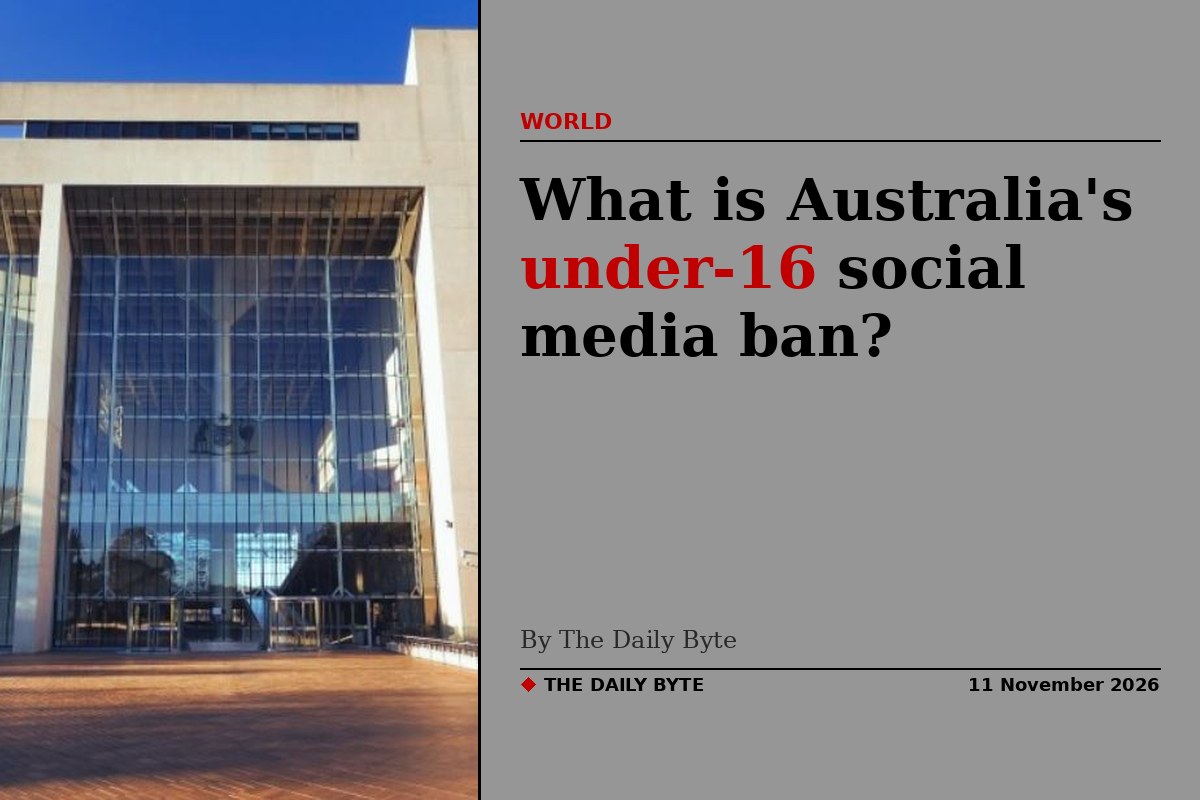
Australia's under-16 social media ban is a world-first law that requires ten major social media platforms to take reasonable steps to stop Australians under 16 from holding an account. It took effect on 10 December 2025, and it is now being tested in Australia's highest court, where Reddit and a digital rights group argue that it breaches the country's constitutional protections for political communication.
The ban does not punish children or their parents. The legal duty sits entirely with the platforms. If they fail to take reasonable steps to keep under-16s off their services, they face penalties of up to A$109.2 million, according to Australia's eSafety Commissioner. The government says more than five million accounts held by under-16s have been removed, deactivated or restricted since the rules began, although evidence also shows that many children are still finding their way onto the platforms.
Which platforms are covered by the ban?
The eSafety Commissioner lists ten age-restricted platforms: Facebook, Instagram, Kick, Reddit, Snapchat, Threads, TikTok, Twitch, X and YouTube. From 10 December 2025, each of these services has been required to take reasonable steps to prevent Australians under 16 from creating or keeping an account. Other services, including BigoLive, Bluesky, Lemon8, Wizz and Yubo, have also assessed themselves as age-restricted.
The list is not fixed in the legislation itself. Instead, the law sets out criteria: a platform is age-restricted when its sole or significant purpose is online social interaction, people can connect and interact with each other, people can post material, and it has a recommender feature or a logged-in feature. The eSafety Commissioner has said a messaging or gaming app can move into the restrictions if the way people use it shifts towards social media features, so a service that sits outside the rules today could fall inside them later.
| Covered by the age restrictions | Not covered |
|---|---|
| Facebook, Instagram, Threads | Messenger, WhatsApp |
| TikTok, Snapchat, X | Discord, Roblox, Steam |
| YouTube, Reddit | YouTube Kids, Pinterest |
| Twitch, Kick | GitHub, Google Classroom |
Under-16s can still view publicly available social media content that does not require logging into an account. Most standalone gaming and messaging apps, and many services that support health and education, are not affected. YouTube Kids and Google Classroom, for example, remain available, and children can still use WhatsApp and online games such as Roblox.
How does the ban work in practice?
The rules come from the Online Safety Amendment (Social Media Minimum Age) Act 2024, which amended Australia's Online Safety Act 2021. Parliament passed the amendment in November 2024, it received Royal Assent in December 2024, and the platform obligations commenced a year later, on 10 December 2025.
The law deliberately stops short of ordering age verification for every user. Platforms must take “reasonable steps”, a flexible standard that leaves each company to choose its own methods, provided they meet the government's safety and privacy requirements. Some platforms use behavioural artificial intelligence to scan accounts for signs of underage ownership, such as posts, bios, birthday mentions and references to school grades, and then restrict those accounts. Others use third-party age-assurance providers that ask users to submit a document or take a selfie so their age can be estimated.
Importantly, the law does not force anyone to use a government-issued identity document or an Australian government-accredited Digital ID to prove their age online. Platforms must offer safe and reasonable alternatives that protect privacy. If a young person is restricted by mistake, there must be a fair and quick review process, and platforms are expected to explain clearly what is happening and give under-16s a chance to download their data.
When the ban started, the rollout was messy. Some children said they lost access to their accounts in the days before the restrictions began, while others reported finding ways around the age checks, including by submitting credit card details, photo identification or selfies. Meta, which owns Facebook, Instagram and Threads, said it had closed around 500,000 accounts in the first few days after the ban took effect.
What happens if a platform breaks the rules?
Enforcement sits with the eSafety Commissioner, the independent regulator led by Julie Inman Grant. In March 2026, three months after the ban took effect, eSafety opened formal investigations into alleged non-compliance by Facebook, Instagram, Snapchat, TikTok and YouTube. Its first compliance report said it had significant concerns about all five platforms, including that some were allowing under-age users to retry the same age-check method until it succeeded.
As of early November 2026, no company had been fined. That is not because the regulator lacks powers. In June 2026, Parliament passed new enforcement legislation that raised the maximum penalty to A$109.2 million and gave the Commissioner stronger powers to compel evidence. Those powers took effect on 12 September 2026, allowing eSafety to demand documents from anyone it reasonably believes holds relevant material, including board minutes, internal emails and technical logs, and to summon people to be examined under oath.
On 20 October 2026, Communications Minister Anika Wells confirmed that eSafety was using those expanded powers to build the evidentiary record for civil-penalty proceedings in the Federal Court against Meta, TikTok, Snap and Google. The proceedings had not yet been formally filed, but the announcement marked an escalation from investigation towards litigation, and the government framed it as a test of whether a democratic government can prosecute major platforms for failing to enforce a national age-based access ban. Wells told the National Press Club in mid-October: “The law is not failing — platforms are failing to comply with the law. We won't flinch at holding tech companies to account.”
Why did Australia introduce the ban?
The government presented the law as a child-safety measure. Its stated object is to reduce the harm that social media can cause to under-16s, at a stage of life when, in the government's words, young people are still learning who they are and how to handle their emotions. The eSafety Commissioner describes the change as a delay rather than a ban, a “not yet” rather than a “never”, designed to give children more time to build maturity and healthy online habits before they face the pressures of algorithm-driven feeds, endless scrolling, constant notifications and disappearing messages.
The policy had substantial public support when it was introduced. Research cited in the debate found that, when the laws came into operation in December 2025, the measure had 67 per cent support, with 15 per cent opposed and 18 per cent undecided. Supporters argue that keeping young teenagers off the platforms reduces their exposure to harmful content, including violent or graphic videos, sexual content and material promoting unhealthy eating habits, and eases the pressure created by follower counts and likes.
Critics, including the teenagers who first challenged the law, do not deny that those risks exist. They argue instead that a blanket ban is the wrong response, and that the money and resources platforms spend on avoiding fines should be spent on removing predators and harmful content. That disagreement is now at the heart of the High Court case.
Why is the ban being challenged in the High Court?
Two separate constitutional challenges were heard together by the full bench of the High Court in Canberra on 3 and 4 November 2026. The first was brought by the Digital Freedom Project, a digital rights group led by New South Wales parliamentarian John Ruddick, which filed its case a few weeks before the ban started. The second was brought by Reddit, which filed its own challenge in December 2025.
The challengers argue that the law burdens the implied freedom of political communication, a principle the High Court has recognised since 1992 as flowing from the constitutional requirement that the people directly elect the Parliament. Reddit's barrister, Perry Herzfeld, told the court that the legislation cut teenagers off from what he described as the most important means of communication in the modern world. The Digital Freedom Project argues that the ban deprives children of free communication and amounts to internet censorship that categorically excludes an entire age group from digital civic participation.
Reddit also argues that it was wrongly included in the regime, because its forum-based structure and primarily adult user base make it different from visual apps such as Instagram or TikTok. It warns that asking people to prove their age creates privacy risks, because technology companies end up collecting sensitive information such as identity documents and face scans. Reddit has said it shares the government's goal of protecting young people, but that more effective alternatives are available, and it has continued to comply with the law while its challenge proceeds.
The government, represented by Joanna Davidson SC, began its response on the first day of the hearing and continued on the second. Its position is that restricting children's access to social media accounts is necessary to protect their mental health, wellbeing and development. Communications Minister Anika Wells has rejected any suggestion that the government will back down, saying: “We will not be intimidated by big tech. On behalf of Australian parents, we will stand firm.” The judges have reserved their decision, and a ruling is expected in the coming months. No confirmed ruling date has been announced.
Is the ban working?
The honest answer is mixed, and it depends on what counts as working. On the government's own figures, the scale of account removal has been large. The government says more than five million accounts held by under-16s have been removed, deactivated or restricted across the covered platforms. Meta reported removing more than 750,000 Australian accounts across Facebook and Instagram, and Snap reported locking 450,000 accounts.
But the same evidence shows that large numbers of children are still on the platforms. The eSafety Commissioner's first report, based on data collected between March and April 2026, found that more than 80 per cent of children were still using social media, and that seven in ten children aged under 16 who had a social media account before the ban still had some access to one. A University of Chicago working paper found that roughly 73 per cent of 14- and 15-year-olds subject to the ban were still using prohibited platforms, and a study published in the British Medical Journal characterised the results as “limited implementation, incomplete compliance, and substantial circumvention”.
That gap matters for both sides of the argument. The government says it proves platforms are doing the bare minimum and must be forced to do more, which is why it is preparing Federal Court proceedings. The challengers say it proves the ban is both over-inclusive, because it burdens teenagers' political speech, and under-inclusive, because it does not address the harms that motivated the law. Under the High Court's proportionality test, the government must show that the law's purpose is legitimate, that the ban is a suitable means of achieving it, that no less restrictive measure would suffice, and that the burden on political communication is proportionate to the benefit.
What happens next?
Three things are now running in parallel. First, the High Court will deliver its reserved judgment in the coming months. If the law is struck down, the Federal Court enforcement action being prepared under the new compulsory powers could be rendered moot. Second, eSafety's investigations continue, and the first civil-penalty proceedings against Meta, TikTok, Snap and Google could be filed in the Federal Court. Third, other countries are watching closely. Since December 2025, Greece, Turkey, Malaysia and Indonesia have advanced similar age-restriction measures, and calls for equivalent legislation have emerged within the European Union.
For families in Australia, the practical position is unchanged while the courts decide. Under-16s cannot hold accounts on the ten age-restricted platforms, but they can still view public content without logging in, and they can still use messaging apps, games, YouTube Kids and education services. The eSafety Commissioner continues to describe the change as a delay, not a ban, and to advise parents to talk openly with their children about what the rules mean and where to get help if something goes wrong online.
Frequently asked questions
When did Australia's under-16 social media ban start? The ban took effect on 10 December 2025, a year after the Online Safety Amendment (Social Media Minimum Age) Act 2024 received Royal Assent.
Which platforms are banned for under-16s in Australia? Ten platforms are age-restricted: Facebook, Instagram, Kick, Reddit, Snapchat, Threads, TikTok, Twitch, X and YouTube. Under-16s must not hold accounts on them, although they can still view public content without logging in.
Can children or parents be fined under the ban? No. There are no penalties for under-16s who access an age-restricted platform, or for their parents or carers. The legal duty and the penalties, of up to A$109.2 million, fall on the platforms.
Has any company been fined for breaking the ban? No. As of early November 2026, no platform had been fined, although eSafety has opened investigations into five platforms and the government said on 20 October 2026 that it was preparing civil-penalty proceedings in the Federal Court.
What is the High Court challenge about? Reddit and the Digital Freedom Project argue the ban breaches the implied freedom of political communication in the Australian Constitution. Hearings took place on 3 and 4 November 2026, and the judges have reserved their decision.
Sources: eSafety Commissioner and TBS News.


