What is the Autumn Budget 2026? Key measures
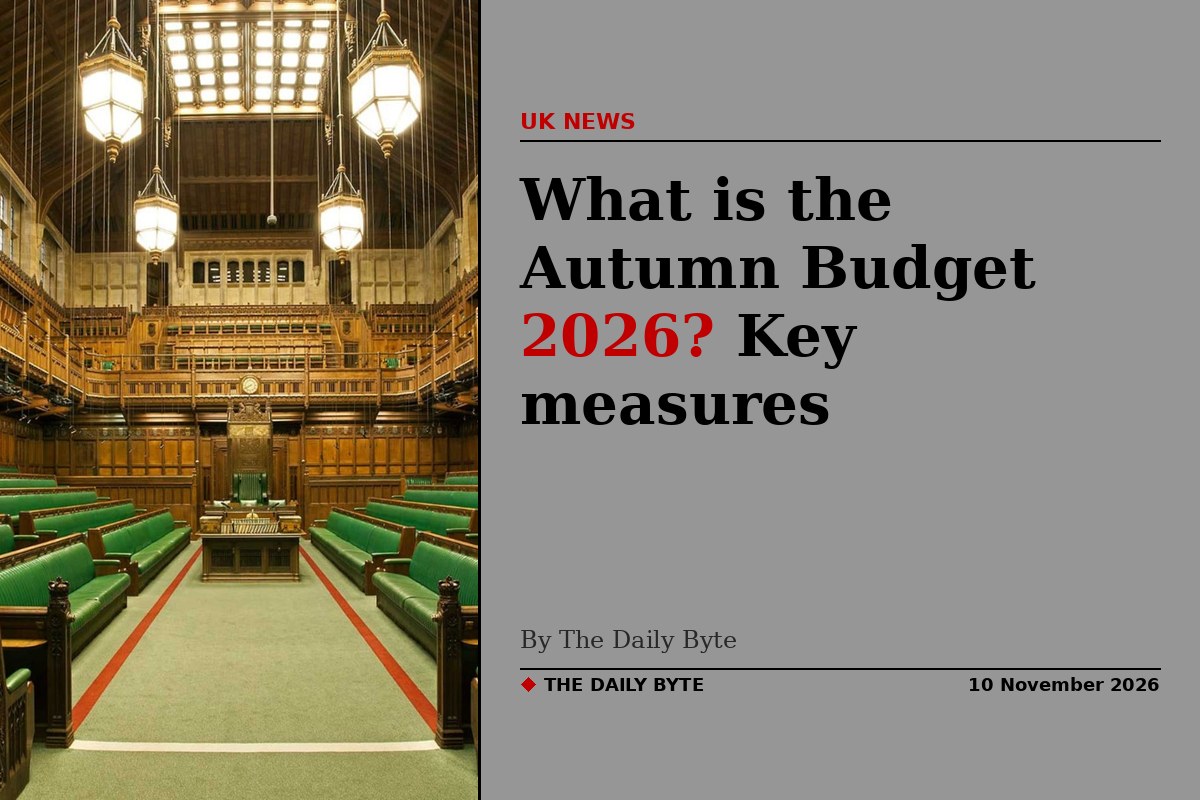
The Autumn Budget 2026 is the UK government's annual statement of its tax and spending plans, delivered to the House of Commons on Wednesday 28 October 2026 by Chancellor John Healey. It was Healey's first Budget as Chancellor and the first Budget of Prime Minister Andy Burnham's government, and it was presented under the title Breathing space for today, fresh hope for the future. Its headline measures were a one-off £100 payment towards energy bills for up to 20 million households, a rise in the minimum wage, and the scrapping of gas standing charges, set against higher taxes on savings and property income from April 2027.
A Budget is not a single law. It is a speech and a set of documents that announce what the government intends to do, and most of the tax changes then have to be passed by Parliament, usually through a Finance Bill. That matters when reading the dates in this explainer: some measures start in January 2027, most start in April 2027, and a few are promises to act during 2027 rather than fixed changes. This guide explains what was actually announced, who it affects, and when it takes effect, using the Budget documents published on GOV.UK and independent analysis of them.
What is the Autumn Budget?
The Budget is the government's main annual financial statement. The Chancellor stands at the despatch box in the House of Commons and sets out how much the government expects to raise in tax, how much it plans to spend, and what it will change about the tax system. The statement is accompanied by a Budget document, often called the Red Book, which in 2026 was published as House of Commons paper HC 726, and by an Overview of Tax Legislation and Rates that gives the detail behind each measure.
The Budget is also a political event. Chancellors use it to explain the state of the economy, to respond to forecasts from the Office for Budget Responsibility, and to signal their priorities. Healey described his Budget as one for the working people of Britain, and he framed it as giving households breathing space from everyday costs at a time when energy bills have been pushed up by the conflict in the Middle East. The government said energy bills had risen this year because of that conflict, and that the Budget was the start of a new approach to energy costs.
When was it delivered and by whom?
John Healey delivered the Autumn Budget 2026 on 28 October 2026, shortly after midday, following Prime Minister's Questions. Healey had been appointed Chancellor in July 2026 by Andy Burnham, who had become prime minister and Labour leader about three months earlier. Before the Budget, Healey had been best known as a former defence secretary, and this was his first major fiscal statement in the Treasury job.
As is traditional, Healey posed with the red Budget box outside 11 Downing Street before travelling to Parliament, and he delivered his speech in the House of Commons to a packed chamber. The speech itself lasted around an hour, and the full Budget documents were published on GOV.UK at the same time, so that MPs, journalists and analysts could check the detail behind the announcements as he spoke.
Energy bills: the £100 Household Energy Payment
The headline measure for households was a one-off £100 Household Energy Payment, to be paid from January 2027 to households in England in council tax bands A to D. According to GOV.UK, up to 20 million households will be eligible, including an estimated 83 per cent of fuel-stressed households in England and 88 per cent of households in the bottom three income deciles. The scheme will cost around £2.6 billion.
Eligibility is based on council tax, not on benefits. A household qualifies if it is liable for council tax on a property in bands A to D and lives there as its main home. Second homes and empty properties are not eligible, and neither are households where the householder is not responsible for paying council tax. Most households that are exempt from council tax will still be included, with full eligibility criteria to be published in due course.
For most people, no application is needed. GOV.UK says that if you pay council tax by direct debit and live in bands A to D, the £100 will be paid directly into your bank account, delivered through the council tax system. If you do not pay by direct debit, your council will invite you to apply. The government has warned that nobody other than your council should contact you about claiming the payment, and that you should only share personal information if you are certain it is your local council contacting you. That warning matters because one-off payments are a common target for scam messages.
Households in Scotland, Wales and Northern Ireland are not covered by the English scheme directly. Instead, their governments will receive additional funding through the Barnett formula and will decide how best to provide similar support based on local needs. The government has also set aside an extra £100 million for local authorities in England to provide discretionary support to households that are struggling with energy bills but are not eligible for the £100 payment. People on means-tested benefits may also be eligible for the £150 Warm Home Discount.
Gas standing charges and VAT on electricity
The Budget also announced longer-term changes to how energy bills are made up. The government has asked Ofgem, the energy regulator, to remove standing charges from household gas bills as early as 2027. Standing charges are the fixed daily fees that households pay regardless of how much energy they use, and they currently average around £108 a year for gas. The government says about 23 million homes will be affected.
Removing the standing charge does not remove the cost altogether. The essential costs that standing charges pay for will move onto the unit rate, which is the price paid for each unit of gas used. That means low users of gas are likely to see their bills fall, while high users could see theirs rise, depending on how much they use. GOV.UK says the typical household on median gas consumption will benefit, and that targeted mitigation will be set out in due course for vulnerable households that use high amounts of gas and cannot avoid doing so.
On electricity, the government had already cut VAT on household bills to zero from 1 October 2026, saving households an average of £45 a year. The Budget extends that zero rate until July 2027, rather than letting it end in April as previously planned. The government says the extension is expected to take around £50 off the annual Ofgem price cap figure from April 2027. Taken together, the £100 payment, the VAT extension and the removal of gas standing charges are the three main parts of the Budget's energy package, and the government has said it wants energy costs to be in line with those in Europe within 10 years.
Help with energy debt
The Budget also included a new approach to energy debt. GOV.UK says the government will provide targeted, one-off debt relief for vulnerable households, provided they re-engage with their supplier through a Debt Relief Scheme. A household will be eligible to have its debt written off if the billpayer is on means-tested benefits, disability benefits or is a pensioner, and has built up debt since the energy crisis of 2022 to 2024, provided they take steps to re-engage with paying their debt. Ofgem will consult on the final design of the scheme and provide an update as soon as possible. In the longer term, the government says it will tackle the root causes of energy debt and take practical steps to prevent it building up again.
Pay: minimum wage and state pension
The National Living Wage and the National Minimum Wage will both rise by 3.9 per cent from 1 April 2027. For workers aged 21 and over, the National Living Wage will rise from £12.71 to £13.21 an hour, an increase of 50p. For workers aged 18 to 20, the rate will rise from £10.85 to £11.27 an hour. The government also confirmed that the increase applies at the same percentage rate to both age groups, which means it is not narrowing the gap between younger and older workers on this occasion.
The state pension will also rise by 3.9 per cent in April 2027, in line with average wage growth under the triple lock, which raises the state pension by the highest of earnings growth, inflation or 2.5 per cent. The full new state pension for people who reached state pension age after April 2016 will be £250.70 a week. The government had already committed to protecting the lowest-income pensioners from paying tax on their state pension, and the Budget confirmed a new Pension Tax Allowance, so that pensioners whose only income is the full new state pension will not pay income tax on it, until at least 2030.
Tax: what changed and what did not
The main rates of income tax on earnings did not change. They remain at 20 per cent, 40 per cent and 45 per cent, and the tax-free personal allowance remains at £12,570. National Insurance rates were also left unchanged. The government said it was keeping its promise not to raise taxes on working people, but the Budget did raise taxes in other areas, and the freeze on tax thresholds means that pay rises can still push people into higher tax bands over time.
From 6 April 2027, the tax rates on savings and property income will rise to 24 per cent for basic-rate taxpayers, 44 per cent for higher-rate taxpayers and 49 per cent for additional-rate taxpayers. That is four percentage points above the rates on earned income, and it follows an earlier plan to raise them by two points, with the Budget adding a further two points. The change affects landlords and people with significant savings interest, rather than most employees.
Fuel duty was also extended rather than changed. The temporary 5p cut in fuel duty on petrol and diesel, first introduced in 2022, will continue until July 2027, and the freeze on fuel duty will continue alongside it. The government also raised the tax-free mileage rate for business travel in a personal car, and made the higher rate permanent.
To help pay for the energy package, the surcharge on bank corporation tax will rise temporarily from 3 per cent to 6 per cent, for 15 months from 1 January 2027 to 31 March 2028. The main rate of corporation tax stays at 25 per cent, with a small profits rate of 19 per cent.
Savings, ISAs and first-time buyers
For savers, the Budget kept the annual cash ISA limit at £20,000, scrapping a previous plan to cut it for people under 65. That decision was welcomed by banks and building societies, which had warned that a lower limit would discourage saving. The Lifetime ISA withdrawal charge will fall from 25 per cent to 20 per cent from 29 October 2026 for people buying a property above the current £450,000 price cap, provided the purchase otherwise meets the qualifying conditions.
People earning money from a side hustle or small venture will also see a change. The Income Tax trading allowance, which is the amount that can be earned from trading before tax applies, will rise from £1,000 to £3,000 a year from April 2027. The government also announced a new young entrepreneurs allowance and a founders' relief, charging 10 per cent capital gains tax on up to £10 million of lifetime gains for qualifying founders, from 6 April 2027.
Business measures
For businesses, the Budget raised the threshold for small business rates relief for retail, hospitality and leisure premises in England from £12,000 to £18,000, which the government says will take 70,000 businesses out of paying business rates altogether. The first-year allowance for spending on new plant and machinery will rise from 40 per cent to 50 per cent from 1 January 2027, although the main writing-down allowance will fall from 14 per cent to 12 per cent from April 2027. The lifetime limit for Business Asset Disposal Relief will fall from £1 million to £500,000 for disposals from 6 April 2027, while the rate stays at 18 per cent.
Gambling taxes will also rise to help pay for a support package for high streets, including an increase in machine games duty from 20 per cent to 25 per cent for higher-stakes machines from April 2027. The government says most of these measures will be legislated through the Finance Bill 2026-27, which means the detail can still change as the Bill passes through Parliament.
What happens next?
The most useful way to read the Budget is by date, because almost nothing in it takes effect immediately. The Lifetime ISA change took effect on 29 October 2026, the day after the speech. The £100 Household Energy Payment and the higher bank surcharge start in January 2027. The minimum wage rise, the state pension rise, the higher tax rates on savings and property income, and the higher trading allowance all start in April 2027. The removal of gas standing charges is expected during 2027, and the zero rate of VAT on electricity runs until July 2027.
Households in council tax bands A to D in England do not need to do anything yet if they pay by direct debit, but they should wait for their council to contact them rather than responding to unsolicited messages about the payment. Anyone who is not sure which council tax band their home is in can check it on GOV.UK. People who are struggling with energy bills but are not eligible for the £100 payment should contact their local council about the discretionary fund, or check whether they qualify for the Warm Home Discount.
Finally, it is worth remembering what the Budget did not do. It did not change the main rates of income tax, National Insurance or VAT, it did not cut the cash ISA limit, and it did not raise capital gains tax rates. Whether the package is enough to ease the cost of living will depend on what happens to energy prices, wages and inflation over the coming year, and on whether the measures survive Parliament in the form announced. This explainer gives general information about the Budget only, and it is not personal financial or tax advice.
Frequently asked questions
When was the Autumn Budget 2026? It was delivered on Wednesday 28 October 2026 by Chancellor John Healey.
Who gets the £100 energy payment? Households in England in council tax bands A to D, living in the property as their main home. Payments start from January 2027.
Do I need to apply for the £100 payment? No, if you pay council tax by direct debit it will be paid directly into your bank account. If you do not pay by direct debit, your council will invite you to apply.
When does the minimum wage rise? The National Living Wage rises to £13.21 an hour on 1 April 2027, a rise of 3.9 per cent.
Has income tax gone up? The main rates on earnings are unchanged at 20, 40 and 45 per cent, but tax on savings and property income rises to 24, 44 and 49 per cent from 6 April 2027.
When will gas standing charges be scrapped? The government has asked Ofgem to remove them as early as 2027. The cost will move onto the unit rate, so the effect on individual bills depends on how much gas is used.