What Is Black Friday?
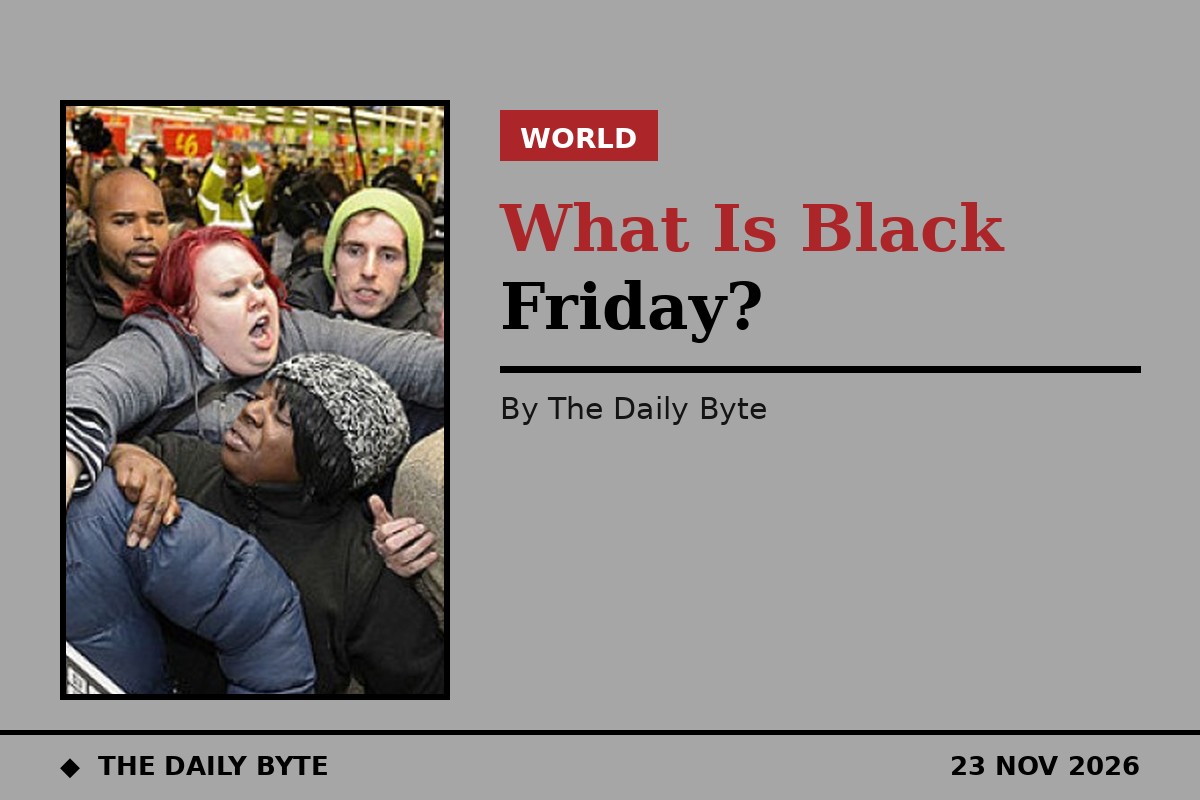
Black Friday is the annual sale day that falls on the Friday after Thanksgiving in the United States, when retailers offer large discounts to mark the start of the Christmas shopping season. In 2026 it falls on Friday 27 November, with Cyber Monday following on Monday 30 November. In the United Kingdom, where Thanksgiving is not celebrated, Black Friday has been adopted as a shopping event in its own right, and most of the deals are now online, with sales running for days or weeks rather than a single day.
The question matters now because Black Friday 2026 is only days away, and this year it arrives with an unusual amount of official attention. In October the Competition and Markets Authority fined three firms a total of 6 million pounds for misleading sales tactics, including false time-limited offers of exactly the kind shoppers will see this week. Trading Standards officers, the Civil Aviation Authority and anti-fraud experts have all issued fresh warnings in November about fake adverts, copycat websites and holiday scams. This explainer sets out what Black Friday is, where the name came from, whether the deals are real, and how to shop without being caught out.
When is Black Friday in 2026?
Black Friday always falls on the day after American Thanksgiving, which is the fourth Thursday in November. In 2026 Thanksgiving is on Thursday 26 November, so Black Friday is Friday 27 November. Cyber Monday, the online-focused follow-on sale, is Monday 30 November, and the travel industry also marks Travel Tuesday on 1 December, when holiday bookings typically surge.
In practice, the single day is now the peak of a much longer event. Amazon's Black Friday Week in the UK runs from 19 to 30 November 2026, and several large retailers, including Currys, AO.com and Boots, switched on their Black Friday promotions on 28 October, a full month before the day itself. That month-long stretch is now normal: retailers compete to start earlier each year, and many of the best-known deals appear well before the Friday in question.
Why is it called Black Friday?
The name has a messier history than most shoppers realise. Its earliest known use in print dates to 1951, when Factory Management and Maintenance magazine complained about workers calling in sick the day after Thanksgiving to extend their holidays, calling the habit Friday-after-Thanksgiving-itis. The phrase then took hold among police officers in Philadelphia in the early 1960s, who used Black Friday to describe the traffic chaos and crowded streets when suburban shoppers poured into the city for holiday shopping and, in some years, for the annual Army-Navy football game. It was not a compliment: officers worked long shifts dealing with jams, accidents and shoplifting.
Philadelphia merchants disliked the gloomy name and tried to rebrand the day as Big Friday, but the attempt failed and the original name stuck. It remained largely a local Philadelphia term until the 1980s, when it spread across the United States. Around the same time retailers began promoting a friendlier explanation: that shops operated at a loss, in the red, for most of the year and only moved into profit, into the black, on the day after Thanksgiving. That story is appealing but it is a later invention, not the origin of the name. There is also an older, unrelated Black Friday: in 1869, financiers Jay Gould and Jim Fisk tried to corner the gold market, causing a financial panic on a Friday that became known by the same name.
How Black Friday works in the UK
Black Friday reached the UK in the early 2010s, when large retailers began importing the American event, and it has grown into one of the biggest shopping occasions of the year. There are two important differences from the United States. First, it is not a public holiday in the UK, so most of the shopping happens online or in the evening. Second, UK consumer law gives shoppers stronger protections than in the United States, which matters when a bargain turns out not to be one.
The event is now dominated by online sales. Retailers use countdown timers, flash deals and limited-stock warnings to create urgency, and social media adverts push offers directly into people's feeds. That urgency is deliberate: the whole point of the day is to make shoppers decide quickly. It is also, as regulators have found, the point at which misleading tactics are most likely to appear.
Are Black Friday deals real?
Some are, and some are not. The honest answer is that a discount only means something if the original price was genuine. Consumer group Which? studied 175 products around the 2025 Black Friday period and found that 83 percent were available at the same price or less at another point in the year. Its tracking around the 2024 sale found that eight in ten deals were the same price or cheaper at other times, and that none of the products it tracked was at its lowest price on Black Friday itself. In other words, the headline saving is often measured against a price the product was rarely sold at, or against a price it will return to within weeks.
That does not mean there are no genuine bargains. Televisions, laptops, headphones and kitchen appliances do see real price cuts, and some retailers now offer price guarantees that refund the difference if the price falls again before Christmas. The practical test is simple: check the price history before buying, using a price-tracking tool, and compare the total cost including delivery with other retailers. If a deal cannot survive that check, it is not a deal.
The 2026 crackdown on fake deals
This is the first Black Friday since the Competition and Markets Authority used its new powers to fine retailers for misleading sale tactics. On 14 October 2026 the CMA announced fines totalling 6 million pounds against three businesses. Wayfair was fined 4.8 million pounds after the CMA found that products advertised through Daily Deals and 24-hour Flash Deals, with messages such as Here Today, Gone Tomorrow and countdown timers, often remained available at the same price or lower after the stated deadline. The time-limited offer was, in the CMA's words, false.
Appliances Direct was fined 1.2 million pounds and ordered to pay around 432,000 pounds in refunds. Its pop-up countdown banners claimed discounts of 10 to 25 pounds were available for a limited time, but the CMA found the same discount codes appeared repeatedly over many days. The company had also automatically opted customers into paid-for extras, such as removing and recycling an old appliance or installing the new one, using pre-ticked boxes. Under consumer law, businesses must get a customer's express agreement before charging for optional extras. Gold's Gym was fined 45,000 pounds and ordered to refund 9,220 pounds to 726 customers because it failed to include the joining fee in the total membership price shown to shoppers, a practice known as drip pricing.
All three businesses admitted breaking the law and agreed to settle early, which earned each a 40 percent reduction in its fine. The penalties were imposed under the Digital Markets, Competition and Consumers Act 2024, which bans falsely claiming that a product is available for a limited time in order to pressure shoppers into an immediate decision, and gives the CMA power to fine companies up to 10 percent of their global turnover. In the 18 months before the announcement, the CMA said it had imposed fines of more than 12 million pounds and secured nearly 2.4 million pounds in refunds using these powers. The message to retailers ahead of Black Friday 2026 is unusually blunt: countdown timers and was prices are now an enforcement priority.
Black Friday scams to watch for in 2026
Fraudsters treat Black Friday as their busiest season too, and this year the warnings have been unusually specific. The Civil Aviation Authority has warned holidaymakers about AI-powered fake adverts offering holiday deals that do not exist, and reminded buyers to check that a travel provider holds an ATOL licence and that a flight-inclusive package is ATOL protected. City of London Police reported that UK customers lost 11 million pounds to holiday fraud in 2024, and that victims can end up paying for flights and accommodation that simply do not exist.
For general shopping, anti-fraud experts warn of phantom retailers, convincing copycat websites that take payment and send nothing, and fake delivery messages asking shoppers to click a link or pay a fee. More than 11.8 million pounds was lost to online shopping fraud between November 2024 and January 2025, and 47 percent of UK adults say it is becoming harder to tell what is genuine online. Trading Standards officers in Staffordshire, issuing their own warning in November, advised shoppers to pause before paying, compare prices, check the website address, go independently to the retailer's official website or app, and never pay by bank transfer or outside a marketplace's payment system. If a deal looks too good to be true, they said, walk away. Suspicious texts about missed deliveries can be forwarded free to 7726, and anyone who thinks they have been scammed should contact their bank immediately, using the number on the back of the card or by calling 159.
Your rights if a Black Friday deal goes wrong
UK shoppers have strong rights that apply to sale items just as they do to full-price goods. When buying online, you usually have 14 days from delivery to cancel most orders, and a further 14 days to send the item back. If an item is faulty, you have 30 days to reject it for a full refund under the Consumer Rights Act, and sale items are included. Paying by credit card for purchases between 100 and 30,000 pounds can give extra protection under Section 75 of the Consumer Credit Act, which makes the card provider jointly responsible if something goes wrong. Since 15 July 2026, most buy now, pay later loans have also been regulated by the Financial Conduct Authority, giving borrowers more protection than before.
None of these rights help if the seller was never real in the first place, which is why the payment method matters: a credit card or a recognised payment system gives you a route to get money back, while a bank transfer to a stranger usually does not. Keep order confirmations, screenshots of the advertised price and any delivery messages, and report suspected fraud to your bank and to Action Fraud.
Frequently asked questions
Is Black Friday a bank holiday in the UK? No. It is an ordinary working day in the UK, and most of the shopping happens online. The date is fixed by the American Thanksgiving calendar, not by any UK holiday.
What is Cyber Monday? It is the online shopping day on the Monday after Black Friday, first named in 2005 when retailers noticed a surge in online sales as people returned to work and shopped from their desks. In 2026 it falls on 30 November, and many retailers now treat the whole weekend through to Monday as one event.
Do prices drop further after Black Friday? Sometimes. January sales and pre-Christmas clearances can bring lower prices on some items, and some retailers offer price guarantees for Black Friday purchases. There is no rule that Black Friday is the cheapest day of the year, and the Which? research shows it often is not.
Is Black Friday only one day? Not any more. The name still refers to the Friday after Thanksgiving, but most UK retailers run Black Friday sales for a week or more, and some start a month early. The deals, and the risks, now stretch across most of November.
Sources: Competition and Markets Authority, CMA fines firms 6 million pounds for misleading sales tactics, published 14 October 2026; Staffordshire County Council Trading Standards Black Friday warning, November 2026; Civil Aviation Authority Black Friday holiday scam warning, November 2026.


