What Is Diabetes? Types, Symptoms and Early Action
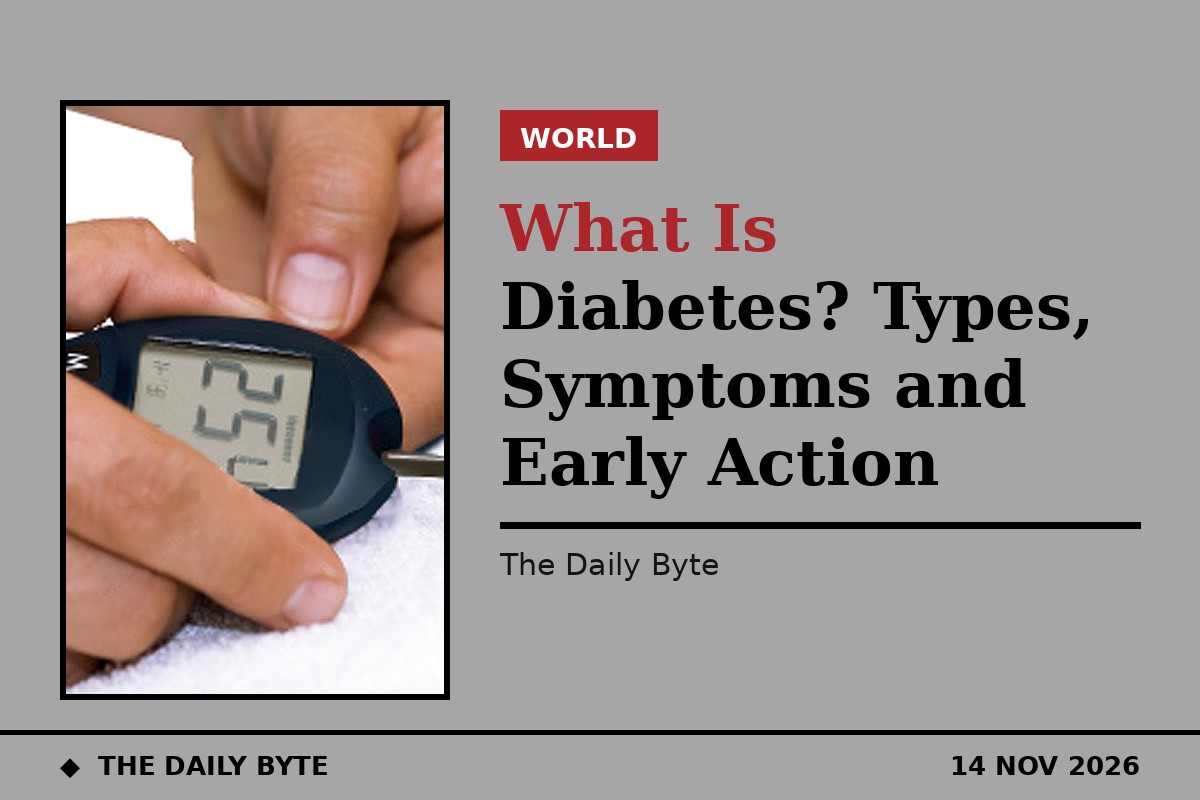
Diabetes is a chronic condition in which the body cannot properly control blood sugar. It develops either when the pancreas does not produce enough insulin, the hormone that regulates blood glucose, or when the body cannot effectively use the insulin it produces. Left uncontrolled, raised blood sugar damages nerves and blood vessels over time. Today, 14 November 2026, is World Diabetes Day, and this year's theme is “Early Action on Diabetes” — a call to find the condition sooner and to reduce the risk of developing it in the first place.
The scale is large and growing. The WHO says the number of people living with diabetes rose from 200 million in 1990 to 830 million in 2022. The IDF estimates that 589 million adults aged 20 to 79 were living with diabetes in 2024, and that more than four in ten of them — about 252 million people — did not know they had it.
What is diabetes?
Diabetes is a chronic disease that occurs when the pancreas does not produce enough insulin or when the body cannot effectively use the insulin it produces, according to the WHO. Insulin is a hormone that regulates blood glucose. When diabetes is uncontrolled, blood glucose stays raised — a state called hyperglycaemia — and over time that damages many of the body's systems, especially the nerves and blood vessels.
What are the types of diabetes?
Type 1 diabetes, previously known as insulin-dependent or juvenile diabetes, is characterised by deficient insulin production and requires daily administration of insulin. In 2025 there were around 9.5 million people with type 1 diabetes, with more than 500,000 new cases diagnosed, and the majority of them live in high-income countries, according to the WHO. Neither its cause nor the means to prevent it are known.
Type 2 diabetes affects how the body uses sugar for energy. It stops the body from using insulin properly, which can lead to high levels of blood sugar if not treated. It is often preventable. Factors that contribute to developing type 2 diabetes include being overweight, not getting enough exercise and genetics. Type 2 was formerly seen only in adults, but it is now occurring increasingly frequently in children.
Gestational diabetes is raised blood sugar during pregnancy, below diabetes levels. Women with it face a higher risk of complications during pregnancy and of type 2 diabetes later, as may their children. Impaired glucose tolerance and impaired fasting glycaemia are intermediate states: blood sugar is above normal but not yet diabetes, and the risk of progressing to type 2 is high. The IDF estimates a further 635 million adults are at high risk of type 2 diabetes.
What are the symptoms of diabetes?
The symptoms of diabetes may occur suddenly. In type 2 diabetes, the symptoms can be mild and may take many years to be noticed, so the disease may be diagnosed several years after it began, after complications have already arisen. The WHO lists the main symptoms as feeling very thirsty, needing to urinate more often than usual, blurred vision, feeling tired and losing weight unintentionally.
Anyone who notices these symptoms should see a healthcare professional. Early diagnosis can be accomplished through relatively inexpensive testing of blood glucose, according to the WHO.
Why is early action the theme for 2026?
World Diabetes Day 2026 begins a new two-year theme, “Early Action on Diabetes”, which runs through 2027. The IDF says the campaign highlights the urgent need to improve early detection, ensure timely access to quality diabetes care and support action to reduce the risk of type 2 diabetes. The WHO stresses earlier diagnosis, access to comprehensive care and reducing diabetes stigma.
The case for acting early is stark. The IDF projects the number of adults living with diabetes will rise from 589 million in 2024 to 853 million by 2050. In 2023 diabetes was the direct cause of 2.0 million deaths, and 44% of diabetes deaths occurred before the age of 70. Diabetes and kidney disease due to diabetes caused around 2.4 million deaths in 2023. Early diagnosis matters because it changes the outcome: the WHO says it can help prevent or delay complications.
What complications can diabetes cause?
Over time, diabetes can damage blood vessels in the heart, eyes, kidneys and nerves. The WHO says it causes blindness, kidney failure, heart attacks, stroke and lower limb amputation, and can cause permanent vision loss. Nerve damage and poor blood flow can cause foot ulcers that may lead to amputation, which is why treatment includes regular foot care, kidney screening and eye exams for retinopathy.
How is diabetes prevented and treated?
Lifestyle changes are the best way to prevent or delay the onset of type 2 diabetes, according to the WHO. To help prevent type 2 diabetes and its complications, people should reach and keep a healthy body weight, stay physically active with at least 150 minutes of moderate exercise each week, eat a healthy diet and avoid sugar and saturated fat, and not smoke tobacco.
Diabetes can be treated with diet, physical activity and medication, and its consequences avoided through regular screening for complications and timely treatment. People with type 1 diabetes need insulin injections for survival. Some people with type 2 diabetes will need medicines to help manage their blood sugar levels, including insulin injections or other medicines such as metformin, sulfonylureas and sodium-glucose co-transporter type 2 (SGLT-2) inhibitors. Along with medicines to lower blood sugar, people with diabetes often need medications to lower their blood pressure and statins to reduce the risk of complications.
What is World Diabetes Day?
World Diabetes Day is observed every year on 14 November. It was established in 1991 by the International Diabetes Federation, with support from the WHO, in response to growing concern about the health and economic impact of diabetes, and it became an official United Nations observance in 2006. The date marks the birthday of Sir Frederick Banting, who co-discovered insulin with Charles Best in 1921.
This article is general information, not medical advice. Anyone who recognises the symptoms described here, or who is concerned about their risk, should speak to a doctor or other healthcare professional.
Frequently asked questions
What is diabetes in simple terms? A chronic condition in which blood sugar stays too high because the body does not make enough insulin or cannot use insulin properly. Over time, uncontrolled blood sugar damages nerves and blood vessels.
What is the difference between type 1 and type 2 diabetes? In type 1 the pancreas produces too little insulin and daily insulin is needed for survival; neither its cause nor the means to prevent it are known. In type 2 the body does not use insulin properly; it accounts for more than 95% of cases and is often preventable.
What are the early symptoms of diabetes? Feeling very thirsty, needing to urinate more often than usual, blurred vision, feeling tired and losing weight unintentionally. In type 2 the symptoms can be mild and take years to be noticed.
Can diabetes be prevented? Type 1 cannot currently be prevented. Type 2 often can: the WHO recommends a healthy diet, at least 150 minutes of moderate exercise a week, a healthy body weight and not smoking.
What is the theme of World Diabetes Day 2026? “Early Action on Diabetes” for 2026-27, focusing on early diagnosis, timely access to care and reducing the risk of type 2 diabetes. World Diabetes Day is observed every year on 14 November.
Sources: World Health Organization and International Diabetes Federation.


