What Is Dual Nationality? UK Rules Explained
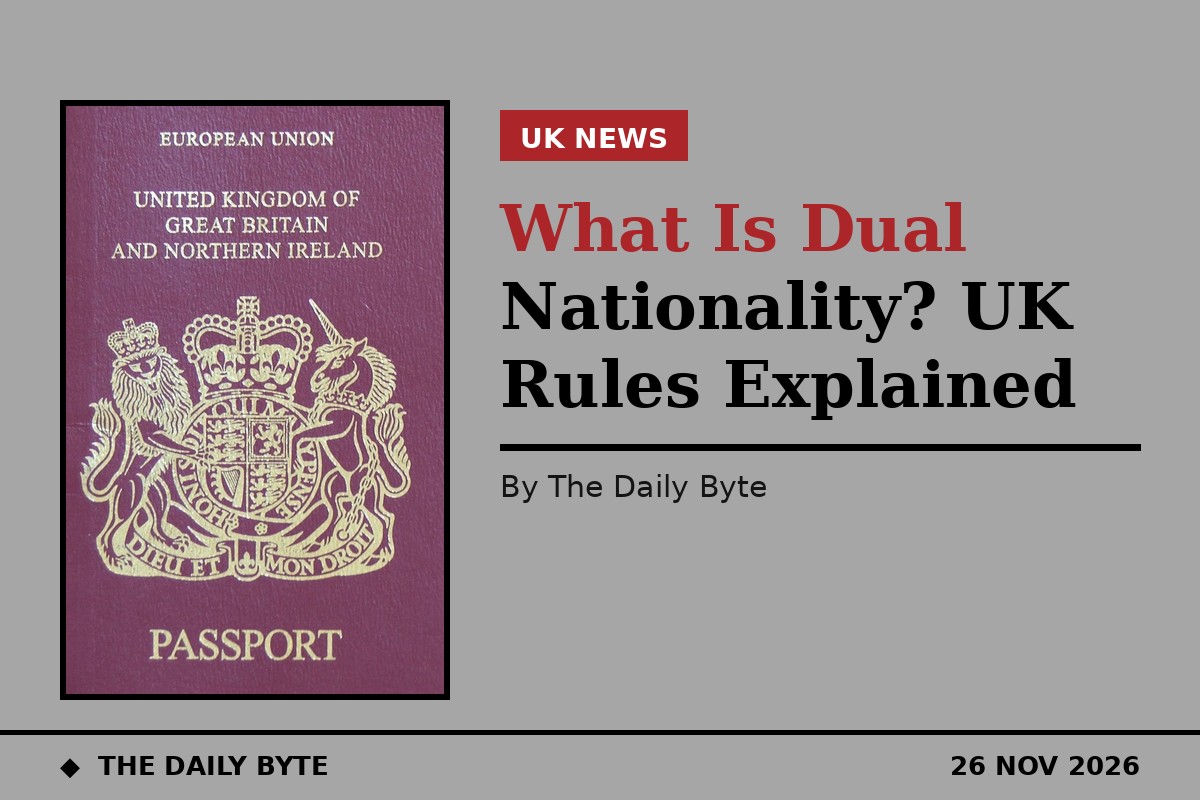
Yes, the UK allows dual nationality. You can be a British citizen and a citizen of another country at the same time, and there is no separate application for dual citizenship itself. You become British through one of the normal routes, such as naturalisation, and you keep your other nationality, so long as the other country allows it. That last condition is the one that catches people out: many countries do not accept dual citizenship, and some will take your original citizenship away automatically if you naturalise elsewhere.
GOV.UK puts the UK position plainly: "Dual citizenship (also known as dual nationality) is allowed in the UK. This means you can be a British citizen and also a citizen of other countries." There is no rule against holding more than one nationality in the United Kingdom, and the UK sets no limit on how many nationalities you can hold. This guide explains how dual nationality works, how you get it, which countries say no, and what changes when you travel.
What is dual nationality?
Dual nationality, also called dual citizenship, means you are legally a citizen of two countries at the same time. You hold two passports, you owe allegiance to both countries, and each country treats you as its own citizen while you are there. That sounds straightforward, but the two sets of laws can pull in different directions, especially on travel, military service, tax and consular help.
Under the British Nationality Act 1981, a British citizen does not lose British citizenship by acquiring another nationality. The position has been the same for decades: the UK has never required people to choose between British citizenship and a newly acquired foreign citizenship. The reverse is also true. If you are already British and later become a citizen of another country, your British citizenship stays intact.
There are six types of British nationality, but only British citizenship carries the automatic right to live and work in the UK. The other categories, such as British overseas territories citizen or British national (overseas), carry fewer rights and do not automatically include the right to settle in the UK. When people talk about dual nationality in the UK, they almost always mean British citizenship plus another country's citizenship.
How do you become a dual national?
There is no form called a dual citizenship application. You become a dual national by becoming a British citizen through one of the ordinary routes while already holding another nationality, or by acquiring a foreign nationality after you are already British. The main routes to British citizenship are birth, descent, naturalisation and registration.
If you were born in the UK before 1 January 1983, you are almost certainly a British citizen automatically. For anyone born in the UK on or after 1 January 1983, the rules changed: you became a British citizen at birth only if at least one parent was a British citizen or was settled in the UK, meaning they held indefinite leave to remain or a similar permanent status.
If you were born outside the UK to a British parent, you may be a British citizen by descent. The key limit is that British citizenship by descent normally passes down only one generation born overseas, so children born abroad to a parent who is British by descent do not usually inherit it automatically.
Naturalisation is the standard route for adults who have moved to the UK and lived here lawfully. If you are not married to a British citizen, you need to have lived in the UK for at least five years and held indefinite leave to remain or settled status for at least 12 months before applying. If you are married to, or in a civil partnership with, a British citizen, you can apply under the three-year route, and you only need to be free from immigration time restrictions on the date you apply rather than having held settled status for a full year. You must also pass a good character assessment, show English language ability and pass the Life in the UK test.
Registration is available to certain people who already have a connection to the UK, including some children and people with other forms of British nationality. Which route applies depends on your own circumstances, and GOV.UK has a checker for how to apply in your situation.
Applying is not cheap, and the fee is not refunded if you are refused. Under the Home Office fees in force from 8 April 2026, adult naturalisation costs £1,839 in total, made up of a £1,709 application fee and a £130 citizenship ceremony fee. The Life in the UK test and English language test cost extra. Fees change, so check the current Home Office immigration and nationality fees table on GOV.UK before you apply.
Which countries do not allow dual nationality?
This is the part of dual nationality that the UK cannot decide for you. GOV.UK warns: "Many countries do not accept dual citizenship. Check with the country's consulate or embassy in the UK to find out about that country's laws on dual nationality." If your other country forbids it, you may be forced to give up that citizenship when you become British, or you may lose it automatically by operation of that country's law, with no form to fill in and no officer to persuade.
India is the best-known example. The Constitution of India does not allow a person to hold Indian citizenship and the citizenship of a foreign country at the same time. Under Article 9 of the Constitution and section 9 of the Citizenship Act 1955, an Indian citizen who voluntarily acquires another country's citizenship automatically stops being an Indian citizen. India instead offers the Overseas Citizen of India (OCI) card, which is a lifelong multiple-entry visa with some economic and educational rights, not citizenship. As the Consulate General of India puts it, holding an OCI card "in no way entitles its holders to claim the status of dual citizenship". An OCI cardholder cannot vote in Indian elections, cannot hold public office and holds no Indian passport.
Other countries take different approaches again. Some require a formal renunciation before you naturalise elsewhere. Some allow dual nationality only in limited cases, for example for children born with two nationalities or for citizens who acquire another nationality through marriage. The only safe approach is to check the other country's rules with its own embassy or consulate before you apply for British citizenship, because the consequence of getting it wrong can be the automatic loss of the nationality you started with.
What rights does a dual national have in the UK?
A dual national holds the same rights as any other British citizen. You have the right of abode in the UK, which means you can live and work here without any immigration restrictions. You can vote in UK elections as a British citizen, apply for a British passport, and use public services on the same terms as any other citizen.
At the same time, your other country of citizenship will treat you as its citizen too. That can mean obligations as well as rights: some countries require their citizens to do military service, pay tax on worldwide income, or enter and leave on that country's passport. Holding two nationalities does not let you pick whichever country's rules suit you at the time. Each government applies its own laws to you when you are on its territory.
Travelling as a dual national
Travel is where dual nationality causes the most practical confusion, and GOV.UK sets out the rules clearly. As a dual national, you can travel to the UK using either a valid UK passport, a valid Irish passport, or a certificate of entitlement. You cannot get an ETA if you are a British or Irish dual citizen, because British and Irish citizens do not need one.
If your UK passport has expired, your airline may still allow you to travel if you have both an expired UK passport issued in 1989 or later and a valid passport for one of the nationalities that can get an ETA, with matching personal details on both passports. It is the carrier's decision whether to allow you to travel, so check with the airline before you fly. If you previously had a UK passport, you can apply for an emergency travel document.
There is a separate route for people who got British citizenship after settling in the UK under the EU Settlement Scheme. You can travel to the UK using a valid passport of your other nationality or a national identity card from the EU, Norway, Iceland, Liechtenstein or Switzerland, but before you travel you need to view your eVisa to check your pre-settled or settled status and update your UKVI account if your passport or identity card has changed.
The Home Office does not hold records of everyone who has British citizenship automatically, so before you travel to the UK it is your responsibility to check whether you have British citizenship. If you are unsure, check before you book, not at the airport.
Dual nationality and diplomatic help
The biggest practical limit on dual nationality is consular help. As a dual national, you cannot get diplomatic help from the British government when you are in the other country where you hold citizenship. GOV.UK gives the example of a person holding both British and French citizenship: they cannot get diplomatic help from the UK when they are in France. The same applies in reverse: France would not help them in the UK.
In a third country, where you hold neither nationality, you can normally seek help from either government. Even there, if the country you are in considers you primarily its own national, British help may be limited. This matters most in a crisis, an arrest or a medical emergency, so dual nationals should know which passport they used to enter a country and which government can actually help them there.
Dual nationality, marriage and children
Marrying a British citizen does not make you British. GOV.UK is explicit: "You do not automatically become a British citizen when you marry a person from the UK. You need to apply as the spouse of a British citizen." The spouse route to naturalisation is shorter, three years instead of five, but it is still an application with residence, language, good character and Life in the UK test requirements.
Children are a separate question. In some countries, a married person is automatically counted as having their partner's nationality, and children may automatically have a parent's nationality even if they were born abroad. That means a child can be born a dual national without anyone applying for anything. Whether that happens depends on the other country's laws, so check with that country's consulate or high commission in the UK.
Dual nationality and tax
Citizenship and tax residence are different things. Holding a second passport does not by itself change your UK tax residence. HMRC decides tax residence under the Statutory Residence Test, which looks at where you live and how much time you spend in the UK, not at which passports you hold. A second nationality can still affect your tax position in the other country, and some countries tax their citizens on worldwide income wherever they live, so take advice on the other country's rules before you assume nothing changes.
What to check before you apply
Dual nationality is straightforward on the UK side and complicated on the other side. Before you apply for British citizenship, check the other country's rules with its embassy or consulate, confirm whether you would lose that citizenship automatically, and make sure your passports and travel documents are in order. Check the current fee on GOV.UK, and remember that rules change: this guide reflects the position on 26 November 2026, and GOV.UK is the official source to check before you act. This guide is general information, not immigration advice.
Frequently asked questions
Can I hold three nationalities?
Yes, as far as the UK is concerned. The UK sets no limit on the number of nationalities you can hold. Whether you can actually keep all three depends on the other countries' rules, and some of them may require you to give one up.
Do I lose British citizenship if I become a citizen of another country?
No. Under the British Nationality Act 1981, a British citizen does not stop being British by acquiring another citizenship. The risk runs the other way: the other country may take its citizenship away from you.
Do I need to tell the Home Office that I have another nationality?
There is no dual citizenship application and no requirement to register a second nationality with the Home Office. You simply apply for British citizenship through the normal route if you do not already hold it.
Can the British embassy help me in my other country of citizenship?
No. As a dual national you cannot get diplomatic help from the British government while you are in the other country where you hold citizenship.
Does marrying a British citizen make me British?
No. You need to apply as the spouse of a British citizen, and you must meet the residence, language, good character and Life in the UK test requirements.
Is an OCI card the same as Indian dual citizenship?
No. India does not allow dual citizenship. An OCI card is a lifelong multiple-entry visa, not Indian citizenship, and it carries no vote, no Indian passport and no right to hold public office.
*Sources: GOV.UK, "Dual citizenship"; Consulate General of India, San Francisco, "Notice regarding Dual Citizenship". Figures are those published on GOV.UK and were correct at the time of writing, 26 November 2026. Rules change, so check the official GOV.UK page before you act. This guide is general information, not immigration advice.*


