What Is ESTA? US Travel Authorisation Explained
ESTA is the online travel authorisation that British citizens and other eligible travellers must get before visiting the United States for a short trip. It stands for Electronic System for Travel Authorization, it is run by US Customs and Border Protection (CBP), and it covers tourism, short business trips and transit for stays of up to 90 days. An approved ESTA is not a visa, and it does not guarantee entry: a CBP officer makes the final decision when you arrive.
If you hold a full British citizen passport and you are travelling to the USA for a holiday or a short business trip, you almost certainly need an approved ESTA before you board your flight, ship or, in many cases, before crossing a land border. Airlines check it before boarding, and without it you can be refused travel. This guide explains who needs one, what it costs, how long it lasts, how to apply, and the mistakes that catch travellers out.
What is ESTA?
ESTA is an automated online screening system operated by CBP, part of the US Department of Homeland Security. It checks whether a traveller is eligible to enter the United States under the Visa Waiver Program, the scheme that lets citizens of more than 40 partner countries visit the USA without a visa for short stays. The UK is one of those countries.
You apply online, answer questions about your identity, travel plans and background, and pay a fee by card. Most applications are decided within minutes, although CBP says a decision can take up to 72 hours, so the official advice is to apply as soon as you start planning your trip and at least 72 hours before you travel.
An ESTA is linked electronically to your passport. There is nothing to print, although many travellers keep a copy of their approval reference as a precaution. When you check in, the airline can see from your passport details whether an approved ESTA is in place.
Who needs an ESTA?
You need an ESTA if you are a citizen of a Visa Waiver Program country, including the UK, and you are travelling to the United States by air, sea or land for tourism, business or transit, for a stay of up to 90 days. Every traveller needs their own ESTA, including babies and children. A family cannot share one authorisation.
You also need an ESTA if you are only transiting through a US airport on your way to another country. GOV.UK travel advice for the USA states that to enter or transit through the US you must have either an ESTA or a visa, and that US authorities enforce entry rules strictly.
You do not need an ESTA if you already hold a valid US visa for your trip, or if you are a US citizen or lawful permanent resident. If you are unsure which document you need, GOV.UK advises contacting the US Embassy or a US consulate in the UK.
How long does an ESTA last?
An approved ESTA is valid for two years from the date it is approved, or until your passport expires, whichever comes first. During that period you can make multiple trips to the United States, provided each stay is no longer than 90 days.
If you get a new passport, you must apply for a new ESTA, because the authorisation is tied to the passport you applied with. The same applies if you change your name, gender or citizenship, or if the answers to the eligibility questions on your application change. Always check the status of your ESTA before you travel, using the official CBP website, if you are unsure whether it is still valid.
The 90-day limit applies to each visit. Overstaying is treated seriously by US authorities and can affect your ability to travel to the USA in future. If you think you may need longer than 90 days, you should apply for a visa instead.
How much does an ESTA cost?
The official ESTA fee is $40.62 per person, the rate in force from 16 October 2026 after an inflation adjustment. The fee is paid online by card when you apply. It is made up of a $10.62 processing fee, which everyone pays, and a further $30 authorisation fee, made up of a $17 travel promotion fee and a $13 general fund fee, which is charged only if your application is approved. If your application is refused, you pay only the $10.62 processing fee.
Fees have changed more than once in recent years, so the figure on the official CBP website is the one that counts. Check it before you pay, and be wary of any website charging much more: the official site is the only place that charges the real fee, and third-party sites cannot speed up your application.
How to apply for an ESTA
Apply only through the official CBP website at esta.cbp.dhs.gov, or through the official ESTA Mobile app, which CBP links from the ESTA homepage. Type the address yourself rather than clicking on an advert in search results. The form takes around 20 to 25 minutes to complete.
- Prepare your documents. You need a valid biometric e-passport, your travel details if you have them, and a card for payment. You do not need to have booked your travel before applying.
- Complete the form. You will be asked for personal details, passport information, contact details and travel plans, followed by a series of eligibility and security questions. Answer them honestly: a false answer can lead to refusal or problems at the border.
- Pay the fee. Payment is made online by card at the point of application.
- Wait for the decision. Many applications are approved within minutes. Some are referred for further checks and can take up to 72 hours.
- Check your status. Use the Check ESTA Status function on the official website, entering your passport details, to confirm the approval before you travel.
If your application is approved, you do not need to do anything else before travelling, although it is sensible to check that the passport you travel with is the same one on the ESTA. If it is refused, you will need to apply for a visa at the US Embassy, which involves an interview and takes longer, so applying early matters.
What can you not do on an ESTA?
An ESTA covers tourism, visiting friends and family, and short business activities such as attending meetings, conferences or trade events. It does not cover work, long-term study, or moving to the United States. You cannot take up employment in the USA on an ESTA, and you cannot study on a full-time course. For those purposes you need the relevant visa.
An ESTA also does not allow a stay of more than 90 days, and it cannot be extended from inside the USA in the way some visas can. If your plans change and you need to stay longer, work or study, you should seek advice from the US Embassy before you travel rather than hoping to sort it out on arrival.
Who cannot use ESTA and needs a visa instead?
Not everyone is eligible for the Visa Waiver Program. GOV.UK advises that you cannot normally apply for an ESTA if you have been in Iran, Iraq, Libya, North Korea, Somalia, Sudan, Syria or Yemen on or after March 2011, or if you travelled to or were in Cuba on or after 12 January 2021. There are some limited exceptions, but in most such cases you will need to apply for a visa.
You are also likely to need a visa if you have a criminal record or a past arrest, a previous visa refusal or overstay, or a serious communicable disease. The eligibility questions on the ESTA form cover these points, and the help section of the official ESTA website explains which circumstances affect eligibility. If you are in any doubt, the safest step is to check with the US Embassy before booking non-refundable travel.
What happens when you arrive in the USA?
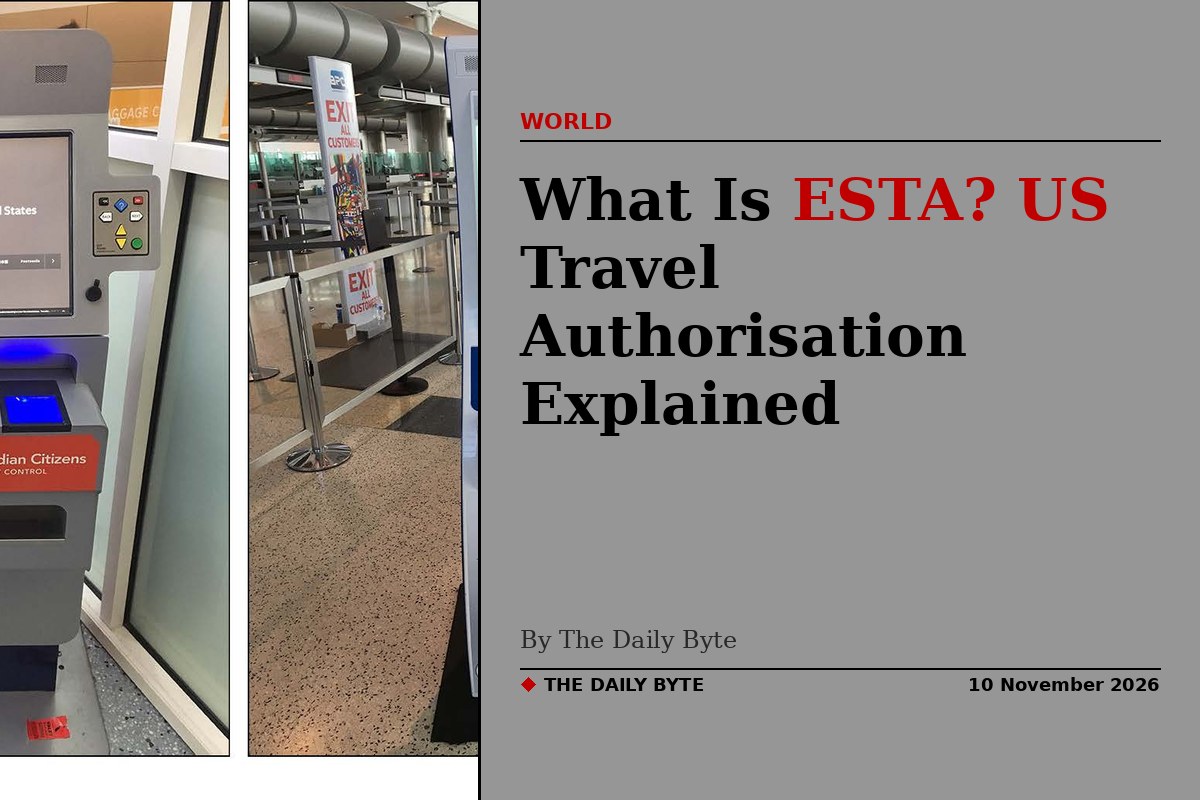
When you land, you go through US immigration control, where a CBP officer checks your passport and your ESTA, and may ask about the purpose and length of your visit. Many airports use Automated Passport Control kiosks, where travellers scan their passport, answer questions on screen and have their photograph taken before seeing an officer.
An approved ESTA does not guarantee that you will be admitted. The officer at the port of entry makes the final decision, and GOV.UK warns that travellers who do not have the correct immigration status, or who breach the terms of their entry, risk being detained, refused entry or removed. Your passport must be valid for the length of your planned stay.
ESTA scams: how to avoid them
ESTA scams are common because the official process is simple and cheap. Unofficial websites copy the look of the official site, charge far more than the official fee, and sometimes sell your personal data. Some appear above the official site in search results as paid adverts.
Protect yourself by typing esta.cbp.dhs.gov into your browser yourself, and checking that the address ends in .gov. No third party can guarantee approval, speed up a decision, or offer a cheaper official fee. If a site charges more than the official fee, it is not the official site. The same warning applies to the mobile app: download the official ESTA Mobile app from CBP, not a lookalike.
Frequently asked questions
Do I need an ESTA for a connecting flight through the USA? Yes. Travellers transiting through the United States need an approved ESTA or a visa even if they do not leave the airport.
Does my child need an ESTA? Yes. Every traveller, including babies, needs their own ESTA or visa.
Can I apply for an ESTA without booked flights? Yes. You can apply before you book, and CBP recommends applying as soon as you start planning your trip.
What should I do if my ESTA is refused? You will need to apply for a visa at the US Embassy in London. Allow plenty of time, as the visa process includes an interview.
Is ESTA a visa? No. It is a travel authorisation under the Visa Waiver Program for short visits of up to 90 days. If you need to work, study long-term or stay longer, you need a visa.
Rules can change without notice, so always check the official CBP website and the GOV.UK travel advice for the USA before you travel.


