What Is Gift Aid in the UK?
Gift Aid is a UK tax relief scheme that lets charities and community amateur sports clubs claim extra money on your donation, at no extra cost to you. For every £1 you donate through Gift Aid, the charity can claim an extra 25p from HM Revenue and Customs — so a £10 donation becomes £12.50, and a £100 donation becomes £125. You do not pay a penny more, and the charity does not have to ask you for anything beyond a short declaration. It is one of the most widely used tax reliefs in the UK, and also one of the most misunderstood: many people tick the box without knowing what it means, and many others never tick it at all.
GOV.UK states the rule in one sentence: donating through Gift Aid means charities and community amateur sports clubs can claim an extra 25p for every £1 you give, and it will not cost you any extra. Behind that sentence sits a simple idea. When you donate from income you have already paid tax on, the charity is allowed to reclaim the basic-rate tax you paid on that money. This guide explains how that works, who can use Gift Aid, what you need to do, what happens if you are a higher-rate taxpayer, and the traps to avoid.
How does Gift Aid work?
Gift Aid works by treating your donation as if it had been made before basic-rate Income Tax was deducted. The basic rate of Income Tax is 20%, so to give £100 from your after-tax income you would have needed to earn £125 before tax — because 20% of £125 is £25. The charity claims that £25 back from HMRC, and your £100 donation is worth £125 to the charity. That is why the uplift is 25p for every £1, even though the tax rate being reclaimed is 20%: the 25p is 20% of the grossed-up amount, not of the donation itself.
The extra money comes from HMRC, not from you. You give £100 and the charity receives £125. You do not pay more tax, you do not lose any of your donation to fees, and the charity does not have to wait for you to do anything else. The only thing the charity needs from you is a Gift Aid declaration, which is your confirmation that you are a UK taxpayer and that you have paid enough tax to cover the amount the charity will reclaim.
| You donate | Charity claims from HMRC | Charity receives in total |
|---|---|---|
| £10 | £2.50 | £12.50 |
| £20 | £5.00 | £25.00 |
| £50 | £12.50 | £62.50 |
| £100 | £25.00 | £125.00 |
| £1,000 | £250.00 | £1,250.00 |
The scheme covers donations to charities and to community amateur sports clubs, known as CASCs. The organisation must have an HMRC charity reference number, and if you are unsure whether it does, GOV.UK advises asking the charity directly. A donation to an organisation that is not recognised by HMRC as a charity for tax purposes cannot be Gift Aided, however good its cause.
Who can use Gift Aid?
You can use Gift Aid if you are a UK taxpayer and you have paid enough Income Tax or Capital Gains Tax in the tax year to cover the amount the charity will reclaim on all of your donations. The tax year runs from 6 April to 5 April. GOV.UK gives a practical rule for this: your donations will qualify as long as they are not more than four times what you have paid in tax in that tax year. So if you paid £100 in tax during the year, you can Gift Aid donations of up to £400, because the charity would reclaim £100 on those donations. If you paid no tax at all — for example, because your income was below the personal allowance — you should not sign a Gift Aid declaration.
That limit matters because the tax being reclaimed is your tax. If a charity gets back more tax than you have actually paid, HMRC may ask you to pay more tax to cover the difference. GOV.UK is explicit about this: you should only sign a Gift Aid declaration if you have paid enough tax to cover what the charity is going to reclaim, and you must tell the charities you support if you stop paying enough tax — for example, if you retire, lose your job or your income falls. The British Red Cross, which explains the scheme to its own donors, makes the same point: you are eligible only if you have paid enough Income Tax or Capital Gains Tax in the current tax year to cover the Gift Aid claimed on all of your charitable donations.
You must give a separate declaration to each charity you want to donate to through Gift Aid. A declaration to one charity does not cover donations to another. The declaration can cover your current and future donations, and it can also cover all donations you made to that charity in the last four years — so if you have been giving to the same charity for years without ticking the box, it is worth asking whether those past donations can be included.
How do you make a Gift Aid declaration?
Making a declaration is usually the easiest part of the whole process. Most of the time it is a single tick box. When you donate online, you tick the Gift Aid box and confirm that you are a UK taxpayer. When you donate by phone or in person, the charity will ask you to complete and sign a Gift Aid declaration form. The form asks for your name and address, and for your confirmation that you pay enough UK tax to cover the claim. Once you have made a declaration, the charity will normally apply Gift Aid to eligible donations you make to it in the future, without asking you again.
There are a few things to get right. First, the name and address on the declaration must be yours — the charity needs them so HMRC can match the claim to a real taxpayer. Second, tell the charity if your circumstances change, especially if you stop paying tax or move house. Third, keep a note of which charities you have given declarations to, because the four-times-tax limit applies across all of your donations added together, not per charity. If you Gift Aid generously to five charities and your total tax bill is small, you could still end up owing HMRC money.
What if you are a higher-rate taxpayer?
If you pay tax at the higher rate of 40% or the additional rate of 45%, Gift Aid gives you a personal benefit as well as benefiting the charity. The charity still claims back the basic-rate tax, turning your £100 into £125. But you can also claim back the difference between the tax you paid on the donation and what the charity got back. GOV.UK gives this example: you donate £100 to charity, they claim Gift Aid to make your donation £125, and if you pay 40% tax you can personally claim back £25.00 — that is 20% of £125. In effect, a £100 donation from a 40% taxpayer costs £75 after the personal reclaim, while the charity still receives £125.
You claim that extra relief through your Self Assessment tax return, or by contacting HMRC and asking them to amend your tax code. If you do not fill in a tax return, you can claim £5,000 or less by phone and more than £5,000 in writing, telling HMRC how much you donated. If you are claiming tax relief on donations of £10,000 or more, you also need to tell HMRC the date you made the donation and who you made it to. The same rules apply if you live in Scotland, where the tax bands differ — GOV.UK confirms that higher-rate taxpayers in Scotland claim in the same way.
There is also a way to get the relief sooner. In your Self Assessment return you normally only report things from the previous tax year, but for Gift Aid you can also claim tax relief on donations made in the current tax year, up to the date you send your return, if you want the relief sooner or if you will not pay higher-rate tax in the current year but did in the previous year. You cannot do this if you miss the Self Assessment deadline — 31 January if you file online, or 31 October if you file by post — or if your donations from both tax years together are more than four times what you paid in tax in the previous year.
What about donating through your pay?
If your employer or pension provider offers a Payroll Giving scheme, you can donate straight from your wages or pension before Income Tax is taken off. The donation is deducted from your gross pay, so you do not pay any Income Tax on the amount you donate — although you still pay National Insurance contributions on it. Because the tax relief is already built into the payroll deduction, you cannot also claim Gift Aid on the same donation: the two schemes are alternatives, not additions. You also cannot donate to a community amateur sports club through Payroll Giving, only to charities.
Payroll Giving has one advantage over Gift Aid for higher-rate taxpayers: with Gift Aid, you have to claim the extra relief yourself through a tax return or a call to HMRC, whereas with Payroll Giving the full tax relief happens automatically in your pay packet. With Payroll Giving, GOV.UK notes, you do not pay the difference between the higher and basic rate of tax on your donation — it is handled for you. Which scheme is better depends on your circumstances, and many people use both: Gift Aid for one-off online donations, and Payroll Giving for a regular monthly gift.
What does not qualify for Gift Aid?
GOV.UK says charities can claim Gift Aid on most donations, but some payments do not qualify. The general rule is that a payment does not qualify where you receive something of value in return. Buying raffle tickets, paying for goods or services at a charity event, or paying a membership fee that gives you benefits are not donations, and Gift Aid cannot be claimed on them. A payment made on behalf of someone else — for example, collecting sponsorship money from friends who have not made their own declarations — does not qualify either, unless each donor has made a declaration of their own.
The charity is responsible for checking that a donation qualifies before it claims, but the donor is responsible for the declaration being true. If you are unsure whether a payment qualifies, ask the charity before you tick the box. A wrongly claimed donation can leave the charity having to repay HMRC, and can leave you with a tax bill if the reclaim exceeded the tax you paid.
Gift Aid in charity shops and on small cash donations
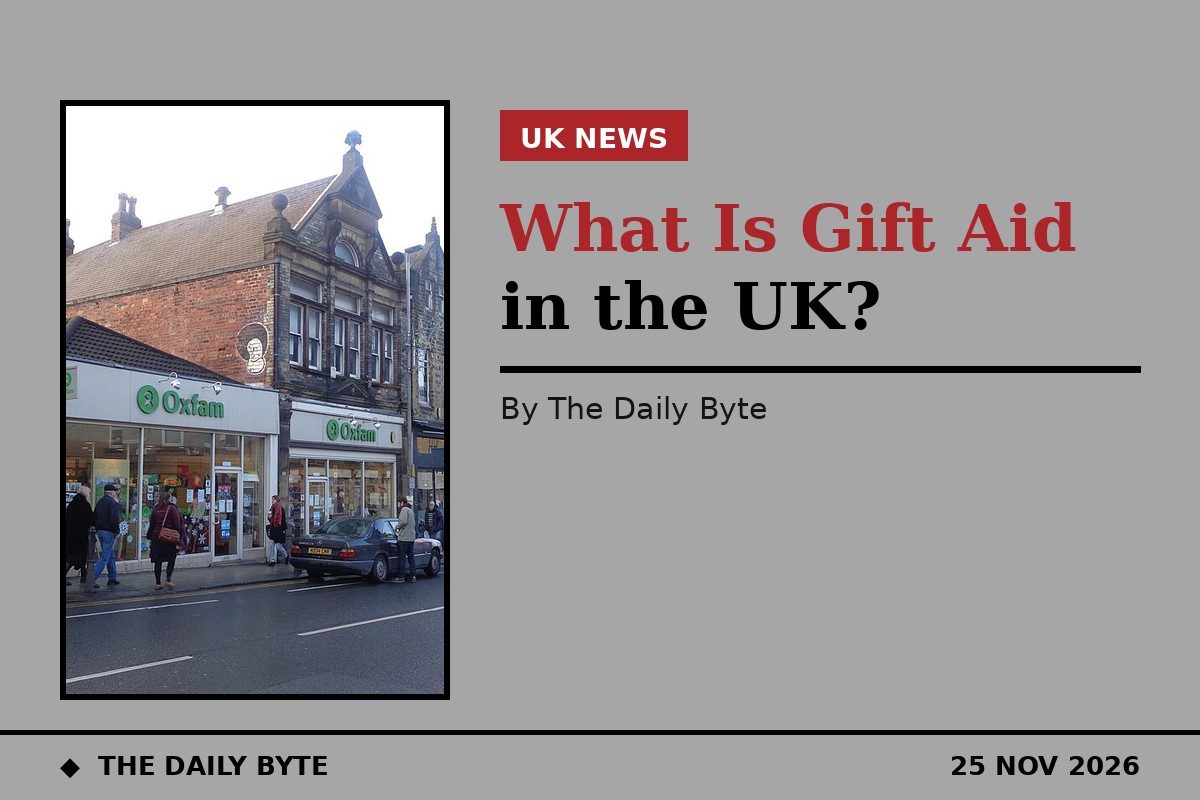
Gift Aid also applies when you donate goods to a charity shop. If you sign up for the shop's Gift Aid scheme, the charity can claim Gift Aid on the proceeds when your donated items are sold. The British Red Cross explains that when donated items are sold through its retail Gift Aid process, it can claim on the sale proceeds — so a bag of clothes you no longer want can be worth 25% more to the charity than the price on the tag. The same principle applies to other charities with shops: ask in store, and they will explain their scheme and give you a card or a number to use when you drop items off.
There is also a separate scheme for small cash donations where no declaration is practical. The Gift Aid Small Donations Scheme, known as GASDS, was introduced in April 2013 and lets eligible charities and community amateur sports clubs claim a Gift Aid-style top-up on small cash and contactless donations of £30 or less — the coins in a collection tin, the notes in a bucket, or the contactless tap at a church service — without collecting a declaration from each donor. A charity can claim on up to £8,000 of small donations per tax year, giving a maximum top-up of £2,000, and the GASDS claim cannot be more than ten times the charity's Gift Aid claim in the same tax year. The charity must also have claimed Gift Aid in that tax year, and claims must be made within two years of the end of the tax year in which the donations were collected. GASDS is a top-up for the charity, not a tax relief for the donor — you cannot claim anything personally on a GASDS donation — but it is the reason a charity can benefit from the loose change in a collection plate.
Gift Aid — key facts
| Item | Detail |
|---|---|
| What it is | UK tax relief letting charities and CASCs reclaim basic-rate tax on donations |
| Uplift | 25p for every £1 donated; £100 becomes £125 |
| Cost to you | Nothing extra |
| Who can use it | UK taxpayers who have paid enough Income Tax or Capital Gains Tax |
| The limit | Donations must not be more than 4 times the tax you paid in the tax year |
| Declaration | One per charity; can cover the last 4 years and future donations |
| Higher-rate taxpayers | Can reclaim the difference via Self Assessment or a tax code change |
| Payroll Giving | Donations before Income Tax; no Gift Aid on the same gift |
| Small donations | GASDS: £30 or less, up to £8,000 a year, £2,000 maximum top-up |
Frequently asked questions
Does Gift Aid cost me anything? No. The extra 25p per £1 comes from HMRC, not from you. Your donation stays the same size; the charity simply receives more.
Can I use Gift Aid if I do not pay tax? No. You should only sign a Gift Aid declaration if you have paid enough Income Tax or Capital Gains Tax to cover what the charity will reclaim. If you pay no tax, ticking the box could leave you owing HMRC money.
Can I Gift Aid donations I made years ago? A declaration can cover donations made to that charity in the last four years, as well as current and future donations. Ask the charity whether your past donations can be included.
Do I need a separate declaration for each charity? Yes. You must give a declaration to each charity you want to donate to through Gift Aid. A declaration to one charity does not cover another.
What happens if I stop paying enough tax? Tell the charities you support straight away. If a charity reclaims more tax than you have paid, HMRC may ask you to pay the difference.
Is Gift Aid the same as Payroll Giving? No. Payroll Giving takes donations from your pay before Income Tax, so the relief is automatic. Gift Aid is claimed by the charity after you donate, and higher-rate taxpayers claim their extra relief separately. You cannot use both on the same donation.
Tax rules change, so check the official GOV.UK page before making a declaration or claiming relief, and take professional advice if your tax position is complicated. This guide is general information, not personal tax advice.