What Is the International Court of Justice (ICJ)?
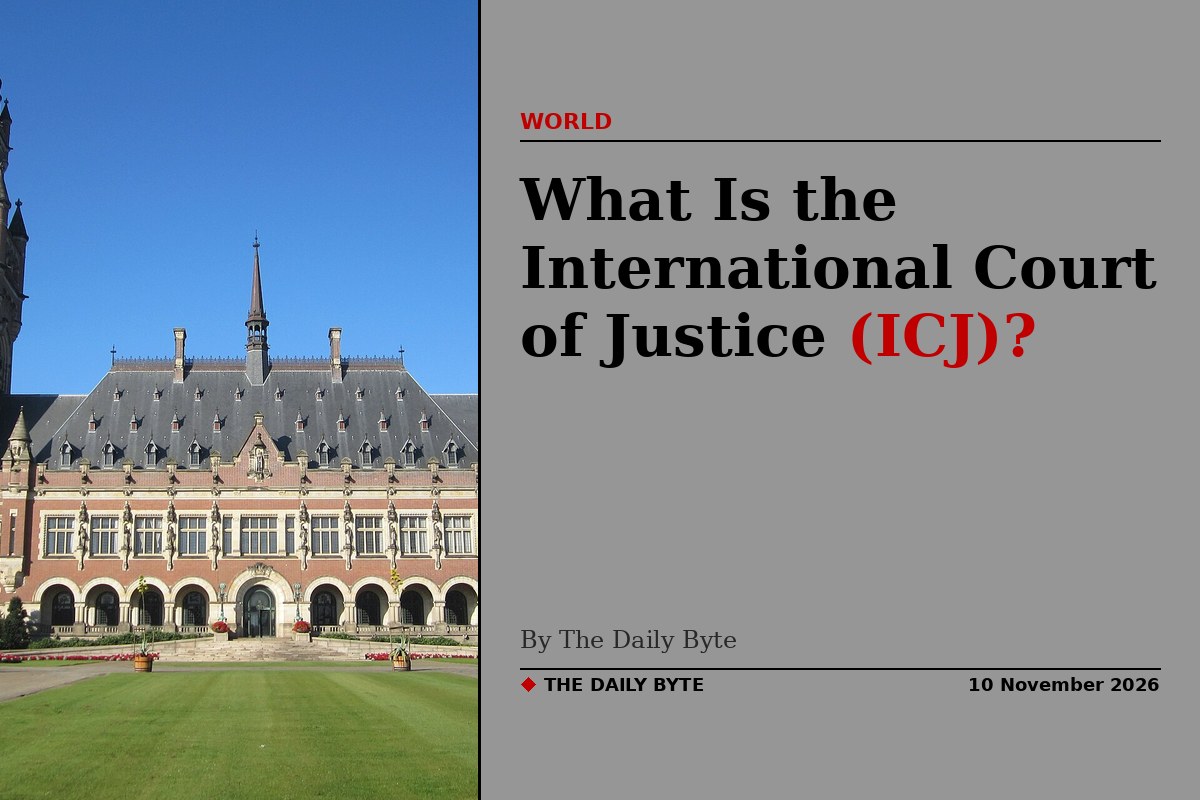
The International Court of Justice (ICJ), often called the World Court, is the United Nations' principal judicial organ. It settles legal disputes between countries and gives advisory opinions on legal questions referred to it by United Nations bodies. It is the only international court that deals with disputes between states.
Where is the ICJ and who sits on it?
The Court was established by the United Nations Charter in June 1945 and began its work in April 1946. Its seat is the Peace Palace in The Hague in the Netherlands, making it the only principal organ of the United Nations not based in New York. It has 15 judges, elected for nine-year terms by the General Assembly and the Security Council. Its official languages are English and French.
What cases does the ICJ hear?
The Court hears two kinds of cases. Contentious cases are legal disputes between states, and only states can be parties to them. After written pleadings and public hearings, the judges deliberate in private and deliver a judgment. Judgments are final and binding on the parties, with no appeal. In advisory proceedings, United Nations organs and agencies ask the Court for an opinion; those opinions are advisory and not binding.
What the ICJ is not
The ICJ is not a criminal court. It cannot try individuals accused of war crimes or crimes against humanity; that role belongs to the International Criminal Court, a separate treaty body outside the United Nations system. The ICJ also cannot take up a dispute on its own initiative: it acts only when states bring a case to it. Under the United Nations Charter, states undertake to comply with its judgments, and if one does not, the other party may take the matter to the Security Council.


