What Is the Mansion Tax? £2m Homes Charge Explained
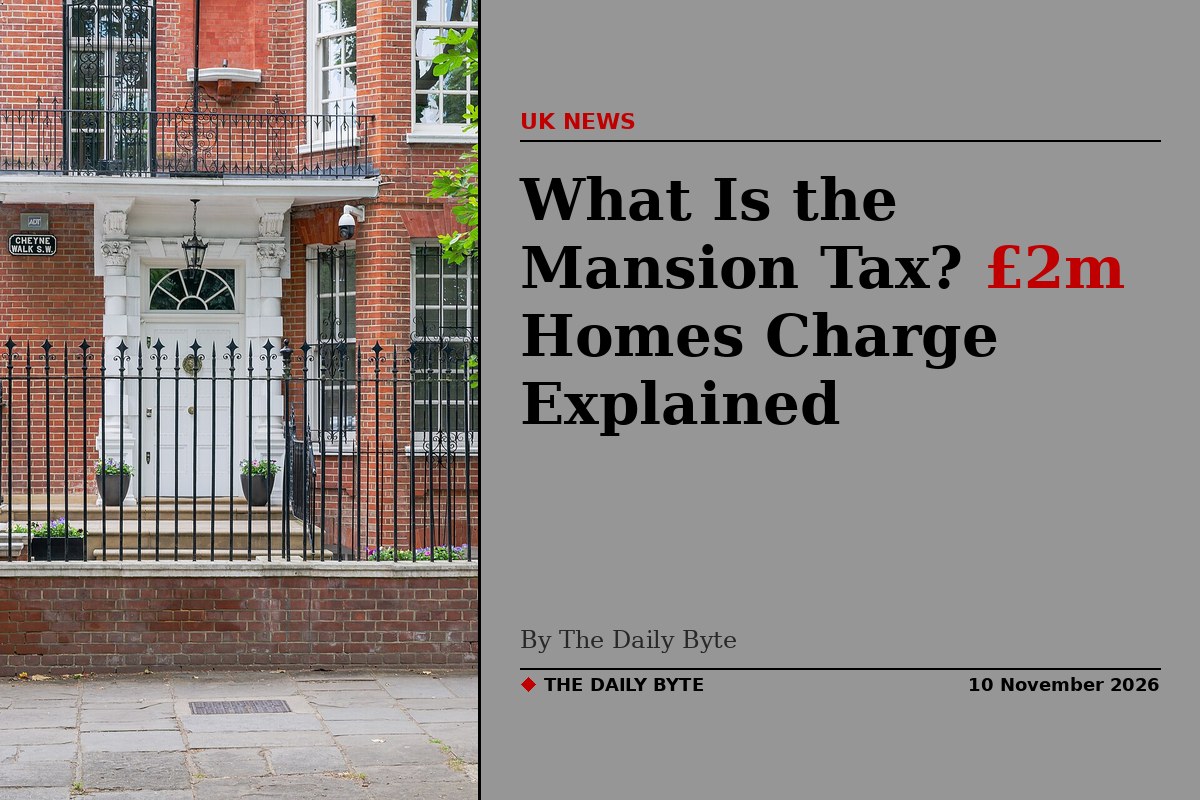
From April 2028, owners of homes in England worth £2 million or more will pay a new annual charge on top of their normal council tax. It is officially called the High Value Council Tax Surcharge, but almost everyone calls it the mansion tax. This guide explains what it is, how much it costs, who has to pay it and what happens next.
The charge was first announced at Budget 2025, put out to consultation in the summer of 2026, and confirmed in the Autumn Budget on 28 October 2026, when Chancellor John Healey kept the £2 million threshold unchanged despite reports it might be lowered to £1.5 million. It is expected to affect around 165,000 homes and raise about £430 million a year.
What is the mansion tax?
The mansion tax is an annual surcharge on residential property in England valued at £2 million or more. It is not a replacement for council tax: it sits on top of it, and it is paid by the owner of the property rather than the person living in it. That matters for rented homes, because the bill goes to the landlord, not the tenant.
The money does not stay with your council. Local authorities collect the charge alongside council tax, but they do so on behalf of central government, and the money goes to the Treasury. The government says fewer than 1% of homes in England will be in scope.
Values are fixed at April 2026 prices. The Valuation Office Agency will carry out a targeted valuation exercise to identify the homes in scope, and owners will be able to see a draft list of properties in late 2027, giving them time to check and challenge a valuation before the first bills arrive.
How much is the mansion tax?
There are four flat-rate bands, based on the value of the home. The charge is the same for every home in a band, whatever its exact value within that band.
- £2 million to £2.5 million — £2,500 a year, about £208 a month
- Over £2.5 million to £3.5 million — £3,500 a year, about £292 a month
- Over £3.5 million to £5 million — £5,000 a year, about £417 a month
- Over £5 million — £7,500 a year, about £625 a month
The charges will rise each year in line with CPI inflation, with uprating starting in 2029-30. Properties will be revalued every five years, with the next revaluation due in 2033. The government has said decisions on whether to uprate the £2 million threshold itself at revaluation are for a future government.
To put the figures in context, the Office for Budget Responsibility estimates around 165,000 properties will be in scope in 2028-29. A home worth just over £2 million pays £2,500 a year, while a home worth £10 million pays the same £7,500 as a home worth £5.1 million, because the top band is flat.
When does the mansion tax start?
The surcharge comes into force on 1 April 2028. Councils will send the first bills in March 2028, in the same way they send council tax bills ahead of the new financial year. There is nothing to pay before then, and no action owners need to take now beyond checking the draft valuation list when it appears in late 2027.
The policy was first announced at Budget 2025, and the government consulted on its design between 19 May and 14 July 2026. Budget 2026, delivered on 28 October 2026, confirmed the design as consulted on: the £2 million threshold stayed, the four bands stayed, and the start date stayed at April 2028.
Who has to pay it?
The owner of the property pays, not the occupier. That is a deliberate difference from council tax, which is normally paid by the person living in the home. If you own a home worth £2 million or more and live in it yourself, you pay. If you own it and rent it out, you pay, not your tenant.
The charge applies to residential property in England only. Scotland is planning its own new higher council tax bands, and Wales has nothing equivalent. Second homes and buy-to-let properties in England are in scope in the same way as a main home, because the test is the value of the property, not how it is used.
What about people who cannot afford to pay?
The government has confirmed a deferral scheme for owners who cannot afford the charge. Owners on lower incomes, or with modest savings, will be able to defer payment until the home is sold, rather than having to pay each year. The detailed rules for who qualifies for deferral are still to be set out in regulations and guidance.
There will also be a series of discounts and exemptions. Care homes are exempt, and the government has confirmed a 100% premium on properties left empty and unoccupied for 12 months or more, meaning an empty £2 million-plus home would pay double the surcharge. The full list of exemptions is still to be published.
How will homes be valued?
Valuations are based on the value of the home in April 2026, not its value today or in 2028. The Valuation Office Agency is carrying out a targeted exercise to find the homes in scope, rather than revaluing every home in England.
That approach has drawn criticism, because many expensive homes have not changed hands for years: around two in five homes worth £1.5 million or more have never had a sale recorded at the Land Registry, according to property lawyers, so many valuations will be estimates. Owners will see a draft list in late 2027 and will have around six months to challenge a valuation before bills start in March 2028. Properties that are substantially improved after the system starts are expected to be revalued and rebanded at the next scheduled revaluation in 2033, or when the property is sold, whichever comes first.
Is the mansion tax confirmed or could it change?
As things stand it is confirmed government policy, announced at two Budgets and consulted on in between. But it does not start until April 2028, and a general election could intervene. The Conservative Party has pledged to scrap both stamp duty on main homes and the mansion tax if it wins the next election, so the charge is politically contested.
The Prime Minister has also backed the idea of replacing council tax and stamp duty with a single annual property tax in the longer term, but ruled that out for this Budget. For now, the surcharge is the policy as confirmed, and the next milestone owners should watch for is the draft valuation list in late 2027.
Frequently asked questions
What is the mansion tax?
It is the High Value Council Tax Surcharge, a new annual charge on owners of homes in England worth £2 million or more, starting in April 2028.
How much will I pay?
Between £2,500 and £7,500 a year, depending on the value band your home falls into, on top of your normal council tax.
Does it apply in Scotland and Wales?
No. It applies in England only. Scotland plans its own higher council tax bands, and Wales has nothing equivalent.
Do tenants pay the mansion tax?
No. The owner of the property pays, even if the home is rented out.
What if I cannot afford it?
The government has confirmed a deferral scheme for owners on lower incomes or with modest savings, allowing payment to be deferred until the home is sold. Details are still to be published.
This article is general information, not personal tax or financial advice. Check the official GOV.UK pages linked below for the current position, because the detailed rules are still being finalised.


