What Is Marriage Allowance? Save Up to £252 a Year
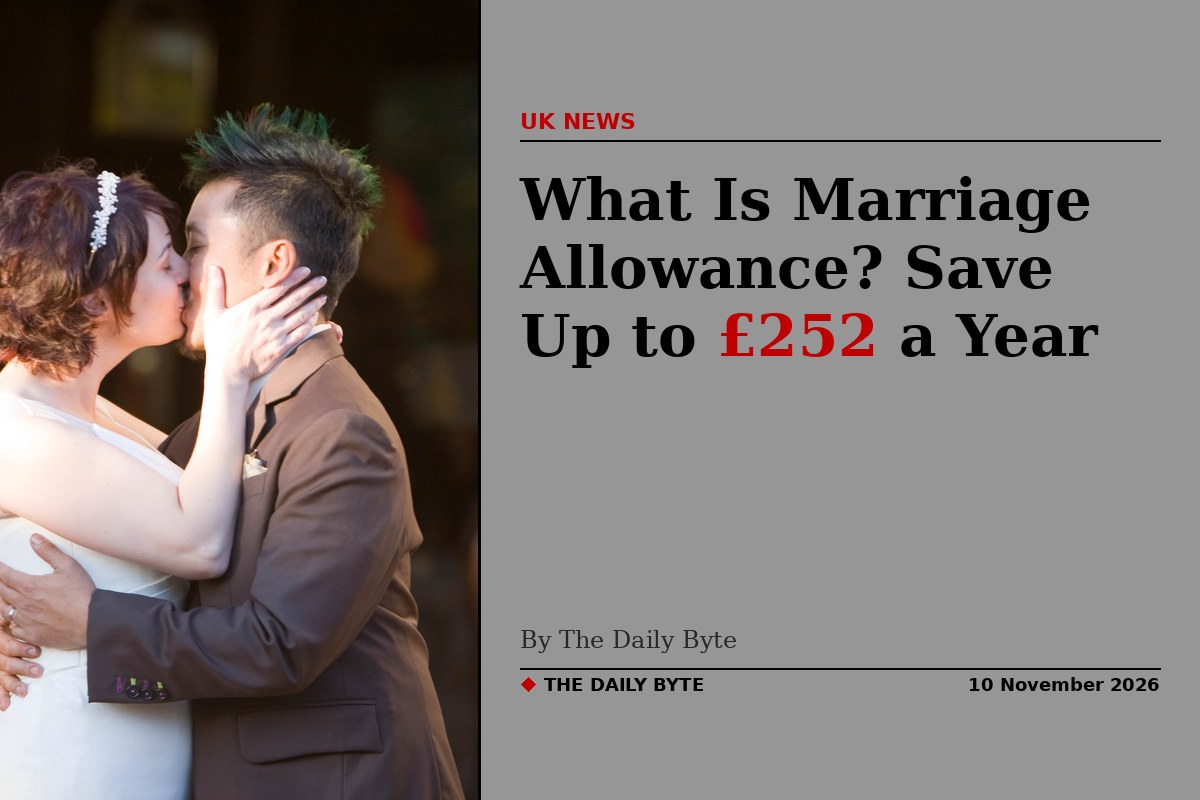
Marriage Allowance is one of the simplest tax breaks in the UK, and one of the most often missed. It lets the lower earner in a marriage or civil partnership transfer £1,260 of their Personal Allowance to their husband, wife or civil partner. That transfer reduces the partner's tax by up to £252 in the tax year, which runs from 6 April to 5 April the next year. The claim is free, it can be backdated to 6 April 2022, and once it is set up it renews automatically every year until you cancel it. This guide explains how Marriage Allowance works, who can claim it, how much you could save, and how to apply on GOV.UK.
Your Personal Allowance is the amount of income you can earn before you pay Income Tax. For the 2026-27 tax year it is usually £12,570. Marriage Allowance moves 10% of that allowance, £1,260, from someone who is not using all of theirs to someone who is paying basic-rate tax. The partner who receives the allowance then has £1,260 less income taxed at the basic rate of 20%, which is where the £252 saving comes from: 20% of £1,260 is £252.
Who can claim Marriage Allowance?
GOV.UK says you can benefit from Marriage Allowance if all of the following apply. You are married or in a civil partnership. You do not pay Income Tax, or your income is below your Personal Allowance, which is usually £12,570. And your partner pays Income Tax at the basic rate, which usually means their income is between £12,571 and £50,270 before they receive Marriage Allowance.
You cannot claim Marriage Allowance if you are living together but you are not married or in a civil partnership. That is the single most common reason claims fail. The rules are different in Scotland, where your partner must pay the starter, basic or intermediate rate, which usually means their income is between £12,571 and £43,662. It will not affect your application if you or your partner are currently receiving a pension, or if you live abroad, as long as you get a Personal Allowance.
If you or your partner were born before 6 April 1935, you might benefit more as a couple by applying for Married Couple's Allowance instead. You cannot get Marriage Allowance and Married Couple's Allowance at the same time, so check which one is worth more before you apply.
How much could you save?
The maximum saving is £252 a year, but not every couple gets the full amount. The key point is that the person giving the allowance away loses £1,260 of their own tax-free allowance, so their Personal Allowance falls from £12,570 to £11,310. If that person's income is £11,310 or less, they still pay no tax, and the couple keeps the whole £252. If their income is above £11,310, they start paying tax on the part above it, which eats into the gain.
GOV.UK gives a worked example that shows this clearly. Your income is £11,500 and your Personal Allowance is £12,570, so you do not pay tax. Your partner's income is £20,000 and their Personal Allowance is £12,570, so they pay tax on £7,430. As a couple you are paying Income Tax on £7,430. When you claim Marriage Allowance you transfer £1,260 of your Personal Allowance to your partner. Your Personal Allowance becomes £11,310 and your partner gets a reduction of £1,260 on their taxable income. That means you will now pay tax on £190, but your partner will only pay tax on £6,170. As a couple you are only paying Income Tax on £6,360 rather than £7,430, which saves you £214 in tax.
So in that example the couple saves £214 rather than £252, because the lower earner now pays a small amount of tax on the £190 above their reduced allowance. The couple is still better off overall, but the example is a useful warning against assuming the headline figure always applies in full. GOV.UK has a calculator that works out how much tax you could save as a couple, and it is worth using before you apply if your income is close to the thresholds.
How to apply for Marriage Allowance
You apply for Marriage Allowance online on GOV.UK, and it is free. Do not pay a company to do it for you. If both of you have no income other than your wages, the person who earns the least should make the claim. If either of you gets other income, such as dividends or savings, you may need to work out who should claim, and you can call the Income Tax helpline if you are unsure. You should call the helpline instead of applying online if you receive other income such as dividends, savings or benefits from your job, or if you do not know what your taxable income is.
To apply online you will need your National Insurance numbers, and you will need to prove your identity using information HMRC holds about you. If your application is successful, the changes to your Personal Allowances will be backdated to the start of the tax year, 6 April. HMRC will give your partner the allowance you transferred either by changing their tax code, which can take up to two months, or through their Self Assessment tax return.
When you transfer some of your Personal Allowance, you might have to pay more tax yourself, but as the GOV.UK example shows, you could still pay less as a couple. That is the test that matters: the saving is worked out for the couple, not for each person separately.
Backdating your claim
You can backdate your claim to 6 April 2022, the start of the 2022-23 tax year, for any years you were eligible for Marriage Allowance. That means a first claim made now can cover up to four earlier tax years as well as the current one. At £252 a year, the backdated amount can be worth up to £1,008 for those four years, paid as a refund, on top of the current year's saving. Your partner's tax bill will be reduced depending on the Personal Allowance rate for the years you are backdating.
If your partner has died since 5 April 2022, you can still claim, but you need to phone the Income Tax helpline rather than applying online. If your partner was the lower earner, the person responsible for managing their tax affairs needs to phone. This is one of the few parts of the process that cannot be done online, so do not be put off by the extra step.
How your tax code changes
You and your partner will get new tax codes that reflect the transferred allowance. Your tax code will end with M if you are receiving the allowance, and N if you are transferring the allowance. So a partner who receives the allowance will typically see their code change from 1257L to 1383M, reflecting a Personal Allowance of £13,830 instead of £12,570, while the partner giving it away will see their code change to 1131N, reflecting a Personal Allowance of £11,310. Your tax code will also change if you are employed or get a pension, and the change can take up to two months to come through.
Once the transfer is in place, your Personal Allowance will transfer automatically to your partner every year until you cancel Marriage Allowance. You do not need to reapply each year. But it is your responsibility to tell HMRC if you stop qualifying, for example because your income has risen above the Personal Allowance.
When to cancel Marriage Allowance
You must cancel Marriage Allowance if your relationship ends, because you have divorced, ended your civil partnership or legally separated, if your income changes and you are no longer eligible, or if you no longer want to claim. Either of you can cancel if your relationship has ended. If you are cancelling for another reason, the person who made the claim must cancel.
You can cancel online on GOV.UK, or by phone through Marriage Allowance enquiries on 0300 200 3300, Monday to Friday, 8am to 6pm. If you cancel because of a change of income, the allowance will run until the end of the tax year on 5 April. If your relationship has ended, the change may be backdated to the start of the tax year on 6 April, which might mean you or your partner underpays tax for the year.
If your partner dies after you have transferred some of your Personal Allowance to them, their estate will be treated as having the increased Personal Allowance, and your Personal Allowance will go back to the normal amount. GOV.UK gives the example of an income of £8,000 with £1,260 transferred: the allowance was £11,310 for the giver and £13,830 for the receiver, and after the receiver's death the estate keeps £13,830 while the giver's allowance returns to £12,570. If your partner transferred allowance to you before they died, your Personal Allowance stays at the higher level until 5 April and then goes back to the normal amount.
Marriage Allowance and Self Assessment
If you send a Self Assessment tax return, there are a few extra rules. If you are transferring your Personal Allowance to your partner, fill out the Marriage Allowance section on your return. If you are receiving the allowance, leave the Marriage Allowance section of your return blank. If you both send a Self Assessment tax return, the person transferring the allowance should file theirs at least three days before the person receiving the allowance. You do not need to fill out the Marriage Allowance section of your tax return if your tax code ends in N or M, because the transfer is already in place.
Common mistakes to avoid
The most common mistake is applying when you are not married or in a civil partnership. Living together, however long you have been together, does not count. Another common mistake is assuming the higher earner can claim when they pay higher-rate tax. If your partner pays tax at the higher rate, above £50,270, or above £43,662 in Scotland, you cannot claim. A third mistake is forgetting to cancel when circumstances change. If your income rises above the Personal Allowance and you keep the transfer in place, you could end up paying tax you did not expect, and HMRC may ask for the extra back.
Finally, do not pay anyone to claim Marriage Allowance for you. The application is free on GOV.UK, it takes a few minutes, and companies that charge for it are selling a service you can do yourself. If you are unsure whether you qualify, use the GOV.UK calculator or call the Income Tax helpline before you apply.
Marriage Allowance is worth up to £252 a year, and a first claim can be worth more than £1,000 once backdating is included. For couples where one partner earns below the Personal Allowance and the other pays basic-rate tax, it is money that is already yours under the rules. The claim is free, it renews automatically, and it can be backdated to 6 April 2022, so it is worth checking whether you qualify. This guide is general information based on GOV.UK, not personal tax advice. You can check the rules and apply at the GOV.UK Marriage Allowance page, and the GOV.UK guide to how it works sets out the eligibility rules, the worked example and how to backdate a claim.