What Is Measles? Symptoms, Vaccine and Risks
Measles is a highly contagious viral illness that was once common in childhood and is now preventable with a safe and effective vaccine. It is in the news again because a young child in Virginia died on 20 November 2026 after testing positive for measles, the state's first measles-related death since 1978, and because the United States lost its measles elimination status the same week after 26 years. With more than 5,400 cases reported across the country in 2026, many people are asking what measles is, how to recognise it, and how to protect themselves and their children.
Measles is not a mild rash illness, although that is how it is sometimes described. It is a serious disease that can lead to pneumonia, swelling of the brain, and death, particularly in children under five. Before vaccination became widespread, measles killed millions of people around the world every year. The vaccine changed that, and in countries with high vaccination coverage the disease became rare. When vaccination rates fall, measles returns quickly, because the virus is one of the most contagious known to medicine.
This explainer covers what measles is, its symptoms and complications, how it spreads, how the MMR vaccine works, and why cases are rising in the United States in 2026.
What is measles?
Measles, also known as rubeola, is an infection caused by the measles virus. It mainly affects the respiratory system and the skin, and it spreads from person to person through the air. A person with measles can pass the virus on when they breathe, talk, cough or sneeze, and the virus can remain in the air for a time after they have left a room. According to the US Centers for Disease Control and Prevention, the CDC, about 90 percent of people who are not immune and are exposed to the virus will become ill.
Measles is a different disease from the German measles, or rubella, although the two are often confused. Rubella is generally milder, and the MMR vaccine protects against both, along with mumps. A person who has had measles is immune for life, but the only reliable way to gain that protection without catching the disease is vaccination.
Measles was declared eliminated in the United States in 2000, meaning the virus was no longer spreading continuously within the country, although cases were still brought in from abroad. That status was lost in November 2026, when the Pan American Health Organization review found that transmission had again become sustained, ending 26 years of elimination.
What are the symptoms of measles?
Measles symptoms usually appear 7 to 14 days after a person is exposed to the virus, although it can take as long as 21 days. The illness typically begins with a high fever, which may spike above 104 degrees Fahrenheit, along with a cough, a runny nose and red, watery eyes. These early symptoms can last for two to four days.
A rash follows, usually three to five days after the first symptoms appear. It starts at the face or hairline and spreads downwards over the body, arms and legs. The rash is made up of flat red spots that may join together, and it is not usually itchy. Small white spots inside the mouth, known as Koplik spots, can appear two to three days after symptoms begin and are a distinctive sign of the disease. Symptoms usually last for one to two weeks.
Measles can be hard to recognise in its early stages because the first symptoms look like a common cold or flu. The combination of a high fever, cough, runny nose and red eyes followed a few days later by a rash is the pattern doctors look for. Anyone who develops these symptoms, especially after known contact with a measles case or travel to an area with an outbreak, should call a health care provider before visiting in person, so that the clinic can take steps to prevent the virus spreading to others in a waiting room.
How does measles spread?
Measles spreads through the air. When a person with measles coughs or sneezes, tiny droplets carrying the virus are released, and other people can breathe them in. The virus can also spread through direct contact with infected nasal or throat secretions. Because it is airborne, measles can spread in a room, a school, a clinic waiting area or a crowded home even without close face-to-face contact.
A person with measles is contagious from about four days before the rash appears until about four days after it appears. That means people can pass the virus on before they know they have measles, which is one reason outbreaks are difficult to contain. In a community where few people are vaccinated, one case can quickly become dozens, as happened in Virginia in 2026, where 220 cases were reported by 19 November, including 127 in Buckingham County alone.
There is no specific drug that kills the measles virus. Treatment focuses on relieving symptoms and managing complications, which is why prevention through vaccination is so important.
How serious is measles?
For most healthy adults, measles is a deeply unpleasant illness lasting a week or two. For others it can be dangerous. The CDC says measles can cause serious health complications, especially in children younger than five. Common complications include ear infections and diarrhoea. Serious complications include pneumonia, which is an infection of the lungs, and encephalitis, which is swelling of the brain. In some cases measles leads to death.
About one in ten children with measles gets an ear infection, and up to one in twenty gets pneumonia, according to public health guidance. Babies, young children, pregnant women and people with weakened immune systems are at the highest risk. A rare but devastating complication called subacute sclerosing panencephalitis, a progressive brain disorder, can develop years after a measles infection.
The 2026 outbreak in the United States shows the risk is real. The CDC has confirmed six measles-associated deaths in 2026, although it does not name the states in its tally. State reports tell a wider story: Pennsylvania, the hardest-hit state, reported an eighth measles-related death and 1,631 cases as of 20 November, while Wisconsin reported two deaths and New York recorded its first measles-associated death, involving a child. Virginia's death on 20 November involved a child between the ages of zero and four, and was the first measles death in the state since 1978.
What is the MMR vaccine?
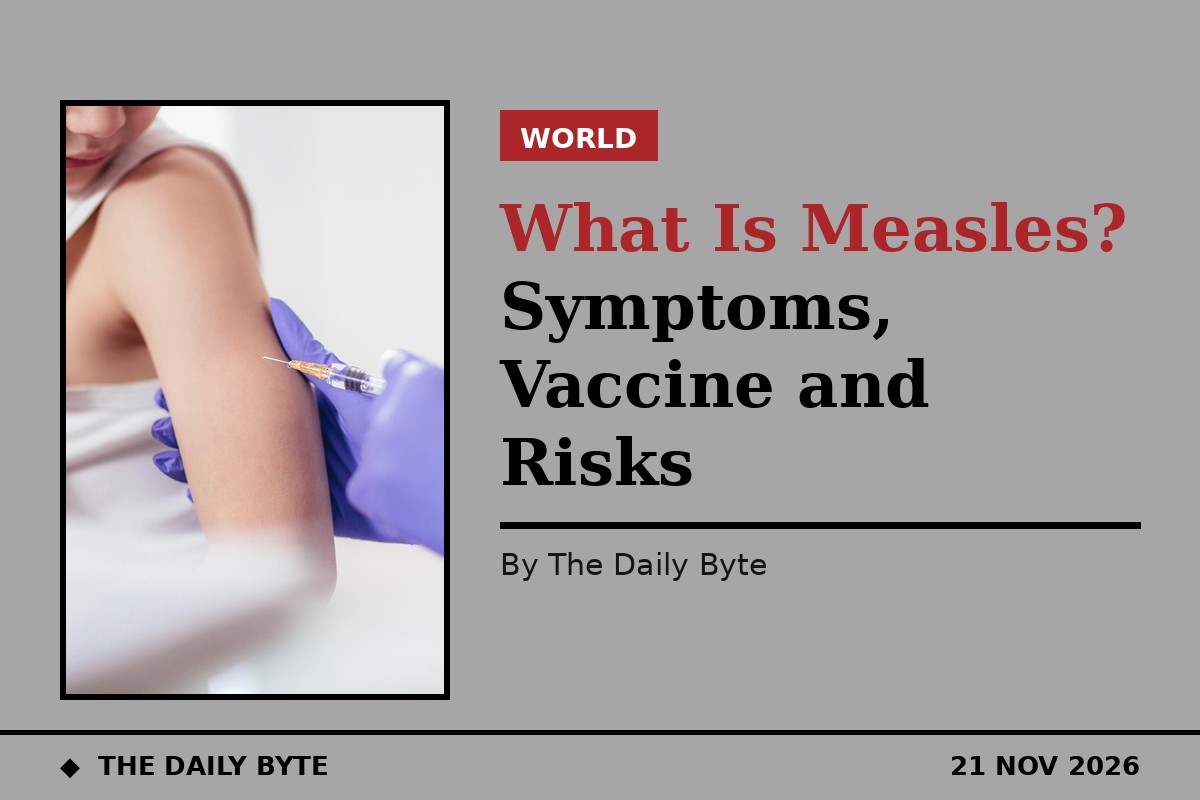
The best protection against measles is the MMR vaccine, which protects against measles, mumps and rubella. The vaccine contains a weakened form of the measles virus that teaches the immune system to recognise and fight the real virus without causing the disease.
Two doses of MMR vaccine are about 97 percent effective at preventing measles if a person is exposed to the virus, according to the CDC. One dose is about 93 percent effective. The routine schedule in the United States is a first dose at 12 to 15 months of age and a second dose at four to six years, before a child starts school. People who received two doses as children are considered protected for life and do not need a booster.
The vaccine has been used for decades and has a long safety record. Most people have no side effects. Those who do typically experience soreness at the injection site, a mild fever, a mild rash or joint pain within about 12 days. Serious side effects are rare. Health authorities stress that the vaccine is far safer than catching measles itself, which carries a real risk of pneumonia, brain swelling and death.
Adults who are unsure whether they were vaccinated can check their records or have a blood test to see if they are immune. People born before 1957 are generally considered immune because measles was so widespread before vaccination that almost everyone caught it. Unvaccinated teenagers and adults are advised to get two doses of MMR vaccine, separated by at least a month.
Why are measles cases rising in the US?
Measles was once a disease the United States had effectively beaten. In 2026 it came back in force. As of 12 November, 5,412 confirmed measles cases had been reported in the country in 2026, more than double the total for the whole of 2025, and the number has continued to climb. The rise coincides with falling immunisation rates and growing vaccine hesitancy, a trend that public health officials have warned about for years.
Measles needs very high vaccination coverage to stay away. Because the virus spreads so easily, around 95 percent of a community needs to be immune to stop it circulating. When coverage drops below that level, even by a few percentage points, gaps appear and outbreaks follow. The 2026 cases have been concentrated in under-vaccinated communities, and only about three percent of cases have occurred among people who had one or two doses of the MMR vaccine, according to state health department data.
The loss of elimination status in November 2026 was a milestone that health officials had hoped to avoid. Elimination does not mean zero cases. It means the virus is not spreading continuously for 12 months or more. Once that threshold is crossed, measles is again considered endemic, and the work of stopping it starts over. The experience of 2026 is a reminder that a disease eliminated by vaccination can return within a few years if vaccination coverage slips.
What to do if you think you have measles
Anyone who develops a high fever, cough, runny nose and red eyes followed by a rash should stay at home and call a health care provider immediately rather than turning up at a clinic or emergency department unannounced. Health care workers will advise on testing and on how to avoid exposing others, and they will want to know about any recent contact with a measles case or travel to an area with an outbreak.
People who have been exposed to measles should also contact a health care provider promptly, particularly if they are unvaccinated, pregnant, or have a weakened immune system. In some situations, a vaccine given shortly after exposure, or an injection of antibodies called immunoglobulin, can reduce the risk of illness, but this depends on timing and on the person's circumstances.
The most effective step anyone can take is to check their vaccination status and, if they are not fully vaccinated, to get the MMR vaccine. Two doses provide strong, lifelong protection, and they protect not only the person vaccinated but also the babies, young children and vulnerable people around them who cannot be vaccinated themselves.