What is MINUSCA? UN Mission in CAR Explained
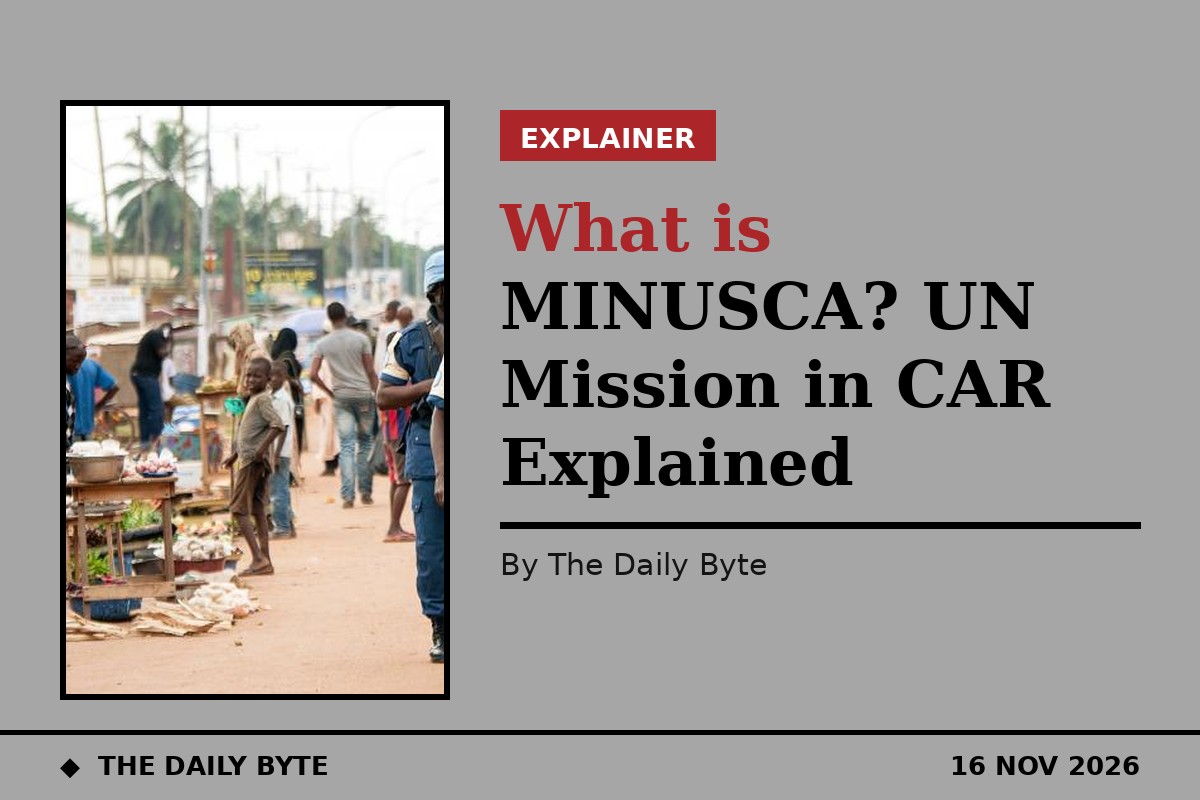
MINUSCA is the United Nations peacekeeping mission in the Central African Republic, and on 12 November 2026 the UN Security Council voted unanimously to keep it running for another year — but with fewer soldiers. Its full name is the United Nations Multidimensional Integrated Stabilization Mission in the Central African Republic, and it has operated in the country since 2014. Under Resolution 2836, adopted on 12 November 2026, the mission's mandate now runs until 15 November 2027, with its authorised military strength cut from 14,046 to 12,000 troops.
The decision matters because the Central African Republic, often shortened to CAR, is heading into a presidential election on 15 December 2026, and the UN's own mission chief has warned of a resurgence of deadly violence in the east of the country. The Council's vote therefore sets up a careful balancing act: a smaller force, a timetable for handing tasks over to the Central African authorities, and an election to protect in the meantime. This explainer sets out what MINUSCA is, why it was created, what it does, and why the Security Council is now shrinking it.
What does MINUSCA stand for?
MINUSCA is an acronym taken from the mission's French name, Mission multidimensionnelle intégrée des Nations Unies pour la stabilisation en République centrafricaine. In English that is the United Nations Multidimensional Integrated Stabilization Mission in the Central African Republic. The word "multidimensional" reflects that the mission does more than patrol streets: it combines soldiers, police, corrections officers and civilians working on politics, human rights, justice and humanitarian aid. The mission is headquartered in Bangui, the capital of the Central African Republic, and is led by Valentine Rugwabiza, the Secretary-General's Special Representative for the country and head of the mission.
| Fact | Detail |
|---|---|
| Full name | United Nations Multidimensional Integrated Stabilization Mission in the Central African Republic |
| Established | 10 April 2014, by Security Council Resolution 2149 |
| Headquarters | Bangui, Central African Republic |
| Head of mission | Valentine Rugwabiza, Special Representative of the Secretary-General |
| Mandate until | 15 November 2027, under Resolution 2836 (2026) |
| Authorised troops | Up to 12,000 military personnel (down from 14,046) |
| Police and corrections | 2,265 police personnel and 40 corrections officers |
| Legal basis | Chapter VII of the UN Charter — authorised to use all necessary means |
Why was MINUSCA created?
MINUSCA was created in the middle of a war. In March 2013, the predominantly Muslim Seleka rebel coalition seized power in Bangui, and retaliatory violence by predominantly Christian anti-Balaka militias followed. The fighting displaced hundreds of thousands of people and left the state barely functioning outside the capital. By March 2014, more than 650,000 people had been internally displaced, with more than 232,000 of them in Bangui alone, according to the UN's account of the crisis.
The Secretary-General proposed a six-point initiative designed to stop the killings, protect civilians, prevent the de facto partition of the country, facilitate the delivery of humanitarian assistance and give the government urgent support. On 3 March 2014 he recommended that the Security Council authorise a multidimensional UN peacekeeping operation, with the protection of civilians as its utmost priority. On 10 April 2014 the Council unanimously adopted Resolution 2149, acting under Chapter VII of the UN Charter, and established MINUSCA for an initial period until 30 April 2015.
The new mission subsumed the UN Integrated Peacebuilding Office in the Central African Republic (BINUCA) on the day it was created. The military and police components took over from the African Union-led International Support Mission to the CAR (MISCA) on 15 September 2014. At that point MINUSCA was authorised to comprise up to 10,000 military personnel, including 240 military observers and 200 staff officers, along with 1,800 police personnel and 20 corrections officers. The Council authorised the mission to take all necessary means to carry out its mandate, within its capabilities and its areas of deployment.
What does MINUSCA actually do?
The mission's priority tasks, as set out by the Security Council, are the protection of civilians; support for the extension of state authority, the deployment of security forces and the preservation of territorial integrity; good offices and support to the peace process, including implementation of the ceasefire and the Political Agreement on Peace and Reconciliation; and facilitating the immediate, full, safe and unhindered delivery of humanitarian assistance. Its mandate also covers the protection of UN personnel and installations, the promotion and protection of human rights, support for national and international justice and the rule of law, and the disarmament, demobilisation, reintegration and repatriation of former fighters.
In practice that means MINUSCA patrols towns and roads where armed groups operate, guards displaced people, helps the government re-establish courts, police and administration in areas it had lost, and supports elections. The mission provided technical and logistical support for the electoral cycle that ran through 2025 and 2026, including the presidential election scheduled for 15 December 2026. It also monitors human rights through its Human Rights Division, which represents the Office of the High Commissioner for Human Rights in the country.
The Central African Republic has experienced repeated political crises and armed conflict since gaining independence from France in 1960, and the mission has been renewed every year since 2014. That long record is part of the argument now being made against it: after twelve years, some Council members say the mission should be working towards its own end rather than continuing indefinitely.
Why is the UN shrinking MINUSCA now?
On 12 November 2026 the Security Council unanimously adopted Resolution 2836, extending the mandate for one year, until 15 November 2027, but cutting the mission's authorised strength. The military ceiling falls from 14,046 to 12,000 troops, a cut of 2,046. Police fall from 2,999 to 2,265, a cut of 734, and corrections officers fall by 68, to 40. France, which drafted the resolution as the Council's penholder on the file, said the text provided a new troop ceiling adjusted to the mission's new goals, alongside the consolidation of its achievements.
The United States had pressed for a deeper cut, seeking a troop ceiling of 11,000, and backed the renewal while saying that successful peacekeeping missions should be working towards their conclusion. The resolution as adopted orders the mission to concentrate its remaining resources in high-risk border areas, particularly those bordering Chad and Sudan, and to hand over selected tasks gradually to the Central African authorities, only when conditions allow. It sets out a framework for that gradual transfer of responsibilities to national authorities rather than a fixed withdrawal date.
The timing is awkward. In October 2026, Rugwabiza told the Security Council that the country was experiencing a resurgence of deadly violence in the east, despite progress in disarming armed fighters and completing the latest electoral cycle. The renewal therefore comes with the mission smaller than before, weeks before a presidential election in which President Faustin-Archange Touadera is seeking a third term, and with armed groups still active in the east and along the borders.
What happens next in the Central African Republic?
The immediate test is the presidential election on 15 December 2026. MINUSCA's electoral support role — moving ballot materials, protecting polling stations and helping the authorities run the vote — will be under strain with fewer troops and police. The mission's next mandate decision will come before 15 November 2027, when the current extension expires, and the Council has said it expects the handover of tasks to the national authorities to continue in the meantime.
Whether the smaller force can hold the line depends on two things the resolution itself flags: whether the Central African authorities can take over security tasks in the areas MINUSCA leaves, and whether the violence in the east stays contained. If the election passes peacefully and the handover proceeds, the Council is likely to keep reducing the force. If violence spreads, the same Council will face pressure to reverse course. For the people of the Central African Republic, the question is not what the mission is called, but whether its soldiers and police are still there when they are needed.
Frequently asked questions
What does MINUSCA stand for? It is the French acronym for the United Nations Multidimensional Integrated Stabilization Mission in the Central African Republic.
When was MINUSCA created? The Security Council established it on 10 April 2014, by Resolution 2149, and it took over from the African Union-led MISCA mission on 15 September 2014.
How many troops does MINUSCA have? Under Resolution 2836, adopted on 12 November 2026, the mission is authorised up to 12,000 military personnel, plus 2,265 police personnel and 40 corrections officers.
Is MINUSCA leaving the Central African Republic? No. Its mandate was extended to 15 November 2027, but the Security Council has ordered a gradual, conditions-based handover of tasks to the Central African authorities.
Who leads MINUSCA? Valentine Rugwabiza, the UN Secretary-General's Special Representative for the Central African Republic and head of the mission.
Sources: United Nations meetings coverage, via GlobalSecurity, reporting Resolution 2836 and the new force ceilings; MINUSCA, the mission's own background page, for its establishment, mandate and history; The Eastleigh Voice, reporting the 12 November 2026 vote and the cuts to military, police and corrections ceilings.


