What Is Self Assessment? UK Tax Return Guide
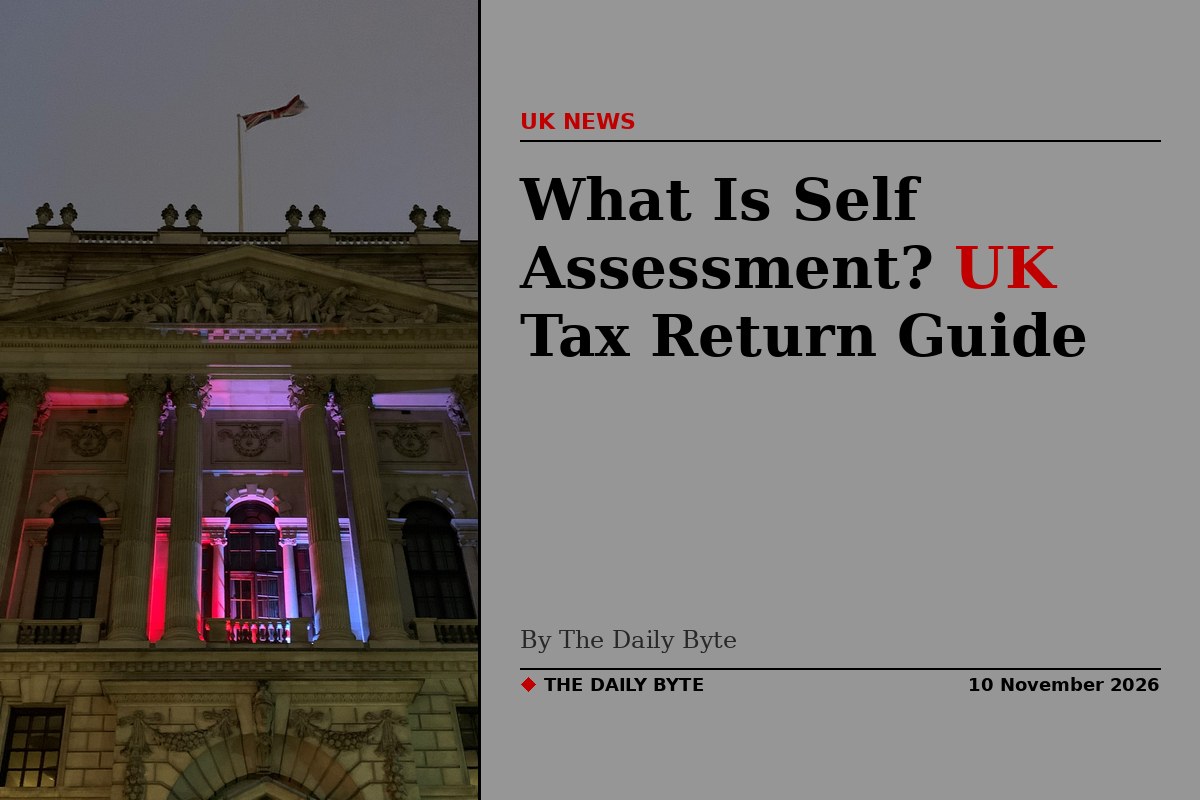
Self Assessment is the system HM Revenue and Customs (HMRC) uses to collect Income Tax that is not taken automatically from wages or pensions. Most employees never need to think about it, because their employer deducts tax through PAYE before they are paid. But if you earn money in other ways, HMRC expects you to report it yourself in a Self Assessment tax return, work out what you owe, and pay it by the deadline. For the 2025-26 tax year, the online return and any tax owed are both due by 11:59pm on 31 January 2027.
The return covers the tax year that ran from 6 April 2025 to 5 April 2026. You can file any time after 5 April, and filing early is usually the sensible move: you find out what you owe sooner, you have longer to budget for the bill, and you can set up weekly or monthly payments towards it if that helps. The paper return deadline of 31 October 2026 has already passed, so anyone who still needs to file for 2025-26 should file online.
Who must send a Self Assessment tax return?
GOV.UK sets out a clear list of people who must send a return. You must send one if, in the last tax year, any of the following applied to you. You were self-employed as a sole trader and earned more than £1,000, counted before taking off anything you can claim tax relief on. You were a partner in a business partnership. You had to pay Capital Gains Tax when you sold or disposed of something that had increased in value, such as shares or a second property. You had to pay the High Income Child Benefit Charge and do not pay it through your PAYE tax code. Or you are an off-payroll worker who is repaying a student or postgraduate loan.
There is one rule that overrides all the others: you must send a return if HMRC asks you to. If HMRC sends you a notice to file, you have to file by the date on the letter, even if none of the conditions above seems to apply to you. Ignoring that notice can trigger a penalty even if no tax is due, so do not assume it was sent by mistake. If you think you no longer need to file, tell HMRC as soon as possible and let them decide.
Who may also need to file a return
Beyond the must-file list, you may also need to send a return if you have untaxed income. GOV.UK lists money from renting out property or land, tips and commission, savings interest, dividends including investments, foreign income, and any taxable UK income if you are a non-UK resident. You may also need a return if you want to claim tax relief on community investments or some venture capital schemes.
There are thresholds that decide whether this kind of income brings you into Self Assessment. As a guide, rental income over £2,500 after allowable expenses, or over £10,000 before them, savings interest or dividends over £10,000, and other untaxed income such as tips or casual earnings over £2,500 can all trigger a return. If you are unsure, GOV.UK has a short online tool that checks whether you need to send a tax return. It is free, takes a few minutes, and is a better test than guessing.
Company directors often need to file even if they are paid through PAYE, and people whose total income is over £100,000 generally need to file so HMRC can work out the correct Personal Allowance, which is gradually withdrawn above that level. If your circumstances changed during the year, for example you started freelancing alongside a job, started letting a property, or sold shares, it is worth checking rather than assuming PAYE has covered everything.
Key dates for the 2025-26 tax return
The dates for the return covering 6 April 2025 to 5 April 2026 are set out on GOV.UK. If you had never sent a tax return before, or you had registered before but did not need to send one for the 2024-25 tax year, you had to tell HMRC by 5 October 2026 by registering for Self Assessment. If you register after 5 October 2026, HMRC will send you a letter or email with a different deadline to send your return by, three months from the date on that letter or email. You must still pay the tax you owe by 11:59pm on 31 January 2027, or you will get a penalty.
The online return must be submitted by 11:59pm on 31 January 2027. The tax you owe for the year must also be paid by 11:59pm on 31 January 2027. If you want to pay your Self Assessment bill through your tax code, you must submit your return by 11:59pm on 30 December 2026. If you miss that earlier date, you will have to pay another way, such as by bank transfer or debit card. There is a second payment deadline of 31 July if you make payments on account, which are advance payments towards your next bill.
How to register for Self Assessment
Registering is done on GOV.UK, and the route depends on why you need to file. Self-employed people, partners in a partnership, and people who need to file for another reason each have their own registration path, and GOV.UK walks you through the right one. Once registered, HMRC sends you a Unique Taxpayer Reference, known as a UTR, by post. You need that number to file, and it can take time to arrive, so do not leave registration until the last week of January.
If you already have a Self Assessment account but did not file last year, you may need to reactivate it before you can submit a return. GOV.UK warns that your return may be delayed if you file without reactivating an existing account, so check your sign-in details early. You will need a Government Gateway user ID and password, or you can sign in through GOV.UK One Login if you have set that up.
How to file your return
You can file your Self Assessment tax return online through GOV.UK, or use commercial software if your situation needs it. Commercial software is required for some cases, including partnership returns, trust and estate returns, income from a trust, non-resident returns, Lloyd's underwriters, religious ministers, and reporting profits on selling or disposing of more than one asset. For most people, the online service on GOV.UK is enough.
Before you start, gather your records. GOV.UK says you need to keep records such as bank statements and receipts so you can fill in your return correctly. That means income from every source, expenses you plan to claim, pension contributions, gift aid donations, and details of anything you sold that might attract Capital Gains Tax. If you do not know your profit for the whole tax year before the deadline, for example because your accounting period ends at a different time, you should work out what it is likely to be and include those provisional figures, telling HMRC you have used them. You then have 12 months from the Self Assessment deadline to correct the return once the real figure is known.
HMRC also offers help filling in your return, and you can estimate your Self Assessment tax bill before you send the return. Estimating early is useful for budgeting, because the payment deadline is the same day as the filing deadline, and there is no extra time to find the money after you submit.
What happens if you file or pay late?
The penalties for a late Self Assessment return are automatic and they stack up. GOV.UK sets them out plainly. If you send your return late, you get an initial £100 penalty. After three months, additional daily penalties of £10 per day apply, up to a maximum of £900. After six months, a further penalty of 5% of the tax due or £300, whichever is greater, is charged. After 12 months, another 5% or £300 charge, whichever is greater, applies. All partners are charged a penalty if a partnership return is late.
Paying late carries its own penalties. You will get penalties of 5% of the tax unpaid at 30 days, six months and 12 months, and you will also be charged interest on the amount owed. If you register late and do not pay all of your tax bill by 31 January, you may also get a failure to notify penalty, based on the amount still left to pay. Penalties must be paid within 30 days of the date on the penalty notice, and if you have a reasonable excuse you can appeal against a penalty. Even if you cannot pay the tax, filing the return on time avoids the £100 late filing penalty, so file first and deal with payment separately.
If you do not think you can pay on time, contact HMRC before the deadline. You may be able to set up a payment plan, known as a Time to Pay arrangement, which spreads the bill over monthly instalments. Interest is still charged, but a plan stops the situation getting worse.
Payments on account explained
Many first-time filers are caught out by payments on account. If your Self Assessment bill is large enough, HMRC asks you to pay part of next year's tax in advance, in two instalments: the first by 31 January alongside the current year's bill, and the second by 31 July. Each payment is normally half of the previous year's bill. If your income falls, you can apply to reduce your payments on account, but if you reduce them too far you will be charged interest on the shortfall, so be realistic.
Changing a return after you file it
You can make a change to a tax return after you filed it, for example because you made a mistake. Your bill will be updated based on what you report, and you may have to pay more tax or be able to claim a refund. You can correct a tax return within 12 months of the Self Assessment deadline, online or by sending another paper return. For the 2024-25 tax year, you would usually need to change your return by 31 January 2027. If you file online, you must wait three days after filing before updating your return. If you miss the deadline or need to change a return from an earlier tax year, you will need to write to HMRC.
What records should you keep?
Keep everything that supports the figures on your return. That includes invoices, receipts, bank statements, records of expenses, and details of income from rent, dividends, savings and foreign sources. If you are self-employed, HMRC generally expects you to keep records for at least five years after the 31 January submission deadline for the relevant tax year. Good records are also what let you claim every expense you are entitled to, so they can reduce your bill as well as protect you if HMRC asks questions.
Self Assessment is also changing. HMRC is moving self-employed people and landlords towards digital record-keeping and quarterly updates under Making Tax Digital for Income Tax, and the October 2026 Budget announced that the trading allowance, the point at which trading income has to be reported, will rise from £1,000 to £3,000 from the 2027-28 tax year. For the return due on 31 January 2027, the £1,000 figure still applies.
The deadline is fixed and the penalties are automatic, so the practical advice is simple: check whether you need to file, register in good time if you do, file early, and pay by 31 January 2027. If your situation is complicated, consider speaking to an accountant. This guide is general information based on GOV.UK, not personal tax advice, and the official GOV.UK pages should be checked for the latest rules before you file. You can start at the GOV.UK Self Assessment tax returns guide and the GOV.UK tool to check if you need to send a tax return.