What Is Shared Parental Leave? UK Guide Explained
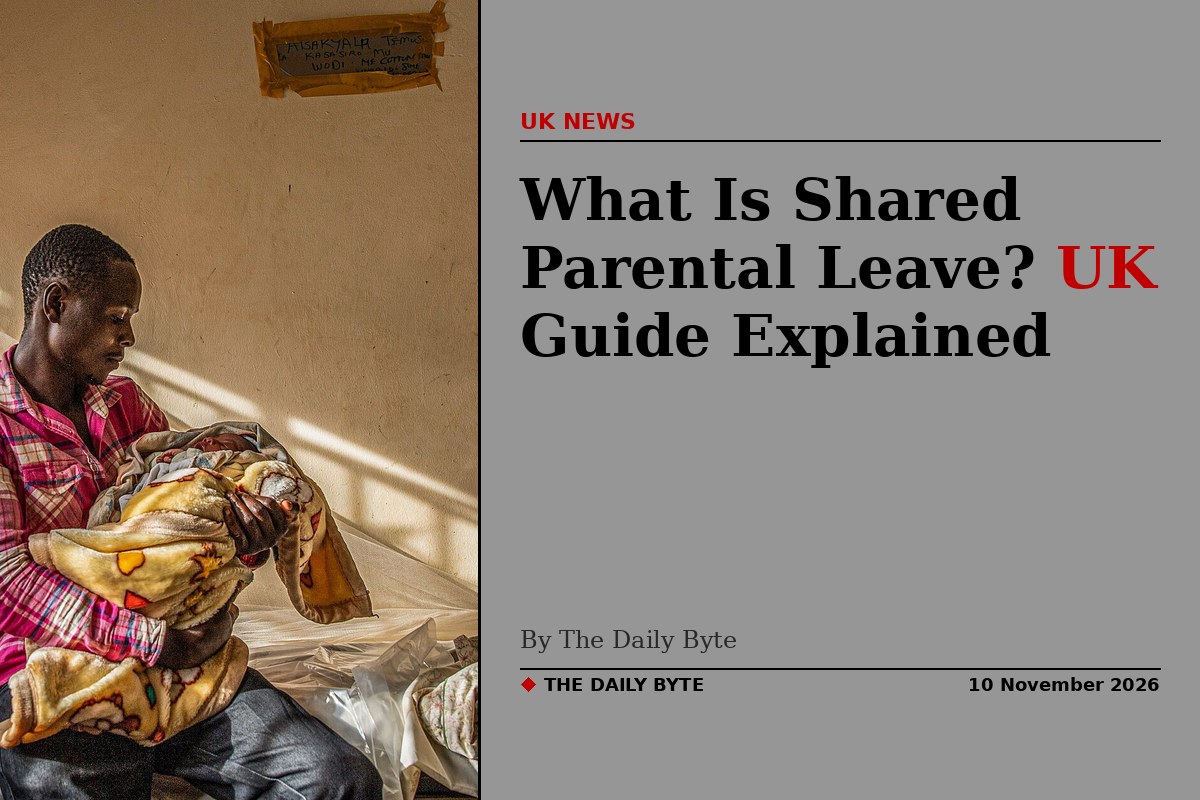
Shared Parental Leave lets two parents share time off work after the birth or adoption of a child. Eligible parents can share up to 50 weeks of leave and up to 37 weeks of pay between them, in the first year after the child is born or placed with the family. It works by the birth parent or primary adopter ending their maternity or adoption leave early, so the weeks that are left can be shared with their partner. This guide explains how it works, who qualifies, how much pay you get, and how to apply.
Shared Parental Leave, often shortened to SPL, has been available in the UK since 2015 for babies due on or after 5 April 2015, and for children placed for adoption on or after that date. It is different from paternity leave, which is a separate, shorter entitlement, and it is different from maternity leave itself. The idea is that families can choose how to split the first year between the two parents, instead of the birth parent taking all of the leave by default. Both parents can be off at the same time, or they can take their leave at different times.
How does Shared Parental Leave work?
The starting point is maternity leave. A birth parent can take up to 52 weeks of maternity leave, with Statutory Maternity Pay for 39 of those weeks. To create Shared Parental Leave, the birth parent ends their maternity leave early. Any weeks of leave that have not been taken can then become Shared Parental Leave, to be shared between the two parents. The same principle applies to adoption: a primary adopter can take up to 52 weeks of adoption leave, and ending it early creates Shared Parental Leave for the couple.
There is one limit that cannot be avoided. The birth parent must take a minimum of 2 weeks of maternity leave after the birth, or 4 weeks if they work in a factory. An adopter must also take a minimum of 2 weeks of adoption leave. That is why the maximum amount of Shared Parental Leave is 50 weeks, not 52. The leave must be taken in whole weeks, and it must be taken within the first year after the birth or the adoption placement, that is, before the child's first birthday or the first anniversary of the placement.
Shared Parental Leave can be taken in blocks, rather than all in one go, and the two parents can be off work at the same time or at different times. The GOV.UK employers' guidance says that Shared Parental Leave can be taken in discontinuous blocks, and a partner can start taking it while the birth parent is still on maternity leave. To take it, a parent must give their employer at least 8 weeks' notice before the leave starts.
How much Shared Parental Leave and pay can you get?
Eligible parents can share up to 50 weeks of Shared Parental Leave and up to 37 weeks of Statutory Shared Parental Pay between them. The 37 weeks of pay comes from the 39 weeks of Statutory Maternity Pay or Statutory Adoption Pay: the birth parent or primary adopter must take at least 2 weeks of pay, so up to 37 weeks of paid leave remain to be shared. How the leave and pay are split is up to the couple, and the two totals are separate, so a parent can take unpaid Shared Parental Leave after the paid weeks have run out, up to the 50-week limit.
Statutory Shared Parental Pay is paid at £194.32 a week, or 90% of the employee's average weekly earnings if that is lower. That rate applies from 6 April 2026, and statutory pay rates are usually reviewed every year. By comparison, Statutory Maternity Pay is paid at 90% of average weekly earnings for the first 6 weeks, and then at the same flat rate of £194.32 a week, or 90% of earnings if lower, for the remaining 33 weeks. That difference matters when a family decides who should take which weeks, because the birth parent's first 6 weeks of maternity pay are usually worth more than Shared Parental Pay.
Some employers pay more than the statutory minimum. GOV.UK notes that some employers, including the Civil Service, pay more than the statutory rates during parental leave, so it is worth checking your employer's own parental leave policy, as well as the statutory rules. Your employer cannot pay less than the statutory rate if you qualify.
Who can get Shared Parental Leave?
To get Shared Parental Leave, there must be two parents sharing responsibility for the child, and both parents must pass tests. The tests are set out on GOV.UK and by Acas, the Advisory, Conciliation and Arbitration Service. The parent who wants to take the leave must be an employee, and must have worked for the same employer continuously for at least 26 weeks by the end of the 15th week before the baby is due, or before the adoption match date.
- The parent taking the leave must have been employed continuously by the same employer for at least 26 weeks by the end of the 15th week before the due date.
- For Shared Parental Pay, each parent must earn on average at least £129 a week. That threshold applies from 6 April 2026.
- The other parent must have worked, employed or self-employed, in at least 26 of the 66 weeks before the due week, and earned at least £390 in total in any 13 of those weeks.
- The birth parent or primary adopter must be entitled to maternity or adoption leave, Statutory Maternity Pay, Statutory Adoption Pay, or Maternity Allowance, because sharing works by ending that entitlement early.
- Both parents must be sharing the main responsibility for the child from the day of the birth or the adoption placement.
Workers, including agency workers, contract workers and zero-hours workers, are not entitled to Shared Parental Leave, although they might be able to get Shared Parental Pay. Employees are the only group entitled to the leave itself. If you are not sure whether you qualify, GOV.UK has an eligibility checker and a planning tool for Shared Parental Leave and pay, at the pay and leave for parents pages.
How and when do you take Shared Parental Leave?
Both parents must give their employers notice that they intend to take Shared Parental Leave. The notice must be in writing, must be given at least 8 weeks before the leave can be taken, and must be accompanied by a declaration signed by both the employee and their partner. After that, the employee gives a further notice to book each period of leave, again at least 8 weeks before it starts. The leave is taken in whole weeks, and it must all be taken within the first year after the birth or placement.
Parents can also agree Shared Parental Leave in Touch days, known as SPLIT days, with their employer. These are days when a parent on Shared Parental Leave can go into work, for example for training or a team meeting, without bringing the leave to an end. Paternity leave and pay can also be taken before or after Shared Parental Leave, so a partner might take 2 weeks of paternity leave straight after the birth, and then take Shared Parental Leave later in the year.
It helps to plan early, because the notice periods are long and the pattern of leave affects pay. GOV.UK provides a shared parental leave and pay planning tool that works out how much leave and pay a family can get, and when each period of leave can be taken. Talking to both employers early also helps, especially if the parents want to be off at the same time, or want to take leave in separate blocks.
Shared Parental Leave for adopters
The same rules apply to adoption. The primary adopter, the parent who takes adoption leave, can take up to 52 weeks of adoption leave and 39 weeks of Statutory Adoption Pay. If they end that leave and pay early, the balance can be shared with their partner as Shared Parental Leave and Statutory Shared Parental Pay, up to 50 weeks of leave and 37 weeks of pay. The leave must be taken within the first year after the child is placed with the family.
As with birth parents, the adopter must take a minimum of 2 weeks of adoption leave before the leave can be shared, and both parents must meet the employment and earnings tests. The child's father, or the adopter's partner, husband, wife or civil partner, including a second mother, can be the other parent for the purposes of Shared Parental Leave.
What if one parent is self-employed?
Only employees can take Shared Parental Leave, so a self-employed parent cannot take the leave itself. But a self-employed parent can still help create the entitlement for their partner. GOV.UK and HMRC guidance explain that if a birth parent is entitled to Statutory Maternity Pay or Maternity Allowance, they can end that payment period early, and the unused weeks can become Shared Parental Leave and pay for their employed partner. A mother who claims Maternity Allowance from Jobcentre Plus, for example, cannot receive Shared Parental Pay herself, but if the qualifying conditions are met, her partner can take the unused weeks of her allowance as Shared Parental Pay.
That means a family where one parent is self-employed and the other is employed may still be able to share leave and pay, even though only the employed parent takes the leave. The employed partner must still meet the continuity of employment test, and the self-employed parent must meet the employment and earnings test. Because these cases are more complicated, it is worth using the GOV.UK eligibility checker or speaking to Acas before giving notice to an employer.
Frequently asked questions
How much Shared Parental Leave can we get? Eligible parents can share up to 50 weeks of leave and up to 37 weeks of pay between them, in the first year after the birth or adoption placement. The birth parent or primary adopter must take at least 2 weeks of maternity or adoption leave first.
How much is Statutory Shared Parental Pay? It is £194.32 a week, or 90% of your average weekly earnings if that is lower. The rate applies from 6 April 2026 and is usually reviewed every year.
Can both parents be off at the same time? Yes. The two parents can take Shared Parental Leave at the same time, or at different times, and the leave can be taken in blocks. A partner can start Shared Parental Leave while the birth parent is still on maternity leave.
Can I take Shared Parental Leave in separate blocks? Yes. Shared Parental Leave can be taken in discontinuous blocks, in whole weeks, within the first year after the birth or placement. Each period of leave must be booked with at least 8 weeks' notice.
Who qualifies for Shared Parental Leave? Both parents must share responsibility for the child, and both must pass employment and earnings tests. The parent taking the leave must have worked for the same employer for at least 26 weeks by the end of the 15th week before the due date, and must earn on average at least £129 a week to get the pay.
Does Shared Parental Leave affect paternity leave? No. Paternity leave and pay can be taken before or after Shared Parental Leave, so a partner can take paternity leave straight after the birth and Shared Parental Leave later in the year.
What happens if my employer refuses? An employer can discuss the timing of leave, but parents who meet the qualifying conditions have a statutory right to Shared Parental Leave. If you disagree with your employer's decision, Acas publishes guidance on shared parental leave and pay, and GOV.UK has an eligibility checker to confirm whether you qualify.
Shared Parental Leave can make a real difference to how families share the first year with a new child, but the notice periods are long and the eligibility tests are detailed. Check the official GOV.UK guidance, use the shared parental leave and pay planning tool, and talk to your employer early. Pay rates are reviewed each year, so confirm the current rate on GOV.UK before you make plans.