What Is the 2035 Women's World Cup?
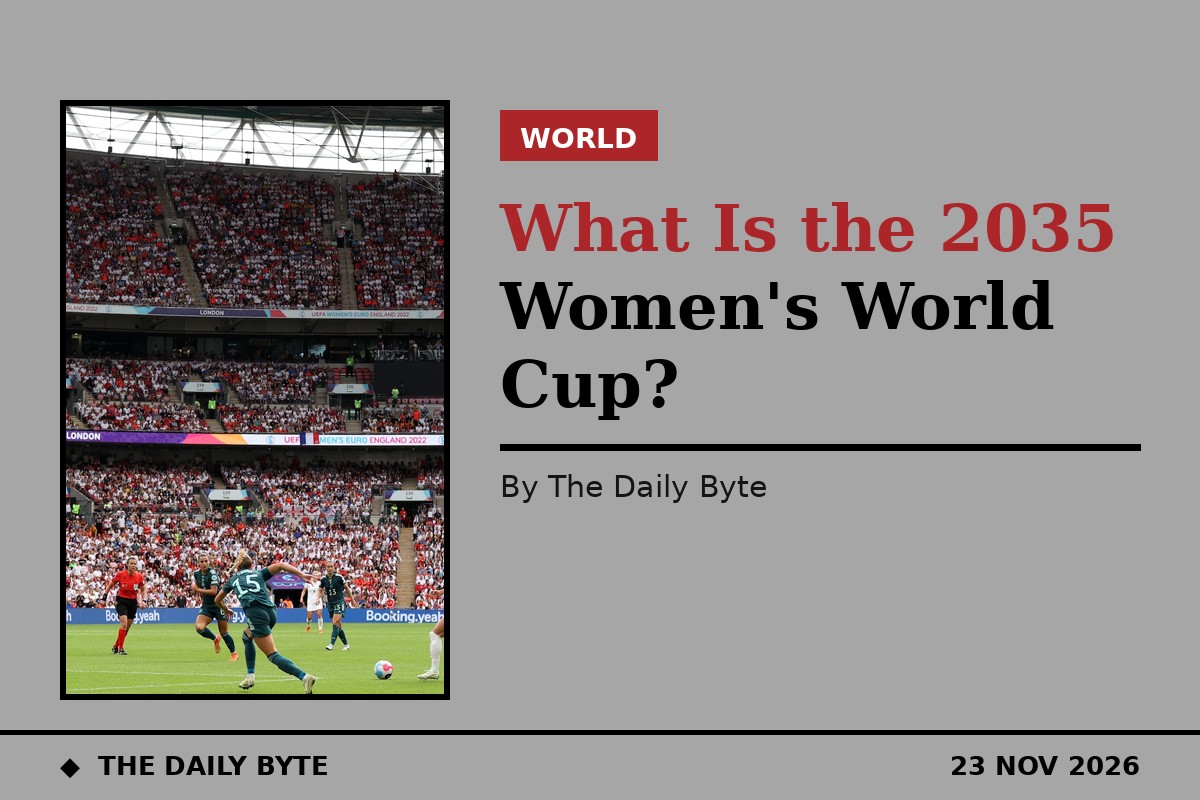
The 2035 Women's World Cup will be played in the United Kingdom. FIFA confirmed on Monday, 23 November 2026 that England, Northern Ireland, Scotland and Wales will jointly host the tournament, at a virtual Extraordinary FIFA Congress. It will be the first Women's World Cup staged in the UK, and the first World Cup of any kind hosted in the UK since England staged the men's tournament in 1966.
The 2035 edition will be the second Women's World Cup to feature 48 teams, following the 2031 tournament in the United States, Mexico, Costa Rica and Jamaica, which was confirmed at the same meeting. The UK bid was the only valid bid for 2035, so the vote, taken by acclamation among FIFA's 211 member associations, was a formality. But the decision settles the biggest question in British football for the next decade: where the games will be played, how big the tournament will be, and what still has to be decided before a ball is kicked.
How was the 2035 host decided?
The bidding process began in March 2025, when the FIFA Council opened the race for the 2031 and 2035 tournaments. For 2031, eligibility was limited to associations from Africa and CONCACAF, the confederation covering North and Central America and the Caribbean. For 2035, it was limited to associations from Africa and Europe. The four home nations of the United Kingdom, England, Northern Ireland, Scotland and Wales, submitted a joint bid under the name All Together, and in April 2025 FIFA declared it the sole valid bid for 2035. The United States-led bid for 2031 was likewise unopposed.
Both bids were then put through FIFA's evaluation process, which scores stadiums, infrastructure, accommodation, transport, legal guarantees and sustainability. The UK bid scored 4.3 out of five in FIFA's evaluation, a mark reported to be higher than any of the past five Women's World Cup bids. FIFA said the bidder had submitted extensive government support documents and contractual hosting agreements, demonstrating the commitment of the relevant authorities and stakeholders. On 23 November 2026, almost exactly 35 years after the opening match of the first Women's World Cup, a 12-team tournament played in China in 1991, the Extraordinary Congress appointed both hosts by acclamation. FIFA announced that England, Northern Ireland, Scotland and Wales would stage its flagship women's competition in 2035.
FIFA President Gianni Infantino told the congress that the aim was to make women's football truly global. "Our objective, of course, is making women's football truly global, and (to) build the future together with all Member Associations and with all stakeholders," he said. "Today, we decide here on the hosts of the FIFA Women's World Cup 2031 and 2035."
How big will the 2035 tournament be?
The 2035 Women's World Cup will be played by 48 teams in 104 matches over 39 days, according to the bid details reported when the award was confirmed. That makes it the largest Women's World Cup ever staged, equal in size to the 2031 edition, which will be the first to use the 48-team format. The expansion follows the men's tournament, which moved to 48 teams for the 2026 edition in the United States, Canada and Mexico, and it means the women's game will have doubled in size in a single cycle: the 2023 tournament in Australia and New Zealand had 32 teams, and the 2027 edition in Brazil, the first Women's World Cup held in South America, will also have 32.
The dates for the 2035 tournament have not yet been confirmed by FIFA. The Times reported proposed dates of 21 June to 29 July, but that remains a proposal, not a confirmed schedule, and fans should treat the timing as provisional until FIFA announces it. What is settled is the scale: 48 teams, 104 matches and a tournament lasting well over a month, spread across four nations.
The growth of the tournament is also a measure of how far the women's game has travelled since 1991, when 12 teams played the first edition in China. The 2035 tournament will be played in front of crowds its founders could not have imagined: the Euro 2022 final at Wembley, in which England beat Germany, drew a crowd of 87,192, then a record for a women's football match in Europe, and the Lionesses have since won a second European title. The 2035 World Cup is the next step in that rise, and the first time the tournament's biggest stage will be in Britain.
Which stadiums could host matches?
The UK bid proposes 19 stadiums across 15 cities: 14 in England, two in Scotland, two in Wales and one in Northern Ireland. Wembley Stadium in London, the largest ground in the bid at 90,652 seats, has been proposed to host the final, and is the only venue identified in the bid as a potential final host. FIFA will make the final decision on which venues are used, and the list is a proposal, not a confirmed fixture list, so some grounds could still be added or dropped before 2035.
| Nation | Proposed stadiums |
|---|---|
| England (14) | Wembley, Tottenham Hotspur Stadium, Emirates Stadium and Selhurst Park in London; Old Trafford and Etihad Stadium in Manchester; Villa Park in Birmingham; Elland Road in Leeds; Hill Dickinson Stadium in Liverpool; St James' Park in Newcastle; City Ground in Nottingham; Stadium of Light in Sunderland; Amex Stadium in Brighton; Ashton Gate in Bristol |
| Scotland (2) | Hampden Park in Glasgow; Easter Road in Edinburgh |
| Wales (2) | Principality Stadium and Cardiff City Stadium in Cardiff |
| Northern Ireland (1) | Windsor Park in Belfast, to be redeveloped |
Three more stadiums could yet be added: Birmingham's new Powerhouse Stadium, Wrexham's redeveloped Racecourse Ground, and a potential new Chelsea stadium. If all three are included, the tournament would be played in 16 cities across 22 venues. A few details in the bid show how much can still change in nine years. Old Trafford is included in its current form, but if Manchester United's proposed new stadium is built, the new ground would be envisaged as the host instead. Windsor Park in Belfast is listed on the basis of a redevelopment that would raise its capacity. And Anfield, Liverpool's famous ground, is absent from the bid entirely: the city's place goes to Everton's new Hill Dickinson Stadium on the waterfront.
FIFA's evaluators scored each proposed stadium individually. Wembley, Tottenham Hotspur Stadium and the Hill Dickinson Stadium received the joint-highest scores, 4.6 out of five, with Wembley's score doubled in FIFA's weighting because it is the proposed final venue. The lowest-scored grounds, including Easter Road, Windsor Park and the City Ground, scored 3.6. Those scores do not decide the final list on their own, but they show which grounds FIFA's inspectors rated most highly.
Why does 2035 matter for the UK?
For British football, 2035 is a homecoming with a long wait behind it. England hosted the men's World Cup in 1966 and won it; no World Cup, men's or women's, has been staged in the UK since. The home nations have bid unsuccessfully for the men's tournament since then, including failed bids for 2006 and 2018, so the 2035 award is the first time a UK World Cup bid has succeeded in almost sixty years. The UK will also host the men's European Championship in 2028, so the decade will bring two of football's biggest tournaments to British soil in the space of seven years.
The tournament is also a landmark for the women's game in the country that hosts it. England's Lionesses won the European Championship at Wembley in 2022 and retained the title in 2025, and the Women's Super League has grown into one of the best-attended women's leagues in the world. Hosting a 48-team World Cup puts that progress on the largest possible stage, and the bid's organisers have said the tournament should reach beyond the pitch, bringing visitors, investment and jobs to every part of the country, in the words of the UK government's announcement of the award. The four-nation format matters too: it is the first World Cup, men's or women's, to be staged across all four home nations together, with matches in Belfast, Edinburgh, Glasgow and Cardiff as well as across England.
There are also practical questions that will take years to settle. The final list of host cities and venues has not been confirmed, and FIFA has not yet said when it will be. Ticketing, transport, security and the tournament schedule all remain to be worked out, and the proposed dates have not been confirmed. The 2031 hosts face the same process first: FIFA is expected to confirm that tournament's final list of host cities and venues by the end of 2028, which gives a sense of the timetable the UK bid may follow.
What happens next?
The next step is FIFA's confirmation of the final venues and host cities, followed by the detailed planning that every World Cup requires: stadium upgrades, transport plans, training bases, fan zones and the match schedule. The Football Associations of England, Northern Ireland, Scotland and Wales will work with FIFA, the UK government and the devolved governments on that programme, and the bid's government support documents, which FIFA praised in its evaluation, suggest the political backing is already in place. For fans, the practical milestones to watch are the venue confirmation, the announcement of dates, and the start of ticket sales, none of which has a date yet. Until then, what is certain is the headline: in 2035, the Women's World Cup is coming to the United Kingdom.
Frequently asked questions
When is the 2035 Women's World Cup? The tournament will be held in 2035, but FIFA has not yet confirmed the exact dates. Proposed dates of 21 June to 29 July have been reported, but they are not confirmed, and the schedule will be announced by FIFA in due course.
Where will the 2035 Women's World Cup be played? Across England, Northern Ireland, Scotland and Wales. The bid proposes 19 stadiums in 15 cities, with Wembley proposed to host the final. Three more stadiums could be added, taking the tournament to 22 venues in 16 cities. The final list has not been confirmed.
How many teams will play in 2035? Forty-eight teams will play 104 matches over 39 days. It will be the second 48-team Women's World Cup, after the 2031 edition in the United States, Mexico, Costa Rica and Jamaica.
Has the UK hosted a World Cup before? Yes, once: England hosted and won the men's World Cup in 1966. The 2035 Women's World Cup will be the first Women's World Cup in the UK and the first World Cup of any kind in the UK since 1966.
Who won the right to host 2035? The joint bid from England, Northern Ireland, Scotland and Wales, under the name All Together. It was the sole valid bid for 2035, declared as such by FIFA in April 2025, and was appointed by acclamation at FIFA's Extraordinary Congress on 23 November 2026.


