What is the 3pm blackout in English football?
The 3pm blackout is the rule that stops live football being shown on television in the United Kingdom between 2.45pm and 5.15pm on a Saturday afternoon. If your team kicks off at 3pm on a Saturday, you cannot watch the match live on Sky Sports, TNT Sports or any other UK broadcaster. The rule has been in place since the 1960s, it is enforced by the Football Association under UEFA's Article 48, and it was raised again in the House of Commons on 12 November 2026, when the MP Rupert Lowe asked the government to end it.
For many supporters the blackout is simply a fact of Saturday life: go to the game, listen on the radio, or follow the scores and wait for the highlights. For others it is an anachronism from the days before streaming, when televised football was feared as a threat to crowds. This explainer sets out what the rule is, where it comes from, what it covers, and whether it could be scrapped.
What exactly is blocked, and when?
Between 2.45pm and 5.15pm on a Saturday, no live football can be broadcast on UK television or streaming services. The window covers the 3pm kick-offs in the Premier League and the English Football League, and it also covers foreign football: a La Liga match kicking off at 3.15pm cannot be shown live in the UK either, and viewers of a 5pm Serie A game have to join 15 minutes after the first half has begun.
The rule only covers intentional television transmissions. Radio commentary is outside it, which is why BBC Radio 5 Live and local radio can carry live commentary of 3pm games, and why programmes such as Soccer Saturday can report the goals as they go in. Highlights are also unaffected: broadcasters can show the goals after full time, and Match of the Day runs on Saturday night.
The blackout only applies in the UK. Overseas, every Premier League match, including the 3pm games, is shown live. That is why supporters abroad can watch a Saturday 3pm kick-off that is unavailable at home, and why the rule is often described as a peculiarly British arrangement.
Where does the rule come from?
The blackout was introduced in the 1960s, driven by the Burnley chairman Bob Lord, who argued that televised matches would empty the terraces at every other ground. At the time, television was becoming a regular appliance in most households, and clubs feared that allowing Saturday afternoon fixtures to be televised would reduce attendances across the country. The idea was to protect crowds, not just at the club being televised, but at lower-league and non-league matches being played at the same time.
The legal basis is Article 48 of the UEFA Statutes, which allows any national association to decide on a set period of two and a half hours per Saturday and Sunday during which the transmission of football within its territory is prohibited. England and Scotland have applied this to 2.45pm to 5.15pm on a Saturday ever since the rule was introduced, and Northern Ireland uses it too. The Football Association enforces the closed period at the request of the Premier League and the EFL, and declares the window to UEFA ahead of each season.
Article 48 can only be enforced when 50 per cent of matches in the top two divisions are being played at the same time within the designated slot. For the FA to implement the rule, that requires 11 matches across the Premier League and Championship to start at 3pm on a Saturday. UEFA publishes each association's declaration in advance, including the Saturdays that are excluded. For the 2025/26 season, the English closed period ran from 23 August to 25 April, with 11 Saturdays excluded, so Saturdays in May fall outside it entirely.
Why does the blackout still exist?
The stated purpose has not changed since the 1960s: to protect attendances throughout the English football pyramid. The Premier League says Article 48 is there to "protect attendances throughout the English football pyramid", and the argument is that if every 3pm game were on television, fewer people would go to matches, including the non-league and youth games down the road that depend on Saturday afternoon crowds.
The rule has survived because the clubs, the leagues and the FA have all defended it, and because it is protected in the broadcast contracts. The Premier League's UK deal that started in 2025/26 lifted the number of live games from 200 to 270 a season, with Sky showing at least 215 and TNT Sports 52, and the 3pm blackout was protected for the length of that deal, to 2029. That leaves around 110 Premier League matches a season with no live UK coverage.
The only time the blackout was lifted was during the early waves of the Covid-19 pandemic, when fans could not attend matches and games were moved to different times so supporters could watch as much football as possible. Once crowds returned, the blackout returned with them. An exemption was granted for two Saturdays over the 2025/26 Christmas period, 27 December and 3 January, but the Premier League chose not to schedule any 3pm kick-offs on those dates, so no 3pm game was shown.
Which matches does it affect?
The most common misconception is that the blackout only touches the Premier League. It does not. The closed period applies to live football broadcasts across a range of British competitions, so during the Saturday afternoon window there is typically no live coverage of the Scottish Premiership, the English Football League, or the Scottish Professional Football League either.
The table below summarises what is and is not available during the window.
During the blackout, 2.45pm to 5.15pm on a Saturday: Premier League 3pm kick-offs, not shown live in the UK. EFL and Scottish league matches at 3pm, not shown live in the UK. Foreign league matches kicking off inside the window, not shown live in the UK. Radio commentary, available live. Score updates and goals shows, available live. Highlights, available after full time. The same matches shown live overseas, available where the local broadcaster holds the rights.
Because the blackout is a restriction on UK broadcasters rather than on the matches themselves, the games still take place as normal. The rule decides who can watch them live, not whether they are played.
Could the 3pm blackout be scrapped?
Yes, in principle. The closed period exists only because the Football Association declares it to UEFA ahead of each season. It is not written into the broadcast contracts as such: if the FA stopped declaring the window, it would lapse. In practice, though, it would need the FA, the Premier League and the EFL to agree, and the leagues have so far defended it.
Pressure is growing. Premier League chief executive Richard Masters has said the league is committed to the blackout for the foreseeable future, but talkSPORT has reported that the Premier League will hold talks on scrapping it as the new streaming era begins, and that a decision on ending the blackout could be made before the end of next season. The same reporting says the blackout could be removed when the next TV rights cycle is finalised in early 2028, with the current cycle running through to the end of the 2028/29 season.
The issue reached Parliament on 12 November 2026, when Rupert Lowe, the Restore Britain MP for Great Yarmouth and a former Southampton chairman, used culture questions in the Commons to ask the government to end the Saturday 3pm blackout, which stops those matches being shown live on British television. It was the most-viewed post from any MP that day, according to a round-up of Thursday's Commons business, which shows how much public interest the question still attracts.
The realistic horizon is the next rights cycle. The current UK deal runs to the end of 2028/29, so the blackout is very likely to be in place for the 2026/27 season and beyond. Any change would most plausibly come when the next cycle is negotiated, rather than in the middle of the current one.
What do supporters think?
Supporters are divided. Those who defend the blackout argue that it protects the match-going habit and the finances of smaller clubs, and that the Saturday 3pm kick-off is part of the culture of English football. They point out that the alternative, moving more games to other times for television, has already changed the fixture list, with fewer games at the traditional time.
Those who want it scrapped argue that supporters already pay for subscriptions and still cannot watch their team, that illegal streams fill the gap, and that the rule made sense when television was new but not in a streaming age when every other match is available. They also note that the blackout does not stop people watching football on a Saturday afternoon: it stops them watching it legally on television in the UK.
Both sides agree on one thing: the blackout is a choice, not a law of nature. It survives because the football authorities choose to declare it each season, and it will disappear when they choose not to.
Frequently asked questions
What is the 3pm blackout? It is a rule that stops live football being shown on UK television between 2.45pm and 5.15pm on a Saturday. It comes from UEFA's Article 48, which lets national associations protect a broadcast window, and it is enforced by the FA at the request of the Premier League and the EFL.
Why can't I watch 3pm games on TV? Because the FA declares a closed period to UEFA each season covering Saturday afternoons. No UK broadcaster holds the rights to show a live match in that window, and the restriction applies to foreign leagues as well as English football.
Can I listen to 3pm games on the radio? Yes. The blackout only covers television transmissions, so radio commentary of 3pm games is broadcast live, and goals shows report the scores as they happen.
Is the 3pm blackout being scrapped? Not for now. The Premier League has said it is committed to the blackout for the foreseeable future, and the current broadcast deal protects it until 2029. Talks have been reported, and a decision could come when the next TV rights cycle is finalised in early 2028.
Does the blackout apply abroad? No. It is a UK-only restriction. Overseas broadcasters show every Premier League match live, including the Saturday 3pm kick-offs.
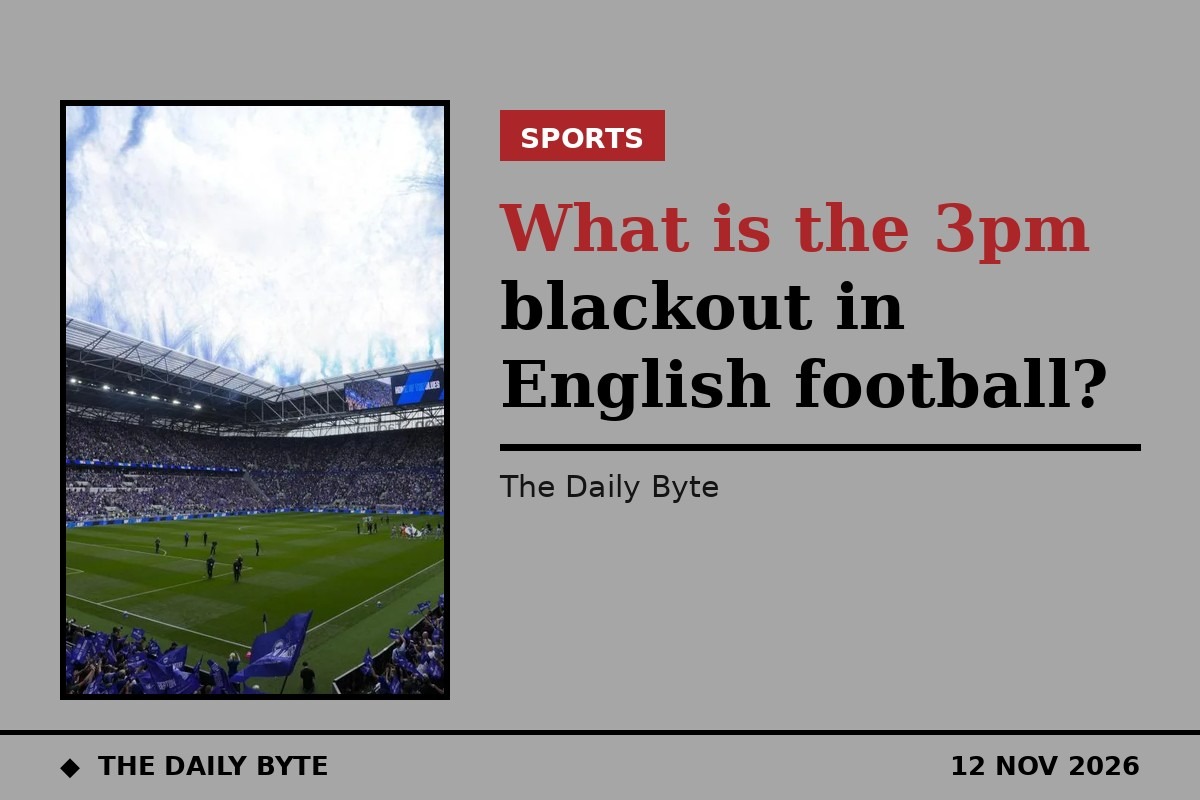
Sources: talkSPORT; 90min; StreamLocator. Photo: a packed Premier League stadium.