What Is the EU Channel Action Plan? UK Cash Explained
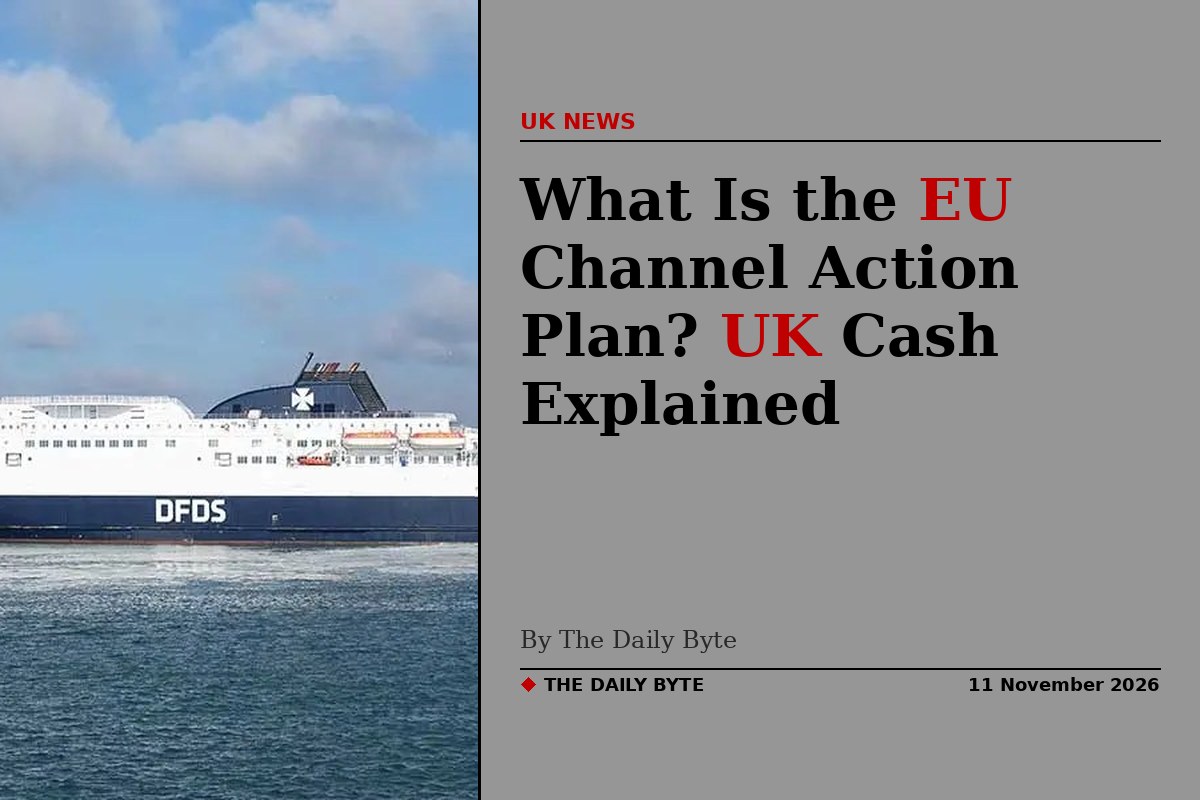
The EU Channel Action Plan is a European Union scheme launched in June 2026 to tackle small-boat crossings of the English Channel, bringing together France, Belgium, Germany and the Netherlands to target people-smuggling gangs and strengthen border surveillance. It is in the news because a leaked draft for the UK-EU summit on 20 November 2026 asks Britain to help pay for it, on top of the £662 million the UK has already promised France.
No payment has been agreed, no figure has been named, and the British government says it does not comment on leaks. This guide explains what the plan is, what the leaked draft actually says, what the UK has already committed, and what happens next.
What is the Channel Action Plan?
The Action Plan for the Channel route was set up by the European Commission in June 2026. It pulls together the four EU countries most involved in Channel crossings — France, Belgium, Germany and the Netherlands — to go after the smuggling gangs, tighten border surveillance and get their border agencies working together more closely.
The Commission's own document calls the UK "a key partner" in this work, which is unsurprising: Britain is the destination for the small boats, while the EU states are the departure points. The plan is about the supply side of the crossings — the gangs who organise them, the boats, and the routes — rather than about asylum rules or returns once people arrive in the UK.
It sits alongside, and is separate from, the UK's own bilateral arrangements with France, including the "one in, one out" returns deal. The Channel Action Plan is an EU-level plan; the UK is not a member of it, which is exactly why the question of a British financial contribution has become politically charged.
What does the leaked draft say?
The leak concerns the draft joint statement being drawn up for the second EU-UK summit, to be held in Brussels on 20 November 2026, where Prime Minister Andy Burnham is due to meet European Commission President Ursula von der Leyen and European Council President António Costa. The summit had been delayed from July following Keir Starmer's resignation.
According to The Sun, which reported the leak on 9 November 2026, the draft says: "Given the shared nature of these challenges, effective implementation requires a joint effort, including, where appropriate, through a financial contribution by the UK." The wording is short, and it names no figure and no cap.
The draft language echoes the Commission's own action plan document, which says: "Given the shared nature of the challenge and the costs borne at European Union level, the United Kingdom's financial contribution to joint actions under this Action Plan would meaningfully support our common efforts." In other words, Brussels has been asking for British money towards the plan since it was launched in June; the leaked summit draft would put that ask into a joint political declaration.
How much would the UK have to pay?
Nobody knows, because no amount has been put forward. The leaked draft contains no figure, and the government has not agreed to any payment. That is the most important fact in the story, and it is the one most often lost in the headlines.
What is known is what the UK is already paying. In April 2026 Britain agreed to pay France £662 million over three years, from 2026/27 to 2028/29, to stop the boats. The Sun's report notes that more than 23,000 people have crossed the Channel in small boats already this year, which critics cite as evidence that the money has bought little so far. The Commission's argument is that the EU is bearing costs of its own at European level, and that a British contribution to joint actions under the plan would be proportionate.
European Commission chief Ursula von der Leyen told EU leaders last month that a British contribution would be "important", according to GB News. That is a political signal rather than a demand with a number attached, and the figure — if there ever is one — would be negotiated, not imposed.
What has the government said?
A government spokesman said: "We do not comment on leaks or provide a running commentary on live negotiations." No payment has been agreed. The Sun's reporting also notes that the leaked text was only an EU first draft, and that UK officials are drawing up their own version of the joint statement ahead of the summit.
That matters because leaked drafts in EU-UK negotiations routinely contain one side's opening position. The same leaked papers, seen by Sky News, also ask the UK to reconsider plans to deport European offenders and to make a financial contribution towards reducing economic and social disparities between EU regions as a condition of access to the EU's single market for electricity. A UK source told Sky News that Britain would not agree to the deportation demand. None of these points represents a settled agreement.
What are critics saying?
Shadow Home Secretary Chris Philp said it would be "shameful" for the Government to "hand over our hard earned money to the EU for nothing in return". His argument is that Britain is already paying France £662 million and should not pay Brussels as well for the same problem.
Supporters of closer UK-EU cooperation make the opposite case: the crossings can only be tackled jointly, the EU states are bearing real costs, and a contribution buys influence over how the plan is run. The trade economist Catherine McBride, writing for Briefings for Britain, has estimated the wider EU-UK reset at £17.6 billion in 2027, a figure that includes many uncosted commitments beyond the Channel plan itself — but that is an analyst's estimate, not a government figure, and it should not be read as the price of the Channel plan.
What happens next?
The test comes at the summit on 20 November 2026. The joint statement will be negotiated line by line, and the Channel contribution wording may survive, be softened, or be dropped entirely. The UK's own draft will be part of that negotiation, and Downing Street has said nothing is agreed until it is agreed.
Even if a contribution is agreed in principle, it would still need a figure, a purpose and a mechanism — none of which exists yet. Until then, the honest summary is this: the EU wants British money for its Channel plan, the UK has not said yes, and the £662 million already promised to France is the only Channel payment that actually exists.
Key facts
| Detail | What is known |
|---|---|
| Plan launched | June 2026, by the European Commission |
| Countries involved | France, Belgium, Germany and the Netherlands; UK described as a "key partner" |
| Purpose | Tackle people-smuggling gangs, boost border patrols and surveillance |
| Leaked draft | EU draft joint statement for the UK-EU summit, 20 November 2026, reported by The Sun on 9 November 2026 |
| Amount requested | None named; no figure and no cap in the draft |
| Already committed | £662 million to France over three years, 2026/27 to 2028/29, agreed April 2026 |
| Government position | "We do not comment on leaks"; no payment agreed |
| Next step | UK-EU summit in Brussels, 20 November 2026 |
Frequently asked questions
What is the EU Channel Action Plan? An EU scheme launched in June 2026 that brings together France, Belgium, Germany and the Netherlands to tackle people-smuggling gangs and strengthen border surveillance on the Channel route.
Is the UK being asked to pay for it? Yes — a leaked EU draft for the 20 November 2026 summit asks for a British financial contribution towards the plan. No figure has been named and no payment has been agreed.
How much has the UK already paid France? Britain agreed in April 2026 to pay France £662 million over three years, 2026/27 to 2028/29, to tackle small-boat crossings.
Has the UK agreed to pay the EU? No. The government says it does not comment on leaks or live negotiations, and the leaked text is only an EU first draft, with UK officials preparing their own version.
When will this be decided? At the UK-EU summit in Brussels on 20 November 2026, when Prime Minister Andy Burnham meets Ursula von der Leyen and António Costa. The wording may change or be dropped during negotiations.
Sources: The Sun, 9 November 2026; European Commission, EU Action Plan for the Channel route, as quoted in reporting; Sky News reporting on the leaked summit papers, November 2026. Checked 11 November 2026.