What is the European Court of Human Rights?
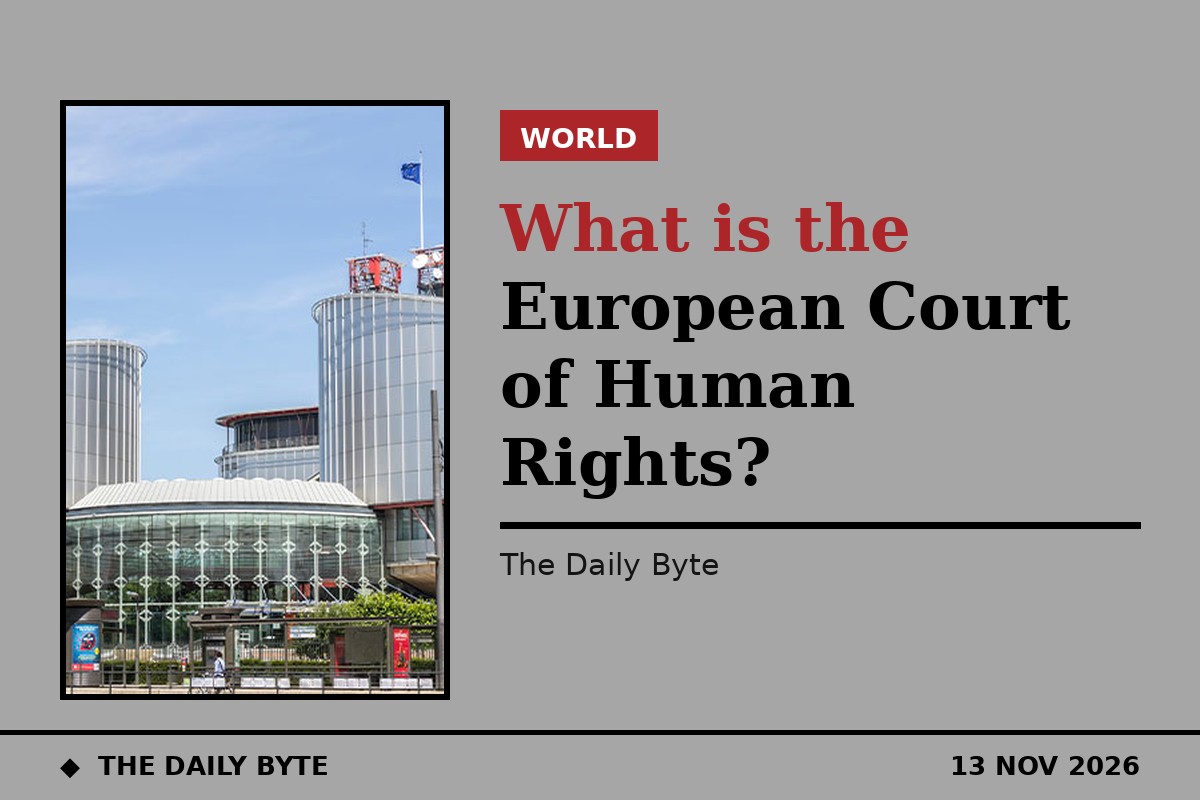
The European Court of Human Rights is an international court based in Strasbourg, France, that decides whether the 46 member states of the Council of Europe have breached the European Convention on Human Rights. It is the court people turn to when they say a state has violated their human rights and their own country's courts have not put it right. Its judgments are binding on the state concerned.
The court was established in 1959 and decided its first case, Lawless v. Ireland, in 1960. It became a permanent, full-time court in 1998. The treaty it applies, the European Convention on Human Rights, was adopted in 1950, in the aftermath of the Second World War, and the United Kingdom helped to draft it. Today the court's jurisdiction covers about 700 million people living in the 46 member states.
What does the European Court of Human Rights do?
The court applies the European Convention on Human Rights. Its task is to make sure states respect the rights and guarantees set out in the Convention, by examining complaints known as applications, lodged by individuals or sometimes by states. Where it concludes that a member state has breached one or more of those rights, it delivers a judgment finding a violation.
The rights protected by the Convention include the right to life, the right to a fair hearing in civil and criminal cases, the right to respect for private and family life, freedom of expression, freedom of thought, conscience and religion, the peaceful enjoyment of possessions, and the right to vote and to stand for election. The Convention also prohibits torture and inhuman or degrading treatment, arbitrary and unlawful detention, discrimination in the enjoyment of Convention rights, the death penalty and the collective expulsion of aliens.
The court has 46 judges, one from each member state. Judges are elected by the Parliamentary Assembly of the Council of Europe for a single, non-renewable term of nine years, and they sit in their individual capacity rather than representing their country. The court is assisted by a Registry of lawyers from the member states. Its official languages are English and French.
Is the European Court of Human Rights part of the European Union?
No. This is one of the most common misunderstandings about the court. It belongs to the Council of Europe, a separate organisation from the European Union that focuses on human rights, democracy and the rule of law. The Council of Europe was founded in 1949 and now has 46 member states, including the United Kingdom. Leaving the European Union did not take the UK out of the Council of Europe or out of the Convention system, and the UK remains a member state.
The European Union has its own court, the Court of Justice of the European Union, which sits in Luxembourg and deals with EU law. The Strasbourg court deals only with the European Convention on Human Rights. Russia was expelled from the Council of Europe in 2022 following its invasion of Ukraine and ceased to be a party to the Convention on 16 September 2022.
Who can take a case to the European Court of Human Rights?
You can apply if you consider that you have personally and directly been the victim of a violation of the rights in the Convention, and the violation was committed by one of the states bound by it. You do not need to be a national of that state: the violation must simply have been committed against a person within its jurisdiction, which usually means on its territory. Individuals, groups and companies can apply, as can states against other states.
There are strict conditions. You must first have used all the remedies in the state concerned that could provide redress, which usually means taking your case through the national courts, including appeals to the highest court where applicable, and raising the Convention complaint there. You must then lodge your application within four months of the final domestic decision. After that period, the application cannot be accepted.
Applications are made on a completed form sent by post to the court in Strasbourg, and there is no fee for lodging a case. You do not need a lawyer for the first stages, although you will need one once your application has been notified to the government concerned. Most applications are declared inadmissible without ever being notified to the government. Proceedings are conducted mainly in writing, and public hearings are exceptional.
What happens if the court finds a violation?
If the court finds a violation, it may award the applicant "just satisfaction", a sum of money in compensation for certain forms of damage, and it may require the state to refund the expenses of bringing the case. The judgment is binding, and the state concerned is under an obligation to comply with it. In urgent cases the court can also grant interim measures, for example to stop a deportation where there is a serious risk of physical harm, although it does so only in exceptional circumstances.
The court itself is not responsible for making sure its judgments are carried out. As soon as it has given judgment, responsibility passes to the Committee of Ministers of the Council of Europe, which supervises execution and checks that any compensation is paid. The court has said that, given its backlog of cases, applicants may have to wait a year before it can even begin its initial examination of an application, although urgent cases can be dealt with as a matter of priority.
What can the court not do?
The court is not a court of appeal above national courts. It does not rehear cases, and it cannot quash, vary or revise national court decisions. It is not empowered to overrule national decisions or annul national laws. It cannot deal with complaints against private individuals or companies, only against states, and it cannot consider complaints about any legal instrument other than the European Convention on Human Rights. It will not help applicants find or pay for a lawyer, although legal aid can be applied for at a later stage.
Frequently asked questions
Is the UK still under the European Court of Human Rights after Brexit? Yes. The UK is a member of the Council of Europe, which is separate from the European Union, and it remains a party to the European Convention on Human Rights.
Can the court overturn a decision of a UK court? No. It cannot quash or change a national court's decision. It can find that a state breached the Convention, and the state is then obliged to comply with the judgment.
How long do I have to apply? Four months from the date of the final decision in your own country's courts. You must also have exhausted the domestic remedies available to you first.
Does it cost anything to apply? No fee is charged for lodging an application, but you will have to bear your own costs, such as lawyers' fees, unless legal aid is granted at a later stage.
Sources: the European Court of Human Rights questions and answers guide and Wikipedia's summary of the court.


