What Is the Federal Reserve? US Central Bank Guide
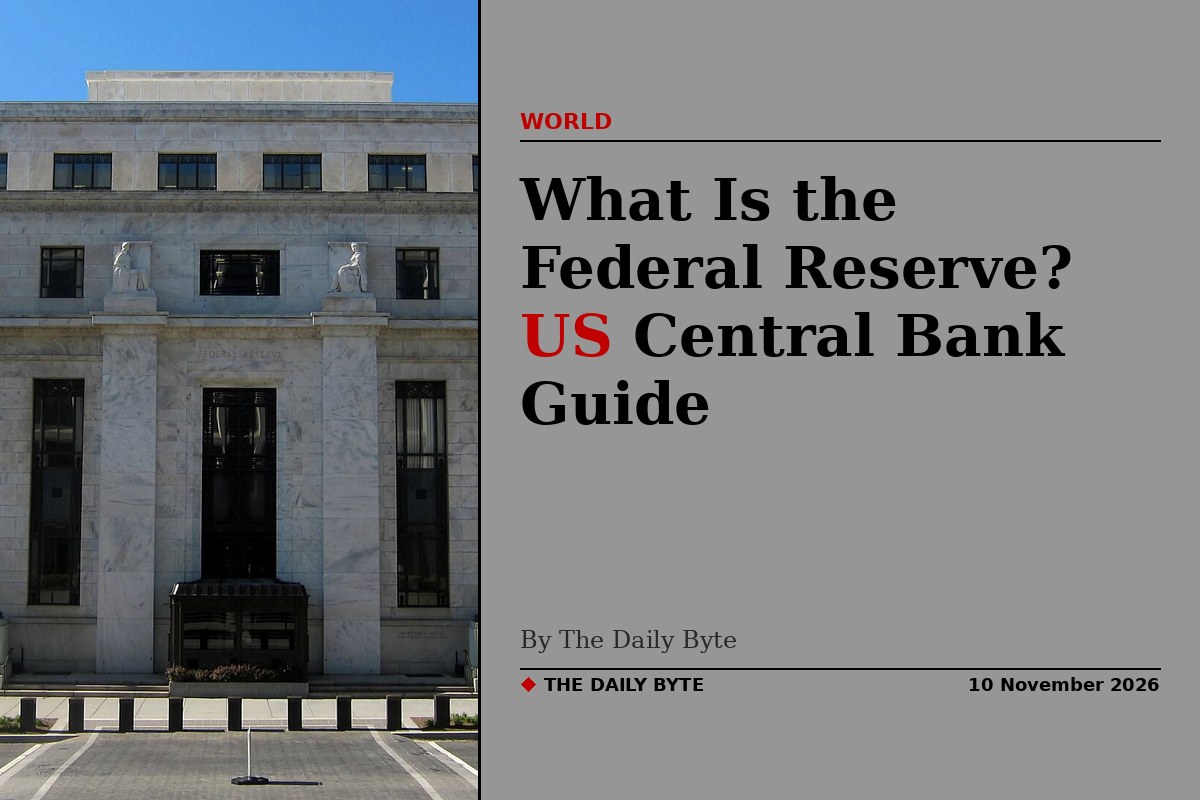
The Federal Reserve, often called the Fed, is the central bank of the United States. It sets the country's key interest rate, supervises banks, keeps the financial system stable and manages the supply of money and credit. When the news says the Fed has raised, cut or held interest rates, it is talking about decisions that affect mortgages, loans, savings and the value of the dollar around the world.
The Fed was created by the Federal Reserve Act of 1913, after a series of banking panics showed that the United States needed a central bank to act as a lender of last resort. It is an independent agency of the US government: its leaders are appointed by the President and confirmed by the Senate, but it makes monetary policy decisions without taking orders from the White House or Congress. That independence is meant to stop politicians from pushing interest rates down before elections at the cost of higher inflation later.
What does the Federal Reserve do?
The Fed itself lists five jobs. The first and best known is conducting monetary policy to promote maximum employment, stable prices and moderate long-term interest rates. The other four are promoting the stability of the financial system, supervising individual banks and financial institutions, keeping the payment system safe and efficient, and protecting consumers and supporting community development.
In practice, most of what the public hears about is the first job: interest rates. The Fed aims to keep inflation at 2% over the longer run, a target its rate-setting committee has stated publicly. When inflation runs too high, the Fed raises interest rates to cool spending and borrowing. When the economy is weak and unemployment is rising, it cuts rates to encourage spending and hiring.
How is the Federal Reserve organised?
The Fed has three parts. At the centre is the Board of Governors, seven members based in Washington, DC, who are appointed by the President and confirmed by the Senate for 14-year terms. The Board supervises banks, sets some of the Fed's policy tools and oversees the wider system. The Chair of the Board, who serves a four-year term in that role, is the public face of the Fed and chairs its rate-setting meetings.
The second part is the 12 regional Federal Reserve Banks, in Boston, New York, Philadelphia, Cleveland, Richmond, Atlanta, Chicago, St Louis, Minneapolis, Kansas City, Dallas and San Francisco. Each serves its own district of the country, supervises banks in its region and gathers economic intelligence from local businesses. The New York Fed is the most important in practice, because it carries out the Fed's market operations.
The third part is the rate-setting body itself, the Federal Open Market Committee, or FOMC, which brings the Board and the regional banks together to decide interest rates.
What is the FOMC and how does it set interest rates?
The FOMC has 12 voting members: the seven governors, the president of the New York Fed and four of the other 11 regional bank presidents, who rotate through the remaining seats on one-year terms. It holds eight regularly scheduled meetings a year. At each meeting it reviews the economy and sets the target range for the federal funds rate, the interest rate at which banks lend balances to each other overnight.
The Fed does not set that rate by decree. It uses three tools: open market operations (buying and selling government securities), the discount rate (what it charges banks to borrow directly from it) and reserve requirements. By changing the supply of bank reserves, it steers the federal funds rate towards its target. Changes in that rate then ripple through the economy, affecting other short-term rates, long-term rates, exchange rates and, ultimately, jobs, output and prices.
The Fed also communicates constantly about its thinking. After each meeting it publishes a statement, and the Chair holds a press conference. Markets hang on every word, because a hint about the next meeting can move share prices, bond yields and currencies within minutes.
Who runs the Federal Reserve in 2026?
The Chair of the Federal Reserve is Kevin Warsh, who took over on 22 May 2026, succeeding Jerome Powell. Powell remains a member of the Board of Governors. The vice chair of the FOMC is John C. Williams, president of the New York Fed.
At its meeting on 28 October 2026, the FOMC held its benchmark rate steady at a target range of 3.75% to 4.00%, in a 10-2 vote. Two members, Governor Lisa Cook and Cleveland Fed President Beth Hammack, dissented because they wanted a quarter-point increase. The committee said it would keep assessing incoming information before deciding its next move. Its next meeting is on 8-9 December 2026, and October's consumer price data, due on Tuesday 10 November, is the last inflation report before that decision. From 2027, the Fed has said one of its eight annual meetings will focus on monetary policy strategy, with no rate vote, leaving seven rate-setting meetings a year.
Why does the Federal Reserve matter to everyone else?
Because the US dollar is the world's main reserve currency and US government debt is the benchmark safe asset, the Fed's decisions reach far beyond America. When the Fed raises rates, borrowing gets more expensive worldwide, the dollar usually strengthens, and money often flows out of emerging markets. When it cuts rates, the opposite happens. That is why central banks from London to Islamabad watch FOMC meetings as closely as their own.
For ordinary people, the Fed matters through the rates on mortgages, car loans, credit cards and savings accounts. A higher federal funds rate does not set your mortgage rate directly, but it pushes up the cost of borrowing across the economy. A lower rate does the reverse. That chain, from a committee room in Washington to the cost of a home loan, is the reason the Fed is one of the most powerful institutions in the world.
Frequently asked questions
Is the Federal Reserve part of the US government? Yes. It is an independent agency within the government. Its governors are appointed by the President and confirmed by the Senate, and it is accountable to Congress, but it sets monetary policy independently of day-to-day politics.
Does the Federal Reserve print money? Not literally. Physical banknotes are printed by the US Treasury's Bureau of Engraving and Printing. The Fed manages the supply of money and credit in the economy through interest rates and its market operations.
How often does the Fed meet to set rates? The FOMC holds eight regularly scheduled meetings a year, roughly every six weeks, and can meet in between if events demand it.
What is the Fed's inflation target? The FOMC aims for inflation of 2% over the longer run. Inflation has run above that target for several years, which is why the Fed raised rates in September 2026 and has kept them high since.
Who is the Chair of the Federal Reserve? Kevin Warsh, who took over as Chair on 22 May 2026, succeeding Jerome Powell.
Sources: Federal Reserve and the Federal Reserve — Federal Open Market Committee.


