What Is the International Criminal Court?
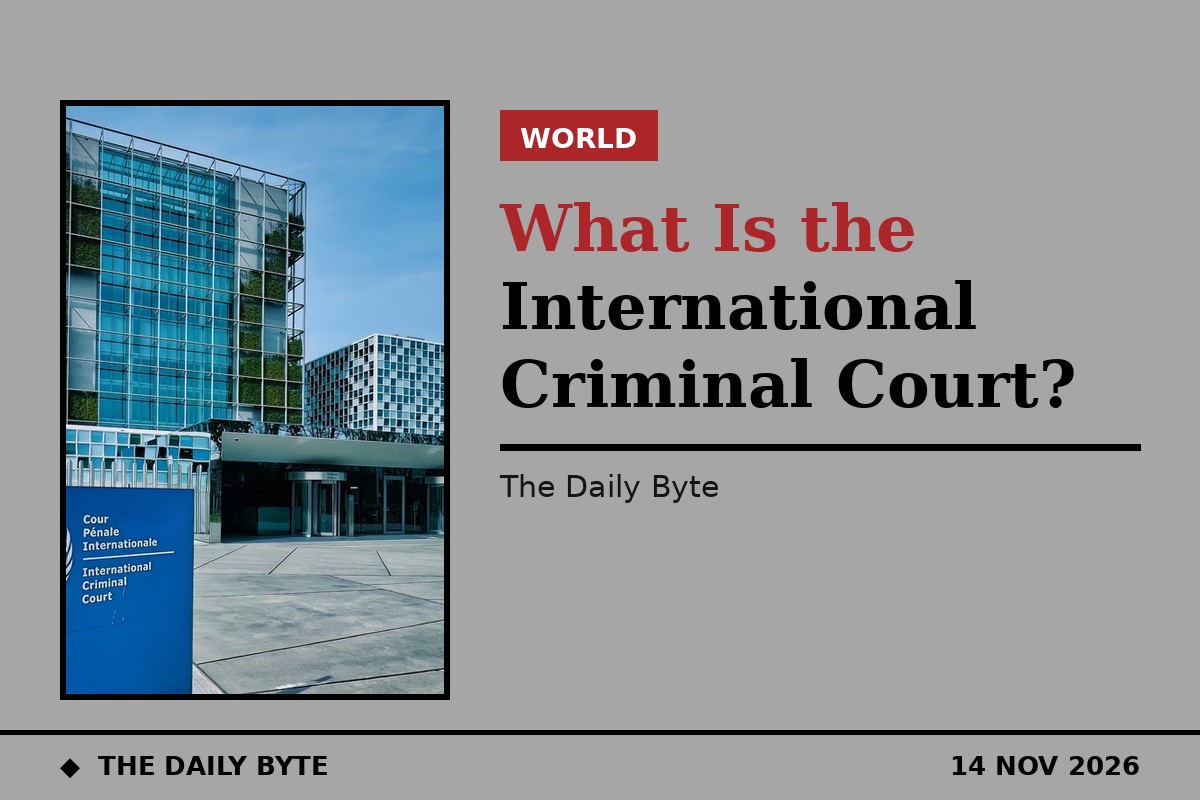
The International Criminal Court, known as the ICC, is a permanent international court based in The Hague in the Netherlands that investigates and tries individuals accused of genocide, crimes against humanity, war crimes and the crime of aggression. It was created by the Rome Statute, a treaty adopted on 17 July 1998 by 120 states, which entered into force on 1 July 2002. The court is a court of last resort: it steps in only where national courts are unwilling or unable genuinely to investigate and prosecute. The court explains how it works on its own official site.
What crimes can the ICC try?
The Rome Statute gives the court jurisdiction over four crimes. Genocide means acts committed with the specific intent to destroy, in whole or in part, a national, ethnic, racial or religious group. Crimes against humanity are serious violations committed as part of a large-scale attack against a civilian population. War crimes are serious violations of the laws of war. The fourth crime, aggression, is the use of armed force by one state against the sovereignty, integrity or independence of another, and the court's jurisdiction over it was activated on 17 July 2018. The court can only deal with crimes committed on or after 1 July 2002, when the statute took effect.
How does a case reach the court?
A case can reach the court in three ways: a state party to the Rome Statute can refer a situation to the prosecutor, the United Nations Security Council can refer one, or the prosecutor can open an investigation on their own initiative. The court is an independent international organisation, not part of the United Nations system, and is funded mainly by contributions from its states parties, of which there are more than 120. It has 18 judges sitting in three divisions — Pre-Trial, Trial and Appeals — and four organs: the Presidency, the Chambers, the Office of the Prosecutor and the Registry. The prosecutor analyses information, decides whether to investigate, and litigates cases before the judges.
Why can the court not just arrest people?
The ICC has no police force of its own. When it issues an arrest warrant, it relies on countries to make the arrest, transfer the suspect to its detention centre in The Hague, freeze assets and enforce sentences. That dependence on state cooperation is the court's biggest structural weakness, and it is also why its work is so often political: a warrant only leads to a trial if a government is willing to act on it. The principle behind this design is called complementarity. The court is meant to complement national justice systems, not replace them, and a case is inadmissible if a country with jurisdiction is genuinely investigating or prosecuting the same conduct.
Why is the ICC in the news?
On 13 November 2026, judges at the court formally closed part of the prosecutor's investigation into Afghanistan that could have looked at alleged crimes by United States troops, along with a probe into the Islamic State Khorasan militia, leaving the focus on actions of the Taliban since 2021. The prosecutor's office told Reuters it has appealed against the decision. Reuters reported that the move follows United States institutional sanctions against the court, imposed over American opposition to arrest warrants issued for Israeli officials and to the investigation into United States soldiers in Afghanistan. Arrest warrants issued against four Taliban leaders remain in effect. The episode shows how the court's legal work and the politics of the states it depends on are never far apart.
Frequently asked questions
Is the ICC part of the United Nations? No. It is an independent international organisation governed by the Rome Statute, with its seat in The Hague. It works with the United Nations, including through Security Council referrals, but it is not a UN body.
Who can the ICC prosecute? Individuals accused of genocide, crimes against humanity, war crimes or aggression, where the crimes fall within its jurisdiction — generally crimes committed on the territory of, or by nationals of, states that have accepted the court's jurisdiction, or in situations referred by the Security Council. It does not prosecute anyone under the age of 18 at the time of the crime.
Can the ICC try a country's leaders? Yes, in principle. The court tries individuals, not states, and that includes senior political and military figures if the evidence supports charges within its jurisdiction.
Does the ICC replace national courts? No. National courts have the first duty to prosecute international crimes. The ICC acts only when a state is unwilling or unable to do so genuinely.


