What Is the Loss and Damage Fund? Explained
The Loss and Damage Fund is the world's first dedicated international fund for paying developing countries for climate harm that cannot be prevented or adapted to. Its formal name is the Fund for Responding to Loss and Damage, and it was created to help the countries most vulnerable to climate change cope with the economic and non-economic losses caused by floods, storms, droughts, sea-level rise and other climate impacts.
It matters now because it has just taken its first real step. On 22 October 2026, the fund's board set aside 21.6 million US dollars for Nepal, the first time money has been earmarked for a specific country, after a glacial flood in the Bhotekoshi valley in August killed more than 1,500 people and left over 5,000 missing. The decision came weeks before the COP31 climate summit opened in Antalya, Türkiye, where the fund's future is on the agenda. Yet the money has still not reached Nepal, and the fund's first funding round is oversubscribed almost eight times over. This explainer sets out what the fund is, how it works, and why getting money to disaster-hit countries is proving so slow.
What does loss and damage mean?
Climate action is usually described in two parts. Mitigation means cutting greenhouse gas emissions to slow warming. Adaptation means preparing for the impacts, for example by building flood defences, developing drought-tolerant farming or installing early warning systems. Loss and damage is the third pillar: the harm that happens anyway, when a disaster is too big or a change too slow and relentless for adaptation to prevent.
The fund recognises two broad kinds of loss and damage. Economic loss and damage includes destroyed housing, roads, crops and livelihoods. Non-economic loss and damage covers things that are hard to price, such as lives, health, cultural heritage, community ties and ecosystems. It covers both sudden events, such as floods and cyclones, and slow-onset events, such as sea-level rise and desertification. Nearly all of the funding requests received so far cover non-economic losses as well as economic ones.
The distinction matters because adaptation funding is meant to reduce future risk, while loss and damage finance responds to harm that has already happened or cannot be adequately avoided. That includes rebuilding homes and infrastructure, restoring livelihoods and supporting communities whose land or culture has been damaged beyond repair.
How the fund was created
The idea that vulnerable countries deserve dedicated support for climate harm took decades of negotiation to win. For years, richer countries resisted a separate fund, fearing it would imply legal liability for their historic emissions. The breakthrough came at COP27 in Sharm el-Sheikh in 2022, when governments agreed to establish a dedicated fund for responding to loss and damage.
A year later, at COP28 in Dubai, the fund was operationalised on the very first day of the summit. Governments pledged about 700 million US dollars, including 100 million dollars each from Germany and the United Arab Emirates. A 26-member board was formed, with 12 members from developed countries and 14 from developing countries, and the World Bank agreed to serve as the fund's interim trustee.
The fund operates under the financial mechanism of the United Nations Framework Convention on Climate Change, the UN climate treaty. Its governing instrument sets out how it should work, including approaches such as direct access for countries, simplified procedures, small grants and, where appropriate, rapid disbursement.
How the fund works
The fund's start-up phase is known as the Barbados Implementation Modalities, an initial set of interventions designed to test and learn while the long-term operational model is developed. The first call for funding requests was launched at COP30 in Belém, Brazil, in November 2025, and the submission window ran from 15 December 2025 to 15 June 2026.
The response showed the scale of the demand. The fund received 176 funding requests covering 119 countries, seeking approximately 2.8 billion US dollars against an initial allocation of 250 million dollars, which the board increased to 342 million dollars in July 2026. In other words, countries asked for roughly eight times more than the fund had available for its first round.
Under the start-up arrangements, funding is provided as grants, not loans, so disaster-hit countries do not take on new debt to recover. Access can work through eligible access entities or through direct budget support to national governments. The requests are currently under review, and the board is expected to consider the first funding decisions at its tenth meeting in Manila in December 2026.
How much money does it have?
As of March 2026, the fund had received pledges of 822 million US dollars from 27 countries, with about 450 million dollars actually paid in. That is a small sum next to the need: a peer-reviewed estimate puts annual loss and damage needs at close to 400 billion US dollars a year, and the wider climate finance commitment agreed at COP29 in Baku was for developed countries to lead the mobilisation of at least 300 billion dollars a year by 2035.
The gap is stark in the fund's own first round. The 342 million dollars reserved for the first funding round covers roughly one-eighth of the 2.8 billion dollars requested. In July 2026 the board deferred its first package of four grants, worth 77.4 million dollars, until December, and its target for disbursing start-up finance slipped from mid-2026 to the end of the year.
The United States withdrew its representation on the board in January 2025, as part of the Trump administration's exit from the Paris Agreement. The fund's supporters argue that replenishment is essential, but analysts also point to a delivery problem: the body allocating scarce finance has 26 members, meets about three times a year, decides by consensus and appraises requests one at a time.
Nepal: the first country allocation
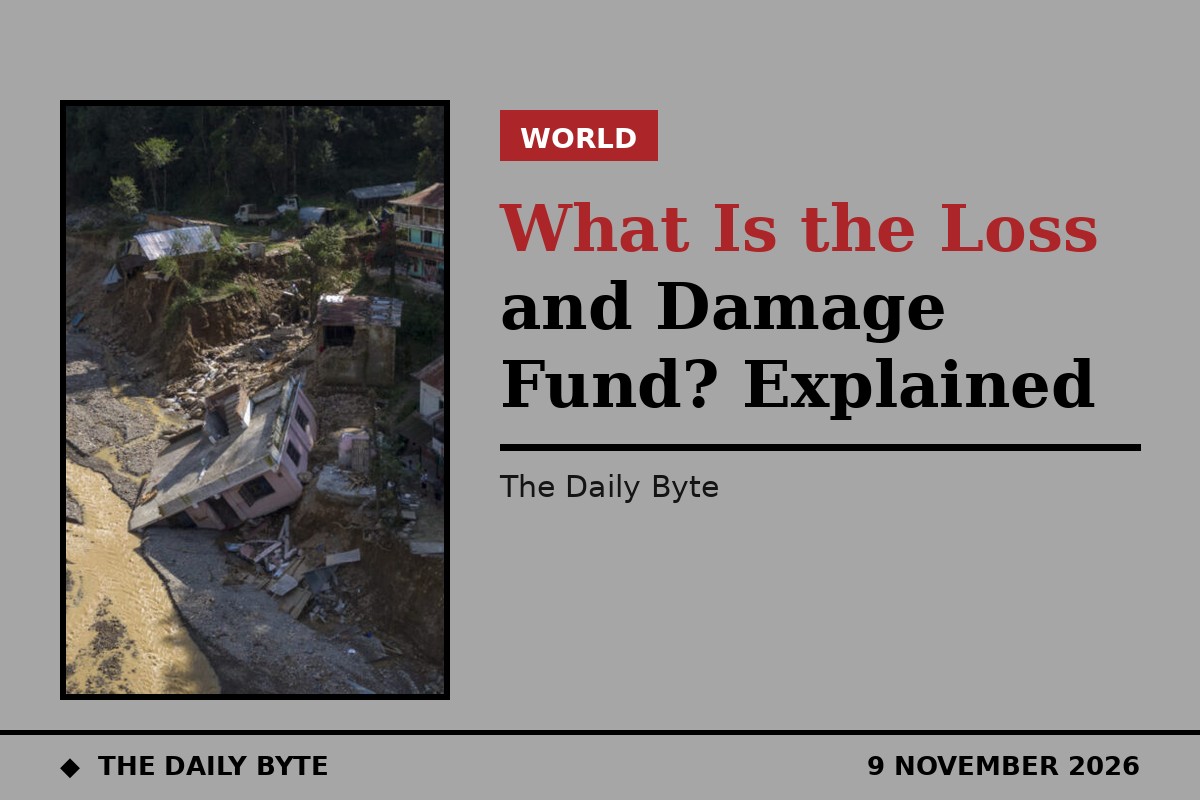
On 26 August 2026, an ice-and-rock avalanche triggered flooding along the Bhotekoshi-Trishuli-Narayani river system in Nepal, close to the border with Tibet. Homes, roads and hydropower infrastructure were destroyed, and more than 1,500 people were killed, with over 5,000 reported missing.
On 22 October, at its first extraordinary virtual meeting, the fund's board set aside 21.6 million dollars for Nepal, including 20 million dollars for recovery and 1.6 million dollars in administrative and oversight costs. It was the first time the fund had earmarked money for a specific country, and Nepal's case is being treated as a template for how the mechanism should ideally work: swift consideration and quick access to money for a disaster-hit nation.
But the reality has been slower than the headline suggests. It took 57 days from the flood for the board to make its decision, and the money has still not moved. Nepal's formal funding proposal is only now being drafted, with a first version due in November, and no implementing organisation has been chosen, because Nepal cannot apply directly. By the time the board next meets in Manila on 15 December, the flood will be 111 days old and the set-aside may still be only a set-aside.
The scale of the gap is also striking. Nepal's estimated recovery needs are close to 5 billion dollars, so the 20 million dollars set aside amounts to less than half of one per cent of what the country needs to rebuild.
Why is it so slow?
The fund's critics say the problem is not only the amount of money but the speed at which it moves. The Lowy Institute, writing ahead of COP31, argues that faster disbursement, not just a bigger fund, is the fix that loss and damage finance actually needs. Its analysis notes that the fund has spent years building governance arrangements, opening a funding window and debating how support should reach recipient countries, while disasters have not waited.
The comparison with other systems is telling. Jamaica's regional risk pool and catastrophe bond were due to pay out 242 million dollars within 16 days of Hurricane Melissa. The Loss and Damage Fund has no equivalent pre-agreed trigger. The Lowy Institute argues that the fund does not need to manage every payment itself: its role should be to pool finance, set common rules for triggers, tracking and audit, strengthen weaker national systems, and hold delivery partners to account.
Under that model, pre-agreed triggers could release cash within days through risk pools, social protection systems and bodies such as the Pacific Resilience Facility, while larger grants support recovery and reconstruction over months. The proposal sets deadlines as the key discipline: rapid finance should reach countries within 14 days of a declared sudden-onset disaster, while recovery grants should be decided within about 90 days of a request. The fund does not currently publish a clear measure of how long support takes to reach affected communities.
What happens next at COP31?
The fund is on the agenda at COP31 in Antalya. A high-level event on Saturday 14 November 2026, titled Fostering Availability, Accessibility and Affordability of Loss and Damage Finance, will take stock of the fund's progress and examine practical choices about how financing works in practice for countries. The discussion is framed around three connected attributes of effective loss and damage finance: availability, accessibility and affordability.
Availability means financing must be dependable and responsive to the timing and diversity of needs across different country contexts, including needs that persist well beyond immediate relief. Accessibility means resources must be reachable through country-led, workable pathways, including direct access, simplified procedures and small grants. Affordability means the terms of support matter as much as its availability: grants rather than loans, and support that does not add to a country's debt burden.
The board's tenth meeting in Manila on 15 December 2026 is the next decision point, when the first funding decisions from the 176 requests are expected. For the countries waiting, the question is whether the fund can move from setting money aside to actually delivering it, and whether COP31 produces new pledges to close the gap between the 822 million dollars promised and the 2.8 billion dollars already requested.
Why it matters
For the countries most exposed to climate change, the Loss and Damage Fund is a test of whether the international system can deliver on a promise made in 2022. The fund exists, it has a board, a trustee and a first round of requests. It has now made its first country allocation. But with requests dwarfing available money, decisions taking months, and the first payout still to move, the fund's supporters and its critics agree on one thing: the next few months, from the COP31 discussions in Antalya to the board meeting in Manila, will show whether it can become a working source of help for countries facing losses they did not cause and cannot adapt away from.


