What Is the Ninth Circuit? US Appeals Court Explained
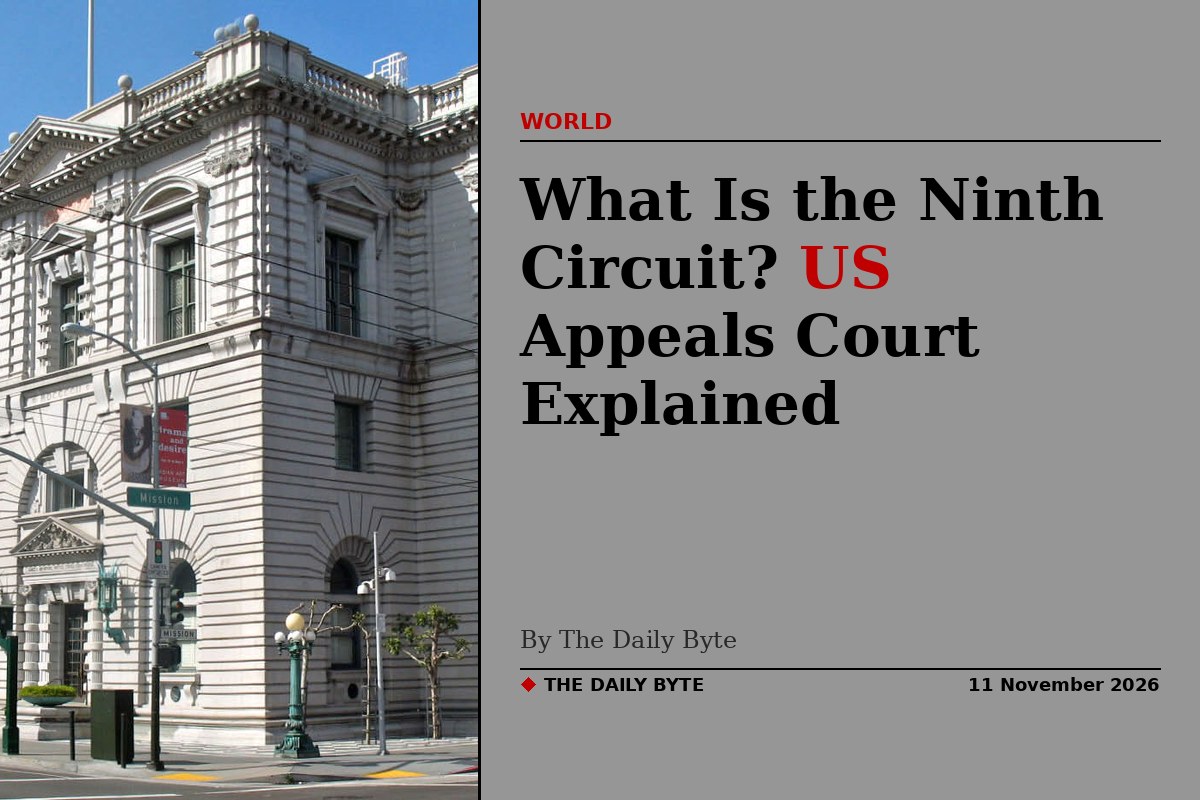
The Ninth Circuit is the largest of the 13 United States Courts of Appeals. It is the federal appeals court for the American West, covering nine states and two territories from its headquarters in San Francisco, California. It came back into the news on 10 November 2026, when it blocked a California climate disclosure law.
Appeals courts sit between the trial courts and the Supreme Court. When a party loses a case in a federal district court inside the Ninth Circuit's area, it can appeal to the Ninth Circuit, which reviews whether the law was applied correctly. This guide explains what the court is, which places it covers, and how its decisions work.
Which states does the Ninth Circuit cover?
The Ninth Circuit has appellate jurisdiction over the federal district courts in Alaska, Arizona, California, Hawaii, Idaho, Montana, Nevada, Oregon and Washington. It also hears appeals from the territorial courts of Guam and the Northern Mariana Islands. That is nine states and two territories, more ground than any other federal appeals court, and a population of about 67 million people.
The court's headquarters are in the James R. Browning U.S. Court of Appeals Building in San Francisco. It also sits regularly in Seattle, Portland and Pasadena. Its judges keep chambers in cities across the circuit, including Phoenix and San Diego.
How many judges sit on the Ninth Circuit?
The court has 29 active judgeships, more than any other circuit. Its Chief Judge is Mary H. Murguia, appointed by President Barack Obama in 2011. Circuit judges are nominated by the president and confirmed by the Senate, and they serve for life. Senior judges, who have taken a reduced caseload after long service, also hear cases, so the total number of judges working on the court is larger than 29.
The Supreme Court justice assigned to the Ninth Circuit is Elena Kagan. That role, known as circuit justice, covers emergency applications from the circuit, such as requests to pause a ruling while an appeal is prepared.
How does the Ninth Circuit decide cases?
Most appeals are heard by a panel of three judges, chosen at random from the court's judges. The panel reads the written arguments, usually hears oral argument from the lawyers, and then issues a written opinion. A panel can affirm the lower court's decision, reverse it, or send the case back for further proceedings.
In important or disputed cases, the court can rehear a case en banc, with a larger group of 11 judges rather than three. The court was established on 3 March 1891, and its size has long been a subject of debate: proposals to split it have been made for decades, because a single appeals court covering so many states and so many people is unusual.
What happens after the Ninth Circuit rules?
A party that loses in the Ninth Circuit can ask the Supreme Court of the United States to hear the case, but the Supreme Court accepts only a small number of cases each year. If it declines, the Ninth Circuit's decision stands. That is why the court's rulings matter well beyond the western states: its decisions on federal law, including immigration, the environment and business regulation, are followed by trial courts across its whole area and are watched closely everywhere else.
Sources: Wikipedia on the Ninth Circuit and the Ninth Circuit's official judges page.


