What is the Piddington asylum camp plan?
Angela Rayner has granted planning permission for an asylum accommodation centre for up to 1,256 men at the former MOD Bicester military site in Oxfordshire, next to the village of Piddington. The decision, announced on Thursday 12 November 2026, was made through the urgent Crown development route, which took the decision away from the local council. Planning permission does not mean the centre will definitely open: the Home Office says a final decision on whether to proceed has not yet been taken.
The approval has become one of the most talked-about planning decisions of the year because of the scale of the site compared with the village beside it. Piddington has around 350 residents, so the proposed centre could hold more than three times as many people as the village itself. Villagers had already held a symbolic vote to leave the United Kingdom in protest, and the planning process drew 3,177 objections and only one representation in support.
What was approved on 12 November 2026?
On 12 November 2026, Angela Rayner, the Secretary of State for Housing, Communities and Local Government, granted planning permission, subject to conditions, for the Home Office application for MOD Bicester. A letter sent to Greg Smith, the Conservative MP for Mid Buckinghamshire, said: "I am writing to inform you that today the secretary of state has granted planning permission, subject to conditions, for the Home Office's application."
The permission covers accommodation for up to 1,256 men at the former Ministry of Defence base. It allows existing buildings to be demolished and modular accommodation, together with health and welfare facilities, to be built on the site. The Home Office application was fast-tracked through an Urgent Crown Development application, a route designed for Crown development that is considered urgent.
The decision notice itself acknowledges the downsides. According to reporting of the decision, Rayner accepted that there would be "residual demand on healthcare, emergency and other public services" and that the plans could damage "community cohesion". The permission was granted on the basis of what the government's own report described as high national demand for asylum accommodation.
Where is MOD Bicester and what is Site A?
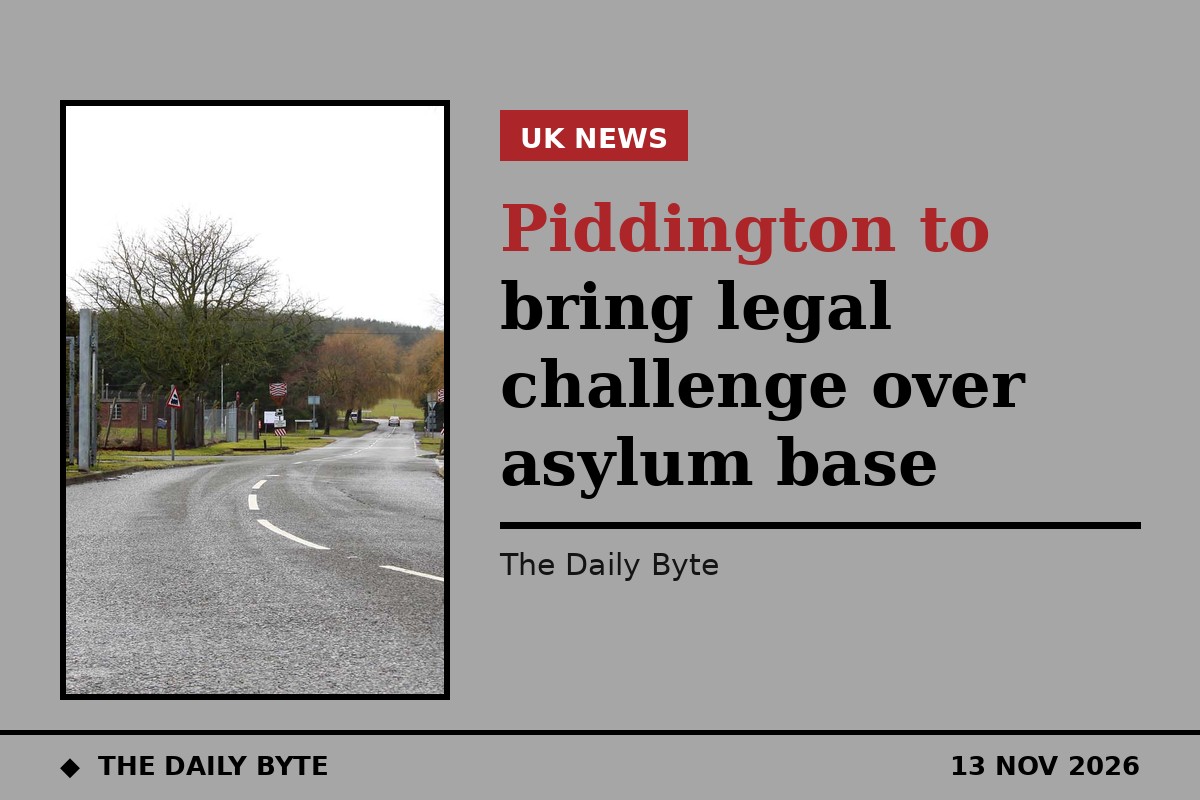
MOD Bicester is a former military equipment storage facility in Oxfordshire, about half a mile from the village of Piddington. The site approved for the asylum centre is known as Site A. The Home Office announced its plans to use the former military barracks to house asylum seekers in the summer of 2026.
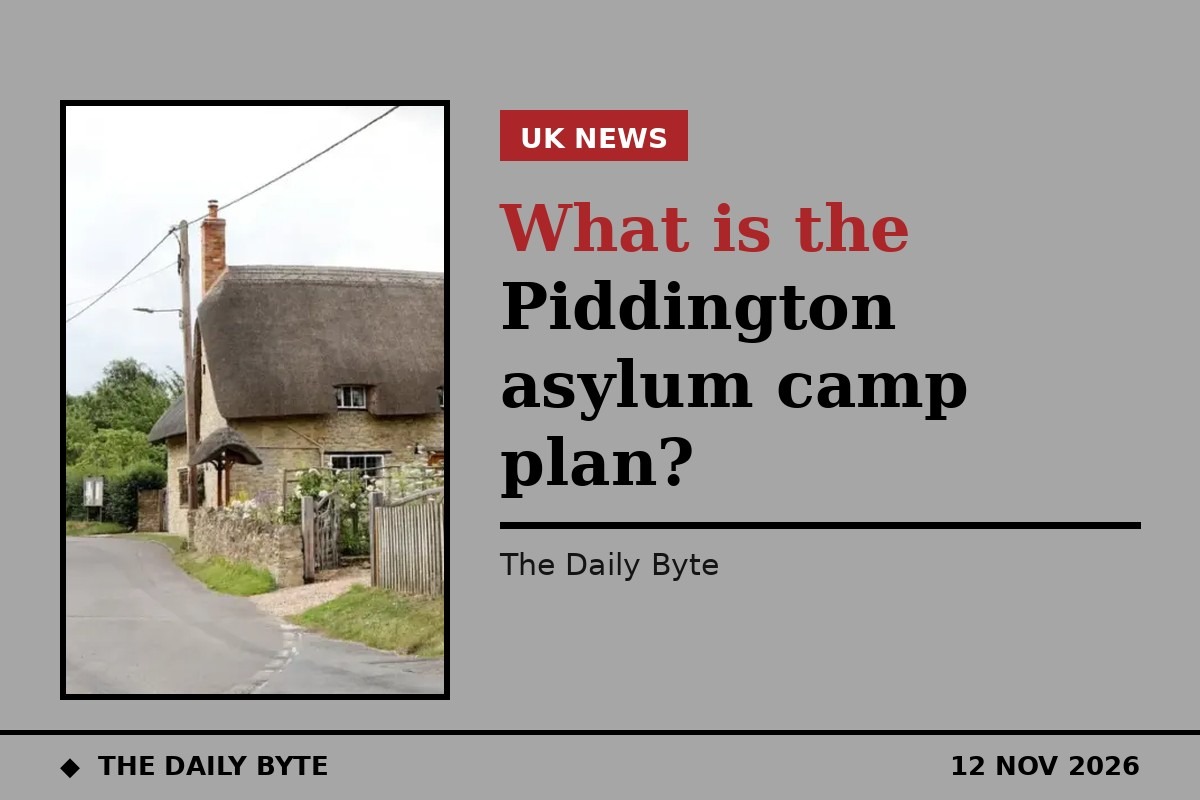
Piddington is a small rural village of roughly 350 people. The contrast between the size of the village and the size of the proposed centre is at the heart of the local campaign against it: the centre would house up to 1,256 single men, more than three times the village's population. Local campaigners have also raised environmental concerns, calling for full ecological surveys to establish whether some of Britain's rarest and most protected bats and newts are present on the site.
Converting the former base has been reported to cost an estimated £250 million. The Home Secretary, Shabana Mahmood, has said that former military bases are "the future for asylum accommodation", as the government tries to move people out of asylum hotels and into alternative accommodation.
Why does the government want the site?
The government's stated aim is to close asylum hotels and move to alternative accommodation, including former military sites. In the official statement of the decision, the government said the new sites are "designed to be self-contained, with 24/7 security and CCTV, to minimise the impact on the local community".
The Home Office says the planning permission allows it to "continue to progress" the use of MOD Bicester, while stressing that a final decision to proceed is yet to be taken. A £1.2 million design contract for the site has already been signed, according to the Oxford Mail, which suggests preparatory work is already under way even though the final go-ahead has not been given.
The government also says it is working on a fairer distribution of asylum accommodation across the country, and that more than £1 billion has been saved in costs since the election. Labour has said it wants to house more than 1,200 people on the site for at least 10 years, according to reporting of the plans.
How was the decision made so quickly?
The key to the speed of the decision is the Urgent Crown Development route. Normally, a planning application of this size would be decided by the local planning authority, Cherwell District Council, after consultation and committee consideration. Under the urgent Crown development procedure, the Secretary of State can decide the application directly, taking the decision away from the local council.
Cherwell District Council had formally objected to the plans, saying they were too vague to judge. That objection did not stop the application: the Secretary of State granted permission anyway, citing national demand for asylum accommodation.
The use of emergency powers is the main focus of the political criticism. Greg Smith, the local MP, said: "Using emergency crown planning powers to force a camp for 1,500 young male illegal migrants onto a tiny rural village is sickening." He added: "This is devastating news for my constituents, with many Mid Bucks villages within walking distance of MOD Bicester. This decision proves the Government have not listened to a word we have said, on safety, on cost, on the environmental impacts." Note that the approved figure is 1,256 men; the higher figure in the MP's comment reflects the way critics have described the scheme.
What did local people say?
Opposition in and around Piddington has been organised and vocal. The government's own report on the decision recorded 3,177 objections and one representation in support. Villagers held a symbolic poll in which they voted 285 to 26 to "secede from the UK" in protest, and the village declared itself the "Principality of Piddington" after the government announced the plans in September.
Campaigners have also challenged the proposal in court, and village officials have previously estimated that male asylum migrants would outnumber women in Piddington by 10 to 1. The campaign's concerns, as set out by the local MP and residents, cover safety, cost, environmental impacts and pressure on local services, including healthcare.
The decision notice's own acknowledgement of "residual demand" on health and emergency services and of a possible impact on community cohesion is likely to feature in any legal challenge, because it shows the government recognised the local effects and granted permission anyway on national grounds.
What happens next?
Three things happen now. First, the planning decision itself can be challenged in the High Court within six weeks of the day after it was made. Such a case can address whether the decision is legally flawed, rather than reconsidering the planning merits of the scheme. That is a narrow legal test, but it is the route open to opponents who believe the process was unlawful.
Second, the Home Office must still take a final decision on whether to proceed with using MOD Bicester. Planning permission allows the department to continue progressing the site, but it does not oblige it to open the centre. The design contract already signed suggests the department is preparing as if it will proceed, while keeping the formal decision open.
Third, if the scheme goes ahead, the site would be built out with modular accommodation and welfare facilities, with the government saying the site would be self-contained, with round-the-clock security and CCTV. Reports suggest the centre could operate for at least 10 years, which would make it a long-term feature of the area rather than a temporary measure.
Is the Piddington decision a one-off?
No. The Piddington decision is part of a wider government policy of using former military sites for asylum accommodation as an alternative to hotels. The Home Secretary has described such bases as the future of asylum accommodation, and the government has said it wants to close all asylum hotels. That means other former military sites are likely to be considered in the same way, and the Piddington decision, including the use of urgent Crown development powers, sets a precedent for how those decisions will be taken.
For other communities, the Piddington case shows the pattern: a government announcement, strong local opposition, a planning decision taken centrally rather than locally, and then a six-week window for a High Court challenge. For the government, the case shows the trade-off it is making between national demand for accommodation and local consent. For Piddington itself, the question now is whether the legal challenge succeeds, and whether the Home Office takes the final decision to proceed.
Frequently asked questions
What is the Piddington asylum camp? It is a proposed asylum accommodation centre for up to 1,256 men at MOD Bicester, a former military site about half a mile from the Oxfordshire village of Piddington. Planning permission was granted on 12 November 2026, but the Home Office says a final decision to proceed has not yet been taken.
How many people would it house? Up to 1,256 single men, according to the Home Office application. That is more than three times the population of Piddington, which has around 350 residents.
Who approved it? Angela Rayner, the Secretary of State for Housing, Communities and Local Government, granted planning permission through the Urgent Crown Development route, which bypassed the local council.
Can the decision be challenged? Yes. The planning decision can be challenged in the High Court within six weeks of the day after it was made, on the grounds that it is legally flawed. Campaigners have already challenged the proposal in court.
Will the centre definitely open? Not necessarily. The Home Office has said planning permission allows it to continue progressing the use of MOD Bicester, but a final decision to proceed is yet to be taken.
Sources: The Times; NewsMadeClear; The Sun. Photo: Piddington village, Oxfordshire.