What Is the Tobacco and Vapes Act 2026?
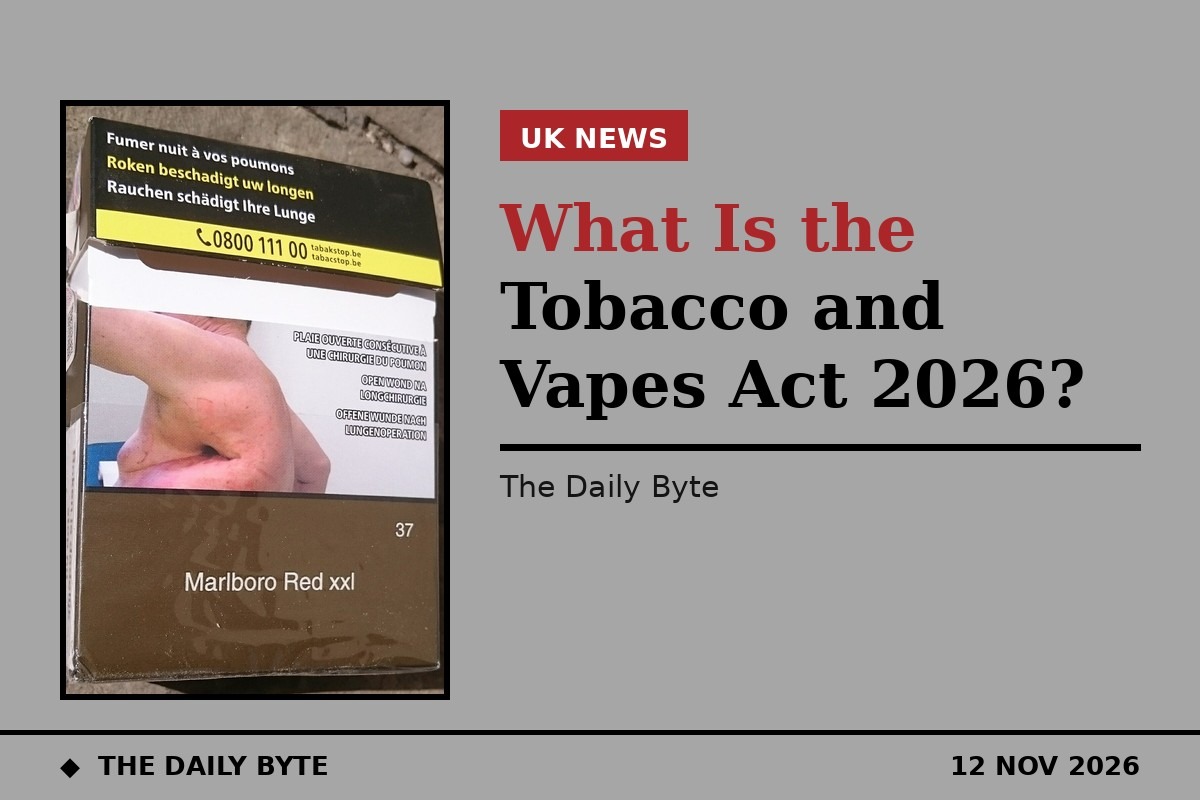
The Tobacco and Vapes Act 2026 is the law that will make it illegal to sell tobacco to anyone born on or after 1 January 2009, creating the UK's first smoke-free generation. The Act received Royal Assent on 29 April 2026, and its measures are being switched on in stages. The latest stage took effect on 29 October 2026, when the sale of all vaping and nicotine products to under-18s became illegal across the UK. The centrepiece — the generational tobacco ban — starts on 1 January 2027.
Ministers describe the Act as the biggest change to smoking law in decades. Dame Diana Johnson, the Minister of State for Public Health and Patient Safety, called it "the greatest piece of public health legislation in a generation". Smoking remains the leading preventable cause of death in the UK, claiming around 80,000 lives every year, according to the government. This explainer sets out what the Act does, what has already changed, what happens next, and what it means for smokers, vapers, parents and shopkeepers.
What is the Tobacco and Vapes Act 2026?
The Tobacco and Vapes Act 2026 (citation 2026 c. 18) is an Act of the UK Parliament that does three main things: it phases out the sale of tobacco to future generations, it tightens the rules on vapes and other nicotine products to protect children, and it gives ministers powers to restrict the advertising, packaging, flavours and promotion of nicotine products.
The Bill was introduced on 5 November 2024 by Wes Streeting, the Secretary of State for Health and Social Care. It passed its three readings in the House of Commons between November 2024 and March 2025, and three readings in the House of Lords between March 2025 and March 2026, before receiving Royal Assent on 29 April 2026. It applies across England, Wales and Northern Ireland, and strengthens Scotland's existing retail register.
The idea behind the generational ban is simple. Instead of banning smoking outright for adults who already smoke, the law raises the legal age of sale by one year, every year. From 1 January 2027, no one born on or after 1 January 2009 can legally be sold tobacco. Each year after that, the cut-off moves forward by a year, so the generation born after 2008 will never be able to buy cigarettes legally. New Zealand passed a similar law, then repealed it in 2022 — leaving the UK with what the Associated Press described as the toughest anti-smoking measures in the world.
What changed on 29 October 2026?
The measures that came into force on 29 October 2026 close loopholes that had let children buy nicotine products the old law did not cover. Selling nicotine-containing vapes to under-18s was already illegal. From 29 October, the ban was extended to products that had escaped the age-of-sale rules: nicotine-free vapes, nicotine pouches, strips and pearls, and other non-medicinal nicotine products. The government says more than a million children are estimated to have tried vaping, with more than 370,000 vaping regularly.
For the first time, it is also an offence for an adult aged 18 or over to buy, or attempt to buy, a vaping or nicotine product on behalf of someone under 18. Children themselves commit no offence by trying to buy or use the products — the law targets sellers and the adults who buy for them.
The same package bans promotional giveaways and substantial promotional discounts on vaping and nicotine products, tobacco products, herbal smoking products and cigarette papers, in shops and online. Vending machines that sell or dispense vapes or nicotine products are banned across the UK, with one narrow exception: vending machines selling vaping products in adult inpatient areas of mental health hospitals in England and Wales. The exception does not cover nicotine pouches or tobacco products.
Enforcement is led by Trading Standards in England, with new fixed penalty notice powers allowing officers to fine rogue retailers £200 on the spot. Enforcement agencies are receiving up to £30 million a year until 2028–29, including up to £10 million a year for Trading Standards and the recruitment of 120 specialist apprentices to tackle illicit and underage sales.
Chief Medical Officer Professor Chris Whitty backed the measures, saying: "Addicting children to nicotine or encouraging them to vape could lead to the risk of serious health harms — it is completely unacceptable." The public health advice remains that vaping is less harmful than smoking and can help adult smokers quit, but it is not risk-free, and children and adult non-smokers should never vape.
What is the smoke-free generation ban?
From 1 January 2027, it will be illegal to sell tobacco products, herbal smoking products or cigarette papers to anyone born on or after 1 January 2009. Anyone born after that date will never be legally sold tobacco in the UK. The age of sale for tobacco will rise by one year every year from that point, so a person who is 18 in 2027 and was born in 2009 will still be unable to buy cigarettes when they are 30, 40 or 50.
The ban covers tobacco products, herbal smoking products and cigarette papers. It does not cover vapes or nicotine pouches, which remain legal for adults — those products are dealt with separately, through the age-of-sale rules and the advertising and packaging powers in the Act. The government has published guidance for retailers on the GOV.UK website, and Trading Standards will enforce the new age-of-sale rules.
Retailers will need to check the age of customers in the same way they already do for alcohol. The key difference is that the relevant date is the customer's date of birth, not their age on the day: a 25-year-old born in 2009 will be refused, while a 25-year-old born in 2008 will not.
What happens next?
The Act is being implemented in phases, and several major measures are still to come. The government says it intends the comprehensive advertising and sponsorship ban for consumer nicotine products, including vapes and pouches, to be in force from 1 June 2027. Consultations have already taken place on restricting product packaging, flavours and displays, and on widening smoke-free places and introducing vape-free places, with the responses now being considered.
The Act also gives the government powers to regulate vaping products more tightly, including setting product and information requirements, and to cap the strength of nicotine pouches — a maximum of 20mg of nicotine per pouch has been proposed, though that figure remains under consultation and is not yet a rule. Scotland is separately requiring retailers selling tobacco, vaping, nicotine and herbal smoking products to register by 29 April 2027.
| Date | What happens |
|---|---|
| 5 November 2024 | Tobacco and Vapes Bill introduced to Parliament |
| 29 April 2026 | Tobacco and Vapes Act receives Royal Assent and becomes law |
| 29 October 2026 | Under-18 sales ban extended to all vapes and nicotine products; giveaways, discounts and vending machines banned; £200 fixed penalties begin |
| 1 January 2027 | Generational tobacco ban begins: no tobacco sales to anyone born on or after 1 January 2009 |
| 1 June 2027 | Comprehensive advertising and sponsorship ban for nicotine products intended to be in force |
Source: GOV.UK; Tobacco and Vapes Act 2026.
What does it mean for adults who smoke or vape?
Nothing changes for adults who already smoke and were born before 1 January 2009: they can still buy tobacco legally. Vaping remains legal for adults, and the government stresses that vapes can help adult smokers quit — stop smoking services can continue providing products to help adults stop. What changes is the marketing and availability of these products to children, and the range of products that can be promoted with giveaways and discounts.
For parents, the practical effect is that nicotine pouches, strips and pearls, and nicotine-free vapes — products that were previously sold legally to children because they contain no tobacco and are not inhaled — are now covered by the same under-18 rules as cigarettes and nicotine vapes. Action on Smoking and Health (ASH) welcomed the change, noting that nicotine products had been promoted indiscriminately through giveaways at festivals, shopping centres and railway stations.
For shopkeepers, the new rules mean checking the age of anyone buying any vaping or nicotine product, refusing proxy sales, removing vending machines that sell these products, and ending free samples and large promotional discounts. Trading Standards officers can issue £200 fixed penalty notices, and more serious cases can be prosecuted.
Frequently asked questions
Can I still buy cigarettes after 1 January 2027? Yes, if you were born before 1 January 2009. The ban only applies to people born on or after that date, and the cut-off rises by one year each year.
Is vaping now illegal? No. Vaping remains legal for adults in the UK. What changed on 29 October 2026 is that no vaping or nicotine product — including nicotine-free vapes and nicotine pouches — can be sold to under-18s, and adults cannot buy them on behalf of children.
Do under-18s commit an offence by buying a vape? No. The offence is committed by the seller, and by any adult who buys or tries to buy these products for someone under 18. Young people who try to buy them do not commit an offence.
When does the tobacco age-of-sale ban start? On 1 January 2027. From that date it will be illegal to sell tobacco products, herbal smoking products or cigarette papers to anyone born on or after 1 January 2009, and the age of sale will rise by one year every year after that.
Sources: GOV.UK; Department of Health and Social Care; Action on Smoking and Health; Tobacco and Vapes Act 2026.