What is Trump's plan to sell off US public lands?
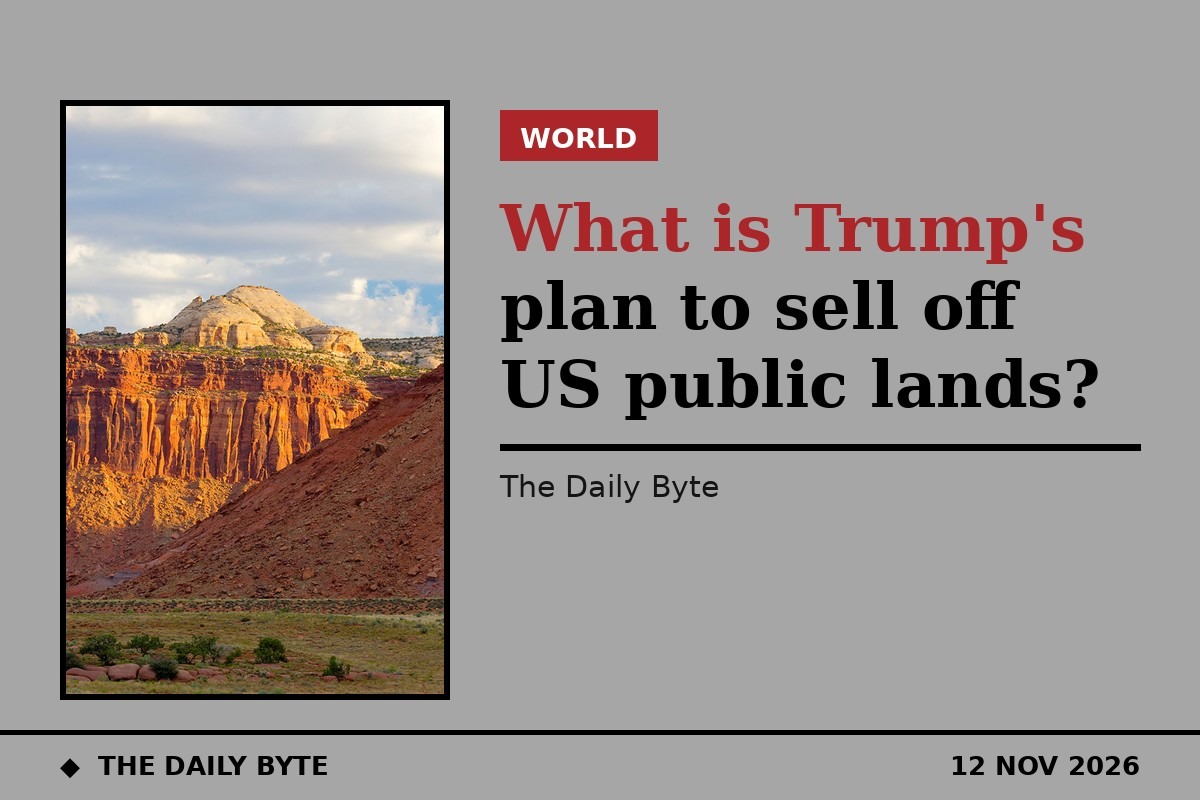
The Trump administration has formally proposed selling off parts of America's federal public lands. The US Department of the Interior's strategic plan for 2026 to 2030, published on Tuesday 10 November 2026, says the department will work to "decrease the size of the federal estate by offering to states, localities and Tribes the opportunity to purchase federal lands". No land has been put up for sale yet, no parcels have been named, and no timetable has been published. The plan is a statement of intent, not a sale, and federal law and Congress both stand between the proposal and any actual transfer.
The announcement matters because the Interior Department manages an enormous estate. The Associated Press reports that it oversees more than 750,000 square miles (1.9 million square kilometres) of land, an area greater than Texas and California combined, along with vast underground mineral reserves. That land includes national parks, national forests administered with the Forest Service, wildlife refuges and the rangelands run by the Bureau of Land Management. Millions of Americans use it for hiking, camping, hunting and fishing, and it holds wildlife habitat, cultural sites and energy and mineral resources. This explainer sets out what the plan actually says, which land could be affected, who would be allowed to buy it, and what would have to happen before a single acre changed hands.
What exactly does the plan say?
The proposal appears in the Interior Department's five-year strategic plan, a 28-page document setting out the department's priorities for 2026 to 2030, which opens with a letter from Interior Secretary Doug Burgum. Its key sentence, quoted by several outlets that have read the plan, is: "The [Interior] Department will work to decrease the size of the federal estate by offering to states, localities and Tribes the opportunity to purchase federal lands." The plan adds that through the sales, the department would focus its resources on "primary federal responsibilities and nationally significant federal lands".
A portion of the money from any sale would go back to the purchasing state, locality or tribe "to use for conservation purposes elsewhere in the state, locality or Tribal land", according to the plan, which says this would improve recreation access while "decreasing the federal taxpayer's financial responsibility to manage federal lands". The plan does not define "nationally significant", does not say how much land might be sold, and does not name a single parcel, location or price. The Associated Press, which reviewed the plan, reported that agency officials "offered no details on what parcels could be sold, nor the scope or location of potential sales".
The same plan also calls for "consolidating the workforce" of the Interior Department, following staffing cuts to public-land agencies during the first two years of the administration, and for redirecting Land and Water Conservation Fund money away from buying land into the public estate and towards access easements on privately owned land, so that "the federal estate does not continue to grow while at the same time increasing recreation access for the American public". The plan sets out a road map for 2026 to 2030; a future administration would not be bound by it.
What are America's public lands?
"Public lands" in the United States means land owned by the federal government and managed for the public. The Interior Department oversees the Bureau of Land Management, the US Fish and Wildlife Service, the National Park Service and the Bureau of Reclamation, which together manage about 500 million acres, according to the North West Sportsman Magazine's reading of the plan. The Bureau of Land Management alone manages about 245 million acres of mostly western rangeland, desert and forest. The Forest Service, which is part of the Agriculture Department rather than Interior, manages a further 193 million acres, although the new plan does not cover it.
These lands are used in many different ways at the same time. Some are protected as national parks, monuments and wildlife refuges. Some are leased for grazing, timber, mining and oil and gas drilling. Some are simply open country where the public can walk, camp, hunt and fish without paying an entrance fee. That mixed use is part of why the proposal is contentious: the same acre can be a hiking trail, a wildlife corridor, a cultural site and a potential drilling lease, depending on who manages it and how.
The proposal does not come out of nowhere. President Trump shrank Bears Ears National Monument in Utah by about 1 million acres earlier this summer, according to GearJunkie, and the administration has been suggesting land sales for the past year and a half. Last year, an attempt by a Utah Republican senator to force the sale of up to 1.2 million acres of Bureau of Land Management and Forest Service land was defeated. The new strategic plan is the first time the sale of public lands has become the Interior Department's official, published policy.
Which land could be sold, and which could not?
Nothing in the plan answers that question, and that is the central uncertainty. The plan does not name any national park, monument, refuge or parcel for sale, but it also does not rule any category out. It says only that the department would focus on "nationally significant" lands, a phrase it does not define. Conservation groups and sportsmen's organisations have warned that the lack of a definition leaves almost everything open to argument.
Federal law does set limits. Mark Squillace, a professor of natural resources law at the University of Colorado Law School, told the Associated Press that federal law "puts significant constraints on public land sales", that land cannot be sold if it is under protected status, and that before a sale can occur it must be deemed appropriate under certain criteria. In practice, that means a sale would need to pass legal tests about the land's status and use, and could be challenged in court.
It is also worth being clear about what has not happened. No auction has been announced, no buyer has been named, and no map of land for sale has been published. The plan is a policy document, and turning it into sales would require further decisions, and in many cases legislation, before any land changed hands.
Who would be allowed to buy the land?
Under the plan, the buyers would be states, local governments and tribes, which would be offered "the opportunity to purchase federal lands". Private companies and individuals are not named as buyers in the plan. Critics argue that this distinction may not protect public access in practice, because a state or county that buys land could later sell it on to a private developer. That warning has been made by sportsmen's groups and conservation organisations, who point out that there is nothing in the plan requiring a new owner to keep the land open to the public.
The plan also arrives alongside other moves that would make it easier to develop public land. On Monday 9 November, the Senate advanced a bill, the Bipartisan Affordability and Jobs Act, that would make it easier for private developers, especially builders of AI data centres, to build on public land. The bill is due a full vote the following week, according to GearJunkie. A day later, on 10 November, the administration announced a proposed Bureau of Land Management rule that would weaken public involvement in land-use planning and cut protections for Areas of Critical Environmental Concern across 245 million acres of western public lands, with a 60-day public comment period running to 9 January, according to the Southern Utah Wilderness Alliance.
Can the plan actually happen?
Probably not quickly, and possibly not at all in its current form. The Interior Department cannot sell large areas of federal land on its own: most sales need Congress to agree, and the proposal already faces opposition from both parties. The Associated Press reported that it drew "quick pushback from some lawmakers, including Trump's former Interior secretary, Republican Rep. Ryan Zinke", and that it faces "strong headwinds in Congress even before Democrats assume a majority in Congress in January". Zinke's office said he "remains firmly opposed to the sale or transfer of public lands" and would vote against it if it came before him before his term ends in January 2027.
Environmental and conservation groups have also condemned the plan. The Sierra Club said the plan "threatens the lands where families hike, camp, hunt, and fish, the wildlife habitats that sustain our ecosystems, and the natural, cultural, and historic treasures we have a responsibility to protect for future generations". The Center for Western Priorities criticised Secretary Burgum's leadership over the proposal. Sportsmen's organisations have joined the criticism, warning that selling land to states risks losing public access, because states may sell it on rather than manage it for recreation and wildlife.
Any sale would also be likely to face legal challenges over whether the land was properly assessed, whether protected status applied, and whether the public had been properly consulted, particularly if the proposed Bureau of Land Management rule weakens consultation at the same time. For now, the practical effect of the plan is political: it puts the sale of public lands on the official agenda of the department that manages them, and it sets up a fight in Congress, in the courts and in the public comment process over the next four years.
| Question | Answer |
|---|---|
| What was announced? | The Interior Department's 2026-2030 strategic plan, published 10 November 2026, proposes selling federal land to states, localities and tribes. |
| How much land is involved? | Not stated. The Interior Department oversees more than 750,000 square miles of land. |
| Which parcels? | None named. The plan does not list any parcel, location or price. |
| Who could buy? | States, local governments and tribes, under the plan as written. |
| Is anything for sale now? | No. No auction, buyer or map of land for sale has been published. |
| What could stop it? | Congress, federal law on protected land, and legal challenges. |
Frequently asked questions
Is any public land actually for sale now? No. The strategic plan announces an intention to offer land for sale, but no parcels have been identified, no prices set and no auction announced. Nothing has changed hands.
Could national parks be sold? The plan does not say that any national park would be sold, and federal law prevents the sale of land under protected status. But the plan also does not define which lands count as "nationally significant" or rule any category out, so the question cannot be answered definitively from the plan alone.
Who decides whether a sale goes ahead? The Interior Department would identify land and run any sale, but most sales need Congress to agree, and sales can be challenged in court if the land is protected or the proper process was not followed.
What would happen to the money from a sale? According to the plan, a portion of the proceeds would go back to the purchasing state, locality or tribe to spend on conservation elsewhere, with the aim of improving recreation access while reducing the federal cost of managing land.
What is the BAAJA bill? The Bipartisan Affordability and Jobs Act is a Senate bill that would make it easier for private developers, particularly builders of AI data centres, to build on public land. The Senate advanced it on 9 November 2026, with a full vote due the following week.
Sources: Associated Press, GearJunkie, Sierra Club, North West Sportsman Magazine, Southern Utah Wilderness Alliance.