What Is Universal Credit? Rates and Rules Explained
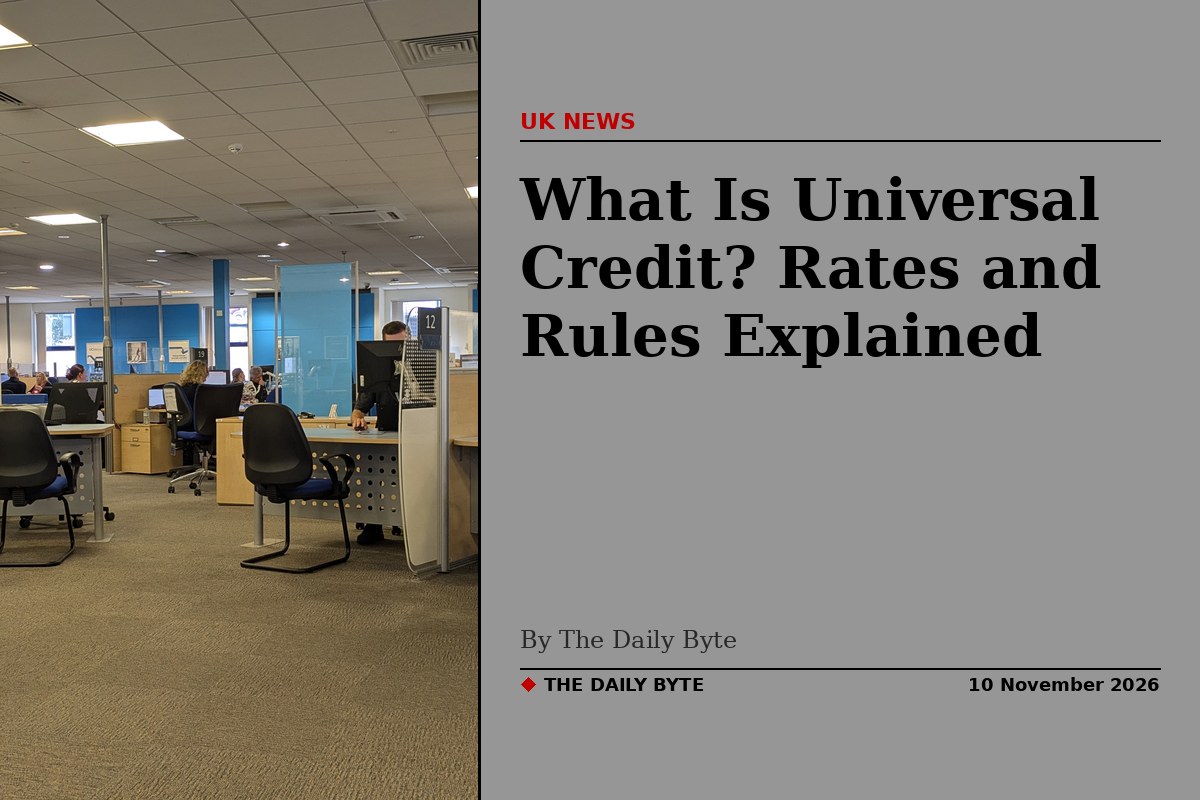
Universal Credit is the UK's main benefit for working-age people who are out of work or on a low income. It is a single monthly payment, run by the Department for Work and Pensions (DWP), that replaces six older benefits and adjusts each month as your earnings and circumstances change.
If you qualify, you make one claim instead of several separate ones for rent, children and living costs. The amount you receive is worked out from a standard allowance, plus extra amounts for children, housing, disability or caring, minus deductions for earnings, savings and other income. It is a means-tested benefit, so what you get depends on your household's income and savings rather than on the National Insurance contributions you have paid.
Who can claim Universal Credit?
GOV.UK sets out four basic conditions. You usually need to live in the UK, be aged 18 or over, be under State Pension age, and have £16,000 or less in money, savings and investments. You can claim whether you are out of work or in work, including part-time and self-employed work, as long as your income is low enough.
People who are already getting one of the older benefits may be asked to move to Universal Credit, and some are moved when their circumstances change. If you receive a Migration Notice letter from DWP telling you to claim, you may also get a transitional protection payment to cushion the move. If you apply for Universal Credit, you keep getting your current benefit for two more weeks if you are on income-related Employment and Support Allowance (ESA) or Housing Benefit, and you do not have to pay that money back.
What does Universal Credit replace?
Universal Credit replaces six legacy benefits: Income Support, income-based Jobseeker's Allowance (JSA), income-related Employment and Support Allowance (ESA), Housing Benefit, Working Tax Credit and Child Tax Credit. The idea is that one payment, recalculated monthly, is simpler than six separate claims with different rules and different paydays.
It does not replace everything. You can still claim some benefits alongside it, such as Personal Independence Payment (PIP), Child Benefit, Carer's Allowance and Council Tax Reduction. If you get Universal Credit you also earn Class 3 National Insurance credits, which count towards your State Pension.
How much is Universal Credit in 2026-27?
Every award starts with a standard allowance. For 2026-27 the monthly rates published by GOV.UK are £338.58 for a single person under 25, £424.90 for a single person aged 25 or over, £528.34 for a couple where both partners are under 25, and £666.97 for a couple where one or both partners are 25 or over.
Extra amounts, known as elements, are then added where they apply:
- Children: £303.94 a month for each child who lives with you, plus an extra £47.94 for a first child born before 6 April 2017. The two-child limit ended on 6 April 2026, so the child element is now paid for every child.
- Disabled children: £164.79 a month at the lower rate or £514.71 at the higher rate.
- Childcare: up to 85% of childcare costs, capped at £1,071.09 a month for one child or £1,836.16 for two or more children, where the childcare is from a registered provider.
- Health: £217.26 a month if your health condition or disability limits your ability to work, or £429.80 if it is severe or unlikely to change.
- Caring: £209.34 a month if you care for someone for at least 35 hours a week.
- Housing: an amount towards rent and some service charges.
Deductions are then taken off. If you have more than £6,000 in savings, your payment falls by £4.35 for every £250 between £6,000 and £16,000. Other benefits you receive, advance repayments, overpayments and some debts can also reduce the payment, and the benefit cap can limit the total amount.
How does Universal Credit change when you work?
Universal Credit is designed to fall gradually as your earnings rise, rather than stopping suddenly when you take a job. If you have a child, or a health condition that affects your ability to work, you get a work allowance: £427 a month if your award includes help with housing costs, or £710 a month if it does not. Earnings up to that allowance do not reduce your payment at all.
Above the work allowance, your payment falls by 55p for every £1 of take-home pay. In other words, you keep 45p of each extra pound you earn. DWP works this out each month from the earnings your employer reports through the tax system, so your payment can go up and down during the year.
How do you claim, and when is it paid?
You claim online at GOV.UK, verify your identity, and usually attend an appointment at a Jobcentre, where you agree a claimant commitment setting out what you will do to look for work or prepare for work. Your claim is then assessed in monthly assessment periods, and the payment is made once a month into your bank account.
The first payment normally takes about five weeks, because the first assessment period has to finish before DWP can work out what you are owed. If you cannot wait, you can ask for an advance, which is paid back in instalments from later payments. You must report changes as they happen, for example if you start work, move house or have a child, because extra amounts are not always added automatically.
What has changed in 2026?
The Universal Credit Act 2025 received Royal Assent on 3 September 2025. It requires the standard allowance to rise each year by at least inflation, measured by the September Consumer Prices Index, plus an extra uplift: 2.3% in 2026-27, rising to 4.8% by 2029-30. The two-child limit was also removed from 6 April 2026, so families now receive the child element for every child rather than only the first two. The health element for new claims is £217.26 a month from April 2026, with the higher £429.80 rate for severe conditions.
Rules differ in Northern Ireland, where Universal Credit is administered separately, and the exact amount you receive depends on your own circumstances. GOV.UK lists independent benefits calculators that can give a personal estimate, and Citizens Advice can help if you are unsure about a claim.
Frequently asked questions
Can I claim Universal Credit if I am working? Yes. Universal Credit is for people on a low income as well as people out of work, and the payment reduces gradually as earnings rise rather than stopping when you start a job.
How long does a Universal Credit claim take? The first payment usually takes about five weeks, and you can ask for an advance if you need money sooner. The advance is repaid from later payments.
Does Universal Credit replace Housing Benefit? Yes, for most working-age claimants. Help with rent is included in the Universal Credit award as a housing element, rather than being paid as a separate Housing Benefit claim.
Sources: GOV.UK, Universal Credit: what you'll get and Universal Credit explained: 2026-27 rates and rule changes.