What Is the US Government Shutdown? Explained
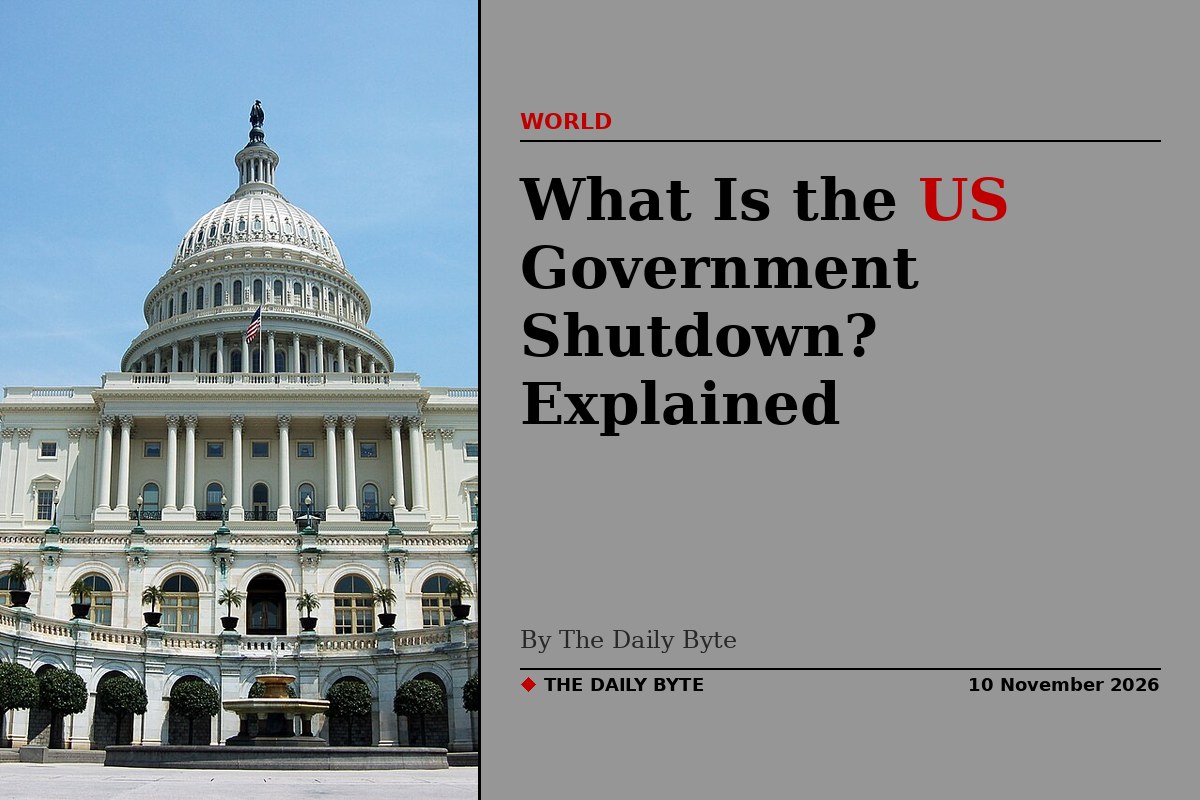
A US government shutdown happens when Congress fails to pass the spending laws that fund federal agencies, so parts of the government must stop work. The current shutdown began on 1 October 2026, when funding ran out at the start of the new financial year, and it has now lasted 41 days, making it the longest shutdown in American history. On Monday night the Senate passed a funding package to end it, and the House of Representatives is expected to vote on the deal on Wednesday evening.
What is a government shutdown?
In the United States, the federal government cannot spend money unless Congress has approved it. The financial year runs from 1 October to 30 September, and most agencies are funded by 12 annual spending bills. If those bills, or a temporary funding measure known as a continuing resolution, are not in place when the old money expires, a funding gap opens. A law called the Antideficiency Act then bars agencies from spending money Congress has not provided, so they must halt work that is not essential to protecting life and property. That forced stoppage is what Americans call a government shutdown. It is not a full closure of the state: the military, federal law enforcement, air traffic controllers and border officers keep working, and payments such as Social Security continue, because they are either legally required to continue or funded outside the annual spending process. But national parks and museums close or run with skeleton staff, routine services pause, and hundreds of thousands of federal workers are either sent home or told to work without pay.
Why did this shutdown happen?
The shutdown began because the Senate could not agree on a short-term funding bill before the 1 October deadline. The House had passed a stopgap measure that would have funded the government through 21 November, but it stalled in the Senate, where most legislation needs 60 votes to advance. Senate Democrats refused to support the stopgap unless it extended the health insurance subsidies paid under the Affordable Care Act, which are due to expire at the end of December. Republicans, who hold the majority, refused to attach the extension to a funding bill and insisted the government should reopen first. With neither side willing to move, funding lapsed on 1 October and the shutdown began. The deadlock lasted for weeks while the effects piled up: federal workers went unpaid, food aid was delayed for millions of families, and flight cancellations and delays spread across the country as airport staffing thinned.
How long has it lasted, and why is it a record?
By Monday 10 November the shutdown had lasted 41 days, and by the time the House votes on Wednesday it will have reached 43 days. That breaks the previous record of 35 days, set during the shutdown of December 2018 to January 2019 in President Donald Trump’s first administration. There have been more than 20 funding gaps since the modern budget process began in 1976, but most lasted only a few days, and several ended over a weekend before most people noticed. This one is different because it has run for six weeks, through a period when Congress was not even in session: the House last voted on legislation on 19 September and has been in recess ever since. That is why the path out of the shutdown has been so slow. Nothing could be finally approved until the Senate acted and the House returned to Washington.
What closes and what stays open?
Each department follows its own contingency plan, coordinated by the White House budget office, sorting staff and services into those that must continue and those that must stop. Workers are divided into two groups. Excepted employees keep working because their jobs protect life and property or are required by law: air traffic controllers, airport screeners, federal agents, hospital staff and the military. Furloughed employees are sent home and are legally barred from working, even as volunteers, because the Antideficiency Act generally forbids agencies from accepting unpaid work. Neither group is paid while the lapse lasts. Services funded outside the annual spending process continue largely uninterrupted, including the delivery of mail and the payment of Social Security benefits. But agencies that rely heavily on annual funding curtail their work sharply. The Internal Revenue Service furloughs most of its staff, limiting taxpayer help, although tax deadlines remain in place. National park visitor centres close, Smithsonian museums shut, and routine federal services such as passport processing and small-business loans slow or stop.
What happens to federal workers’ pay?
Before 2019, back pay for shutdown workers depended on Congress granting it each time a shutdown ended. The Government Employee Fair Treatment Act of 2019 changed that: the law now guarantees that furloughed employees will be paid for the lapse period, and that excepted employees will be paid for the work they performed, at their standard rate, as soon as possible after funding is restored. The funding package passed by the Senate also reverses the Trump administration’s firing of furloughed workers during the shutdown and blocks further layoffs until 30 January. Even so, the guarantee of eventual pay has not spared workers hardship. With no pay for more than a month, many have turned to food banks, taken second jobs or fallen behind on rent and bills, and federal unions have warned that the strain is driving experienced staff out of public service.
What is in the deal to end the shutdown?
The package the Senate passed on Monday night by 60 votes to 40 uses the House-passed stopgap bill as its vehicle and combines it with three full-year spending bills. It would fund most of the federal government through 30 January at current levels, giving negotiators more time to agree on full-year spending for the rest of the financial year. Three departments get full-year funding through 30 September 2026: Agriculture and the Food and Drug Administration, Military Construction and Veterans Affairs, and the legislative branch, which covers Congress itself. The Supplemental Nutrition Assistance Program, the food aid scheme that serves about 42 million lower-income Americans, is fully funded through September next year. The deal passed with the support of eight members of the Senate Democratic caucus who broke with their party leadership: Dick Durbin, John Fetterman, Maggie Hassan, Jeanne Shaheen, Tim Kaine, Catherine Cortez Masto and Jacky Rosen, plus independent Angus King. Senate Majority Leader John Thune brokered the agreement over the weekend with Hassan, Shaheen and King, Senate Appropriations Chair Susan Collins and White House negotiators.
What the deal does not settle
The one major issue the deal does not resolve is health care. It does not extend the Affordable Care Act subsidies that are due to expire at the end of December, which had been the central demand of Senate Democrats throughout the shutdown. Instead, Thune has promised that the Senate will vote by the second week of December on extending the subsidies, a vote with no guaranteed outcome. Speaker Mike Johnson has not said whether the House will hold a vote on the matter. That leaves the subsidies, which benefit about 24 million Americans, facing a cliff at the end of the year even if the government reopens this week. The deal would also keep the federal government on a path of adding about 1.8 trillion dollars a year to a national debt of about 38 trillion dollars, since it extends funding at existing levels rather than cutting spending.
What happens next?
The Senate vote does not reopen the government by itself. The bill still needs to pass the House of Representatives, which has not been in session since 19 September, before President Donald Trump can sign it. The House Rules Committee advanced the measure overnight, with all Republicans supporting it and all Democrats opposed, after a hearing that lasted more than six hours and ended shortly after 1 a.m. on Wednesday. The full House is expected to hold a final vote on Wednesday evening. Speaker Mike Johnson has told lawmakers to return to Washington and has said he expects the bill to pass quickly, and President Trump has endorsed the legislation and is expected to sign it if it reaches his desk, which would allow the government to reopen within hours. If the House passes it, federal workers should receive their delayed pay, food aid should resume in full, and flight schedules should begin to recover. If it fails, the shutdown would continue into a seventh week, and Congress would have to start again on a new funding deal.
Frequently asked questions
When will the US government shutdown end? The shutdown is expected to end this week if the House passes the Senate funding package on Wednesday evening and President Trump signs it. The government would then reopen within hours, after 43 days closed.
Will federal workers get back pay? Yes. The Government Employee Fair Treatment Act of 2019 guarantees that furloughed workers and excepted workers who kept working will be paid for the shutdown period once funding is restored.
Does a shutdown stop Social Security payments? No. Social Security, Medicare and other benefit payments continue during a shutdown because they are funded outside the annual spending process, although routine services such as new claims processing can slow down.
Why did flights get cancelled? Air traffic controllers and airport screeners are excepted workers who must keep working without pay. As the shutdown dragged on, staffing shortages and sickness grew, forcing airlines to cancel or delay flights across the country.
What is a continuing resolution? It is a temporary funding law that keeps the government open at existing spending levels for a set period, usually a few weeks or months, while Congress negotiates full-year spending bills. The deal to end this shutdown is built around a continuing resolution running to 30 January.


