When Is Black Friday 2026? UK Dates and Deals Guide
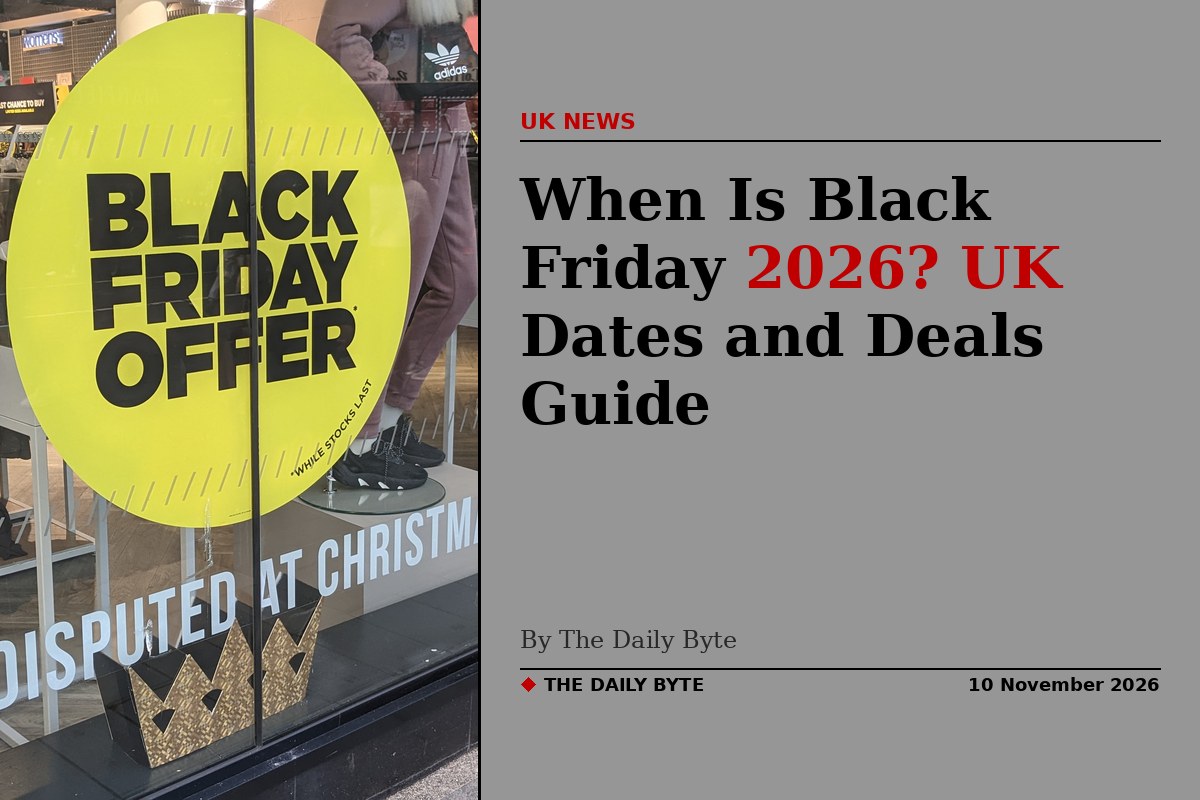
Black Friday 2026 falls on Friday 27 November in the UK, the day after Thanksgiving in the United States, and Cyber Monday follows on Monday 30 November. Many British retailers have already started their sales, so the event now runs for most of November rather than a single day. This guide gives the key dates, explains why the day has its name, and shows how to tell a genuine bargain from a deal that only looks like one.
When is Black Friday 2026?
Black Friday 2026 is on Friday 27 November, the last Friday of the month and the day after American Thanksgiving, which falls on Thursday 26 November. The same date applies in the UK and across Europe. The sales weekend runs through Saturday 28 and Sunday 29 November, and Cyber Monday, the online-focused follow-up, is on Monday 30 November, which is also the last working day of the month. In 2025, Black Friday fell a day later, on Friday 28 November, with Cyber Monday on 1 December, so this year's dates are a day earlier. The date itself is fixed by the calendar, but the promotional period is not: most UK retailers now run Black Friday offers for several weeks, and some started in the first days of November, so the busiest shopping period of the year is already under way.
When do UK Black Friday sales start?
While Black Friday itself is not until 27 November, most UK retailers have already gone live with their deals, and the sales period typically lasts the whole month. Amazon, Currys, Argos and John Lewis are among the major retailers running early Black Friday promotions, and beauty retailers are in on it too: Superdrug's Black Friday promotions run from 4 November to 1 December. Some brands started even earlier, with sale prices dated from late October. A few retailers hold back until the day itself, with Apple, for example, expected to launch its offers on 27 November. The practical result is that there is no single start date to wait for. If you have a specific item in mind, the time to start checking its price is now, while there are still weeks to compare prices before the main event.
Why is it called Black Friday?
The name is widely traced to Philadelphia in the 1960s, where police used the term Black Friday to describe the crowds and traffic chaos on the day after Thanksgiving, as shoppers flooded the city centre and spectators travelled in for the annual Army versus Navy American football match. Shopkeepers at the time disliked the negative name and tried to promote the more flattering Big Friday instead, but the original name stuck. A later explanation, that the day was when retailers moved from being in the red to being in the black, is popular but came after the name was already in use. In the UK, Black Friday was a minor event until Amazon brought it over in earnest in the early 2010s, and it has grown every year since, helped by the fact that it falls a month before Christmas, when many people are already buying gifts.
Are Black Friday deals really cheaper?
Often, the honest answer is no, or not by much. The consumer group Which? tracks Black Friday prices every year, following the same products for months before and after the sale. In its latest study, published in November 2025 and covering Black Friday 2024, it tracked 175 home, tech and health products at eight big UK retailers, including Amazon, AO, Argos, Boots, Currys, John Lewis, Richer Sounds and Very, from May 2024 to May 2025. It found that 83 percent of the products were the same price or cheaper at least once outside the four-week sale period, which ran from 15 November to 12 December 2024. Not one of the deals it tracked was at its cheapest price of the year on Black Friday itself, and 42 percent were actually cheaper at some other point in the year. Waiting was rarely punished: 35 percent of the products were cheaper after the sales period ended, and 68 percent were the same price or cheaper after it. The pattern was similar the year before. For Black Friday 2023, Which? found that 92 percent of 227 deals were the same price or cheaper at other times of the year, and around four in ten were cheaper. The lesson is not that every Black Friday deal is fake, because genuine discounts do exist, but that a crossed-out was price is not proof of a bargain. The only way to know is to check what the item has actually sold for before.
How to spot a genuine Black Friday deal
Start with the price history. Free price-tracking sites such as PriceSpy show what an item has cost over the past few months, and for Amazon there are dedicated trackers such as CamelCamelCamel and Keepa, which show price charts and can send alerts when a price drops. If today's price is not close to the lowest in the last six months, it is not a deal, whatever the was price says. Be wary of comparisons with the recommended retail price, because an item may never have sold at that price: Which? found one electric toothbrush advertised as save 25 pounds on a 50 pound recommended price that had been the same price or cheaper for more than 96 percent of the year, with the 50 pound price applying for just 13 days in the six months before the sale. Check the retailer's own returns policy before you buy, and keep the receipt and any order confirmation, because a bargain is no bargain if you cannot return a faulty item. Finally, compare the same product across retailers rather than trusting one store's claim: the same television or vacuum cleaner is often on sale at several shops at once, and the prices can differ by tens of pounds.
What are your rights when you shop online?
Most Black Friday shopping in the UK now happens online, and that gives you stronger rights than buying in a shop. Under the Consumer Contracts Regulations, you generally have 14 days from receiving an item bought online, by phone or by mail order to change your mind and cancel, and a further 14 days to return it, with the retailer refunding the item and the standard delivery cost. The item does not have to be faulty. There are exceptions, such as personalised goods, perishable items and sealed media that you have opened, so check the terms before you buy. If an item arrives faulty, or is not as described, the Consumer Rights Act gives you a short-term right to reject it within 30 days for a full refund, and a right to a repair or replacement after that. Paying by credit card adds another layer of protection: for purchases between 100 and 30,000 pounds, the card provider is jointly liable with the retailer if something goes wrong. Keep screenshots of the price and the product description at the time you buy, because they are your evidence if the item turns up different from what was advertised.
Black Friday scams to avoid
Scammers use the Black Friday rush, so treat any unexpected offer with suspicion. Only buy from retailers you know, or check a new one first: look for a real UK address and contact details, read recent reviews, and be wary of a site that only takes bank transfer or cryptocurrency. Fake delivery messages are common in November, so do not click links in texts or emails claiming a parcel is held or a payment failed; go to the retailer's own site or app instead. Watch out for social media adverts for big-brand goods at impossible prices, which often lead to copycat sites that take your money and send nothing. If a deal looks too good to be true, check the price on the brand's own website first. And remember that no genuine retailer will ask you to pay by gift card or to share a one-time passcode to release a delivery. If you think you have been scammed, contact your bank straight away and report it to Action Fraud.
Is Black Friday worth it in 2026?
Black Friday can still be worth it if you go in with a plan. Make a short list of things you actually need, set a budget for each one, and check the price history before the sales start, so you know what a good price looks like. The best deals tend to be on older models being cleared out, on televisions, laptops and small appliances, and on gift sets that retailers discount heavily in November. The worst deals are often on items that were put up in price just before the sale, or on products that are rarely discounted at all, where the Black Friday price is simply the usual price with a was label attached. Because so many sales now start early, there is no need to rush on the day itself, and the research shows that waiting rarely costs you: more than a third of the deals Which? tracked were cheaper after the sales ended. The smartest approach is to treat 27 November as a deadline for checking your list, not as a day to buy things you had not planned to buy.
Frequently asked questions
When is Black Friday 2026 in the UK? Friday 27 November 2026, with Cyber Monday on Monday 30 November. Many retailers started their sales in early November.
When is Cyber Monday 2026? Monday 30 November 2026, the Monday after Black Friday and the last working day of the month.
Do UK shops close on Black Friday? No. Black Friday is a normal working day in the UK, and shops open as usual, with many opening earlier and staying open later.
Can I return a Black Friday purchase? Yes. Faulty goods can be returned under the Consumer Rights Act, and online purchases generally carry a 14-day cooling-off period, although some retailers extend their Christmas returns deadlines into January, so check the policy when you buy.
Black Friday 2026 falls on Friday 27 November, with Cyber Monday on Monday 30 November. Read the Radio Times guide to UK retailer start dates and the MoneyMagpie round-up of early Black Friday deals for the latest offers, and check the price history of anything you plan to buy before you pay.


