White House Cyber Chief Out After Week of Tech Outages
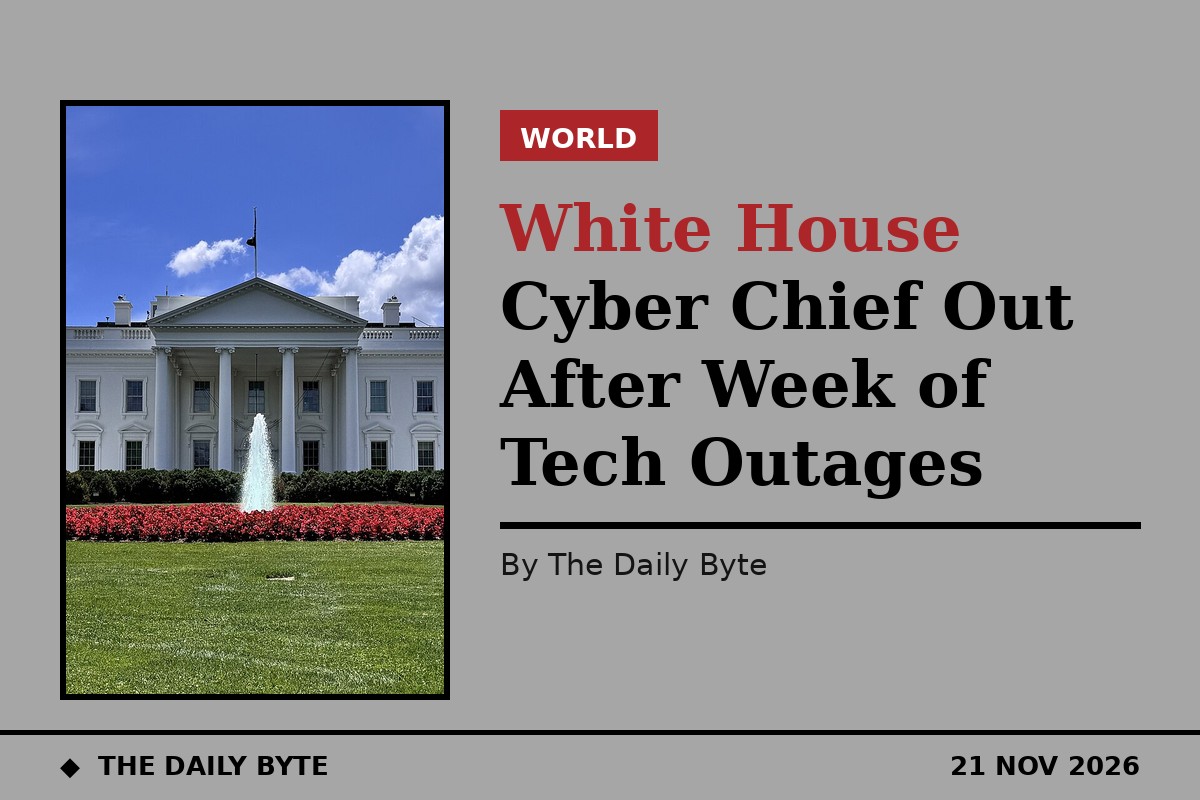
Sean Cairncross is out as the White House national cyber director, the administration's most senior cybersecurity official, after a week in which technology failures disrupted air travel, banking and some of the world's most widely used online services. Kirsten Davies, the Pentagon's chief information officer, will take over the role in an acting capacity.
The departure was first reported by Axios on Thursday 19 November, which described it as amicable and said Cairncross had decided not to stay on for the final two years of President Donald Trump's term, in part so the White House would have time to get a successor confirmed before Democrats take control of the Senate in January. Other outlets told a different story: a source close to the White House told CNN and Reuters that Cairncross had been fired, and that Trump "fully supported firing" him because he lacked the strong cyber credentials the job required. The White House itself confirmed only that Cairncross is leaving the administration, and did not say when his last day will be.
Cairncross, who had led the Office of the National Cyber Director since August 2025, said in a statement that it had been "the honor of a lifetime to serve President Donald J. Trump" and that he left "incredibly proud of our work to strengthen America's cybersecurity, protect our critical infrastructure, confront foreign threats, and position America to lead the world in Super Intelligence". The office coordinates cybersecurity policy and strategy across the federal government, and its director requires Senate confirmation.
A week of outages, but no evidence of attack
The change comes at the end of a bruising week for American technology. A global Microsoft 365 outage lasting more than a day disrupted Outlook, Teams and Copilot for hundreds of millions of users. A nationwide Federal Aviation Administration ground stop halted departures for nearly five hours — the longest such stop since 11 September 2001 — disrupting more than 18,000 flights and about a million passengers after a contractor's new router flooded the air-traffic network. Chase Bank customers were hit by online banking disruption caused by a software bug, Apple suffered outages across its App Store and iCloud services after a faulty internal update, and the National Security Agency's internal network was affected by a software patch.
Officials have repeatedly said there is no evidence the failures were a coordinated cyberattack. Secretary of State Marco Rubio said earlier in the week that there was "zero evidence" hackers, criminals or foreign governments were behind the outages, or that the incidents were connected. Cybersecurity experts cited by Reuters said the disruptions were more likely linked to corporate efforts to patch newly discovered software vulnerabilities rapidly in the AI era — a router cutover, a software upgrade, a patch and a bug, rather than an adversary.
Whether the outages caused Cairncross's exit is unclear. His departure is the administration's first major personnel move since the disruptions began, and it comes as the administration faces scrutiny over its response to them. Next week will test the country's technology systems again, as millions of travellers fly for Thanksgiving and retailers prepare for a surge of Black Friday online shopping.
An acting successor, and a confirmation to watch
Davies, who was the Senate-confirmed chief information officer at the Department of Defense, was congratulated publicly by Rubio on Thursday night. She takes over an office whose last permanent occupant lasted just over a year. Cairncross is the latest cyber official to leave the administration: last year, Trump fired the director and deputy director of the National Security Agency, the country's powerful cyber intelligence bureau.
The same day Cairncross's departure was reported, Trump's pick to lead the Cybersecurity and Infrastructure Security Agency, Michael LoSapio, testified at his Senate confirmation hearing. The Senate will also have to confirm whoever is nominated to lead the Office of the National Cyber Director permanently — and, on the account that Cairncross left voluntarily, the timing of his exit was chosen precisely so that confirmation can happen before the Senate changes hands.


