Who can get a free flu jab on the NHS?
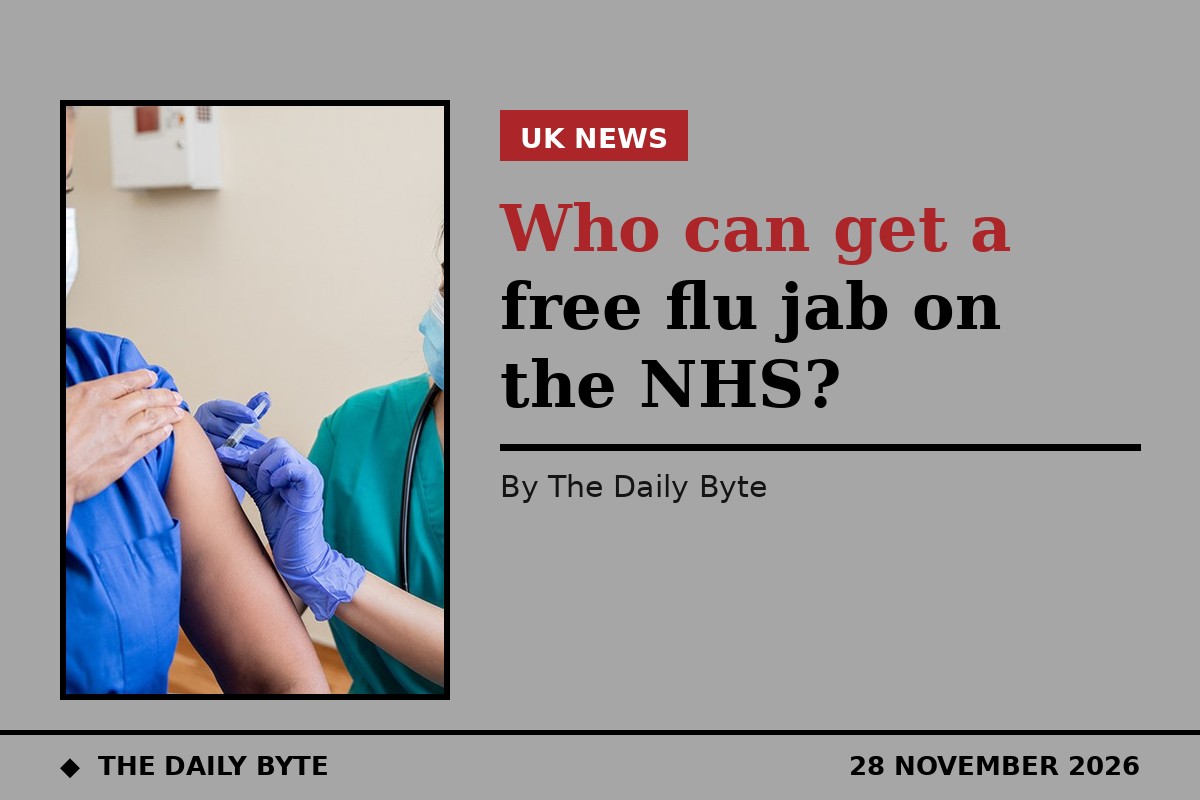
You can get a free flu jab on the NHS if you are aged 65 or over, pregnant, living in a care home, a carer, living with someone whose immune system is weakened, aged 16 or over and sleeping rough or staying in a homeless hostel or night shelter, a frontline health or social care worker, or an adult aged 18 to 64 with certain long-term health conditions. Children can also get one free: those aged two or three, four-year-olds who have not started school, school-aged children from Reception to Year 11, and children aged six months to 17 with certain long-term health conditions. This guide sets out the full eligibility list for winter 2026-27, how to book, and what to do if your child misses the school session.
Who can get a free flu jab as an adult?
The NHS offers the flu vaccine every autumn and winter to people at higher risk of getting seriously ill from flu. For adults, you can get the free NHS flu vaccine if you are aged 65 or over, including if you will turn 65 by 31 March 2027. You can also get one if you are aged 18 to 64 and have certain long-term health conditions, which are listed in the next section.
Pregnancy qualifies at any stage. The NHS says studies have shown it is safe to have a flu vaccine at any stage of pregnancy, that it helps protect you and your baby, reducing the risk of serious complications during pregnancy and protecting your baby in the first few months after birth, and that it is safe to breastfeed if you had the vaccine during pregnancy or have it while breastfeeding. You can have it at the same time as other pregnancy vaccinations, such as the RSV vaccine from 28 weeks and the whooping cough vaccine.
People living in a care home can get the vaccine free, as can people who are the main carer for an older or disabled person or who receive Carer's Allowance. People who live with someone who has a weakened immune system are also eligible, because vaccinating household contacts helps protect the person whose immunity is weakened. People aged 16 or over who are sleeping rough or staying in a homeless hostel or night shelter are eligible under an offer added for this winter, and eligible people can get a free flu vaccine at a participating walk-in pharmacy without being registered with a GP.
Frontline health and social care workers can also get a flu vaccine, normally through their employer. Eligible frontline social care workers who do not have an employer scheme can access the NHS offer instead, including people employed by a registered residential care or nursing home, a registered domiciliary care provider, a voluntary managed hospice provider, or through direct payments or personal health budgets, such as personal assistants.
Which health conditions qualify for a free flu jab?
The NHS lists the long-term health conditions that make adults aged 18 to 64 eligible. They include conditions that affect breathing, such as asthma needing a steroid inhaler or tablets, chronic obstructive pulmonary disease (COPD) or cystic fibrosis. Heart conditions qualify, including coronary heart disease and heart failure, as does chronic kidney disease and liver disease such as cirrhosis or hepatitis.
Some conditions affecting the brain or nerves also qualify, such as Parkinson's disease, motor neurone disease, multiple sclerosis and cerebral palsy. A learning disability qualifies, as do diabetes and Addison's disease. People with a weakened immune system qualify, whether that is due to a condition such as HIV or AIDS or due to a treatment such as chemotherapy or steroid medicine. Problems with the spleen qualify, such as sickle cell disease or having had the spleen removed, and so does being very overweight, with a body mass index of 40 or above.
The Department of Health and Social Care adds that not every long-term condition automatically qualifies, and if you are unsure whether your condition qualifies you should ask your GP, specialist or pharmacist. The same applies for children: speak to your GP surgery or specialist if you are not sure whether your child's condition makes them eligible.
Which children can get a free flu jab?
Children aged two or three on 31 August 2026 can get a free flu vaccine, and the NHS also advises vaccination for four-year-olds who have not started school. School-aged children from Reception to Year 11 are usually offered their flu vaccination at school, and children aged six months to 17 with certain long-term health conditions are eligible too.
Most school-aged children are offered the vaccine as a nasal spray at school. The spray contains weakened viruses and is designed not to cause flu in eligible children. If the nasal spray is unsuitable, or parents do not want it for their child, an injected alternative is available for eligible children, including when the spray's porcine gelatine content is a concern. Parents should tell the school immunisation team or GP about asthma, wheezing, weakened immunity, medicines and allergies so they can advise on the right vaccine. The nasal spray is not routinely offered to children under two, and eligible babies under two receive an injected vaccine through their GP.
How do I book a free flu jab?
Vaccination for winter 2026-27 started on 1 September for pregnant women and eligible children, and on 1 October for most other eligible groups. If you are eligible for an NHS flu vaccine, you can book a flu vaccination appointment online or in the NHS App, find a pharmacy that offers free flu vaccination, or contact your GP surgery to book an appointment. You do not need to wait for an invitation, and the booking service checks whether you need a vaccine.
If you cannot book online, you can call 119 free of charge to book by telephone, and you can ask for an interpreter if needed. Textphone users can use 18001 119, and a British Sign Language interpreter service is available through NHS 119. NHS England provides translated, audio, BSL and easy-read vaccination information, and you can ask the provider in advance for reasonable adjustments such as a quieter appointment or support from a carer. If you cannot leave home, contact your GP about local home-visit arrangements.
Some people may be able to get vaccinated through their maternity service or care home, or through their employer if they are a frontline health or social care worker. For school vaccinations, parents should complete and return the consent form provided by the school immunisation team. The last date you will be able to get your flu vaccine is 31 March 2027, but it is best to get vaccinated as soon as you can to protect yourself during winter, and online booking will close on 30 March 2027.
What happens at the appointment, and can the jab give me flu?
All flu vaccines used for adults are given as an injection. The most common side effects of the injected flu vaccines are mild and get better within one to two days, and they can include pain or soreness where the injection was given, a slightly raised temperature and an aching body. More serious side effects such as a severe allergic reaction are very rare, and the person who vaccinates you will be trained to deal with allergic reactions and treat them immediately.
The injected flu vaccines used in the UK do not contain live flu viruses, so they cannot give you flu. A runny nose, mild fever or aches after vaccination are not the same as catching flu. You only cannot have the vaccine if you have had a serious allergic reaction, known as anaphylaxis, to a previous dose of the vaccine or an ingredient in the vaccine, so tell the vaccinator about any previous severe vaccine reaction or allergy. If you have a high temperature, wait until you are feeling better before having your flu vaccine, but a minor illness without a high temperature does not usually prevent vaccination.
The vaccine usually takes up to 14 days to work, so it is worth getting it before flu starts circulating widely. You can have the flu vaccine at the same time as other vaccines such as the COVID-19 and shingles vaccines, although the eligibility rules for each vaccine are different, so check each one separately and do not delay your flu vaccination while waiting for another vaccine.
Why is the flu jab offered every year?
Flu usually comes on quickly, with fever, aches, exhaustion and a cough. It can cause pneumonia and worsen existing conditions, and even children without a long-term condition sometimes need hospital care. Protection from the flu vaccine goes down with time, and the types of flu virus the vaccine protects against are updated each year, which is why it is important to get the flu vaccine every year if you are eligible.
The Department of Health and Social Care says UK Health Security Agency estimates suggest vaccination prevented around 100,000 hospitalisations and 7,000 deaths in England in 2025-26. These are modelled estimates, not a guarantee of individual protection, and no vaccine provides complete protection: the flu vaccine aims to protect you against the most common types of flu viruses, but there is still a chance you might get flu after getting vaccinated, although it is likely to be milder and not last as long. Vaccinating children helps protect them and also helps reduce the spread of flu to families and people who are more vulnerable.
What if my child misses the school flu jab?
If your child misses vaccination at school, contact the school immunisation team about another session. From 1 December 2026, participating community pharmacies will also offer flu vaccinations to school-aged children who missed their vaccination at school, and this pharmacy catch-up is new for this winter. Children aged two to 17 with clinical risk conditions can already use participating pharmacies, but not all pharmacies vaccinate children, so check age limits and whether the pharmacy offers booked or walk-in appointments first.
Eligible adults can still receive vaccination later in winter, and the NHS adult page lists 31 March 2027 as the final vaccination date. If you do not have a fixed address or GP registration, you can still get help: eligible people can get a free flu vaccine at a participating walk-in pharmacy without GP registration, and you do not need proof of address to register with a GP.
What if I am not eligible for a free flu jab?
If you are not eligible for a free NHS flu vaccine, some pharmacies and employers offer vaccination privately, so check availability and costs directly. If you think the eligibility check is wrong, speak to your GP or pharmacist rather than assuming you cannot be vaccinated. The NHS also advises that flu vaccination protects against flu but does not protect against every effect of cold weather, and UK Health Security Agency advice is to try to heat frequently used rooms, such as your living room and bedroom, to at least 18 degrees Celsius, wear layers and check on people who may need support.
If you get flu, ask for an urgent GP appointment or contact NHS 111 if you have flu symptoms and are in a higher-risk group, feel very unwell, are short of breath, are worried about your child or do not improve after seven days. Call 999 or go to accident and emergency for sudden chest pain, severe difficulty breathing or coughing up blood, and do not let concerns about winter pressure delay emergency care.
Frequently asked questions
Q: Can the flu vaccine give me flu?
A: No. The injected flu vaccines used in the UK do not contain live flu viruses, so they cannot give you flu. The children's nasal spray contains weakened viruses and is designed not to cause flu in eligible children.
Q: Do I need a flu jab every year if I had one last year?
A: Yes, if you are eligible. Protection decreases over time and the vaccine is updated to match the main circulating flu viruses, which change over time.
Q: Can I have the flu vaccine while I am pregnant?
A: Yes, at any stage of pregnancy. The NHS says studies have shown it is safe, that it helps protect you and your baby, and that it is safe to breastfeed afterwards.
Q: My child missed the flu vaccine at school. What should I do?
A: Contact the school immunisation team about another session. From 1 December 2026, participating pharmacies will also offer flu vaccinations to school-aged children who missed the school offer.
Q: What if I am not eligible for a free flu vaccine?
A: Some pharmacies and employers offer vaccination privately. Check availability and costs directly, and speak to your GP or pharmacist if you think the eligibility check is wrong.


