Cholera: WHO says ending it by 2030 is within reach
By The Daily Byte
·11 Nov 2026
·2 min read
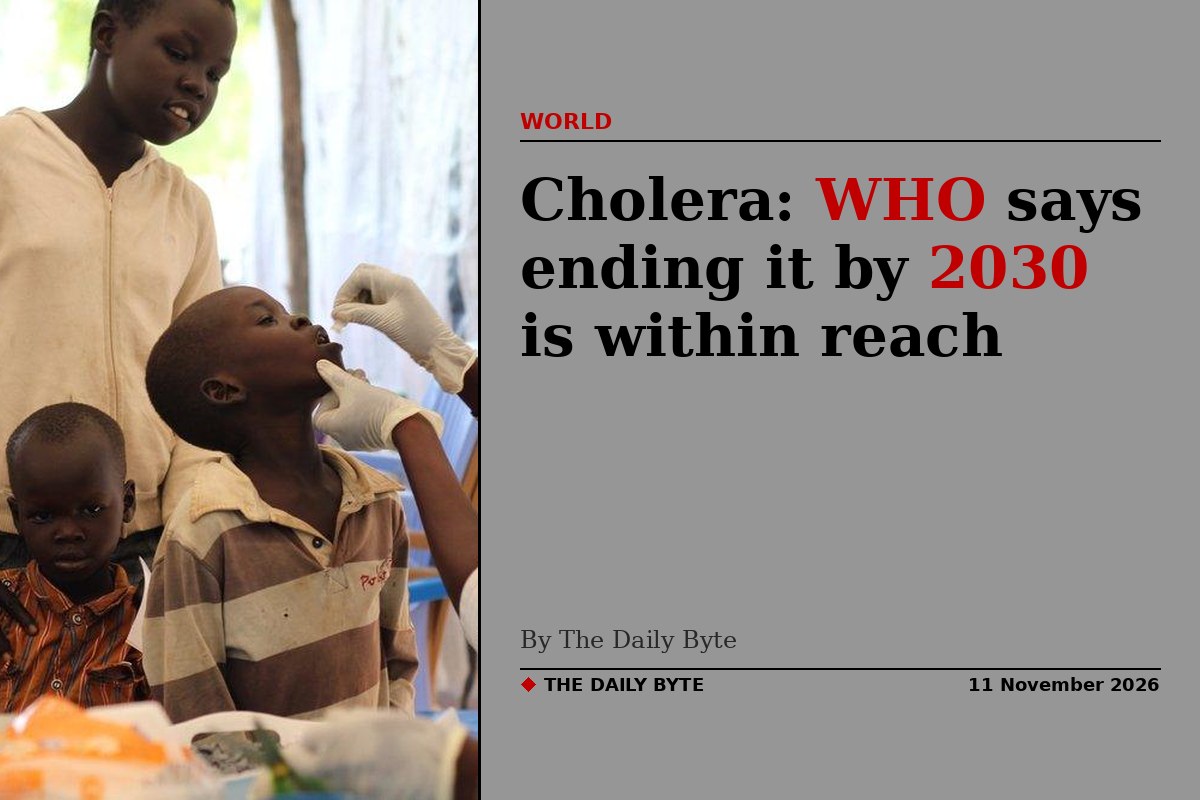
Ending cholera as a public health threat by 2030 is within reach, the World Health Organization (WHO) said on Tuesday, because every death from the disease can already be prevented with tools that exist today.
Dr Lorenzo Pezzoli, the WHO lead for epidemic-prone bacterial diseases, told journalists in Geneva that clean water, basic sanitation and a nearby health centre are enough for most patients to recover, [UN News](https://news.un.org/en/story/2026/11/1168782) reported. The WHO's assessment was also carried by [Panapress](http://www.panapress.com/Ending-cholera-by-2030-within-re-a_630797670-lang2.html).
## Deadliest year since 1999
Last year was the deadliest for cholera since 1999, with almost 7,900 deaths recorded worldwide. Fatalities have dipped in the first nine months of 2026, but more than 3,000 people have still died of the preventable and treatable disease — and nearly nine in ten of those deaths were in Africa.
Most cases are currently being reported in the Democratic Republic of the Congo, Yemen, Zambia, Nigeria, Somalia and Djibouti. The WHO has already provided 71 million doses of cholera vaccine to affected countries.
## Vaccines and clean water
Where clean water and sanitation exist, cholera can be beaten, Dr Pezzoli said — but in a crowded camp or a village cut off by conflict, the disease can turn deadly within hours. He warned that El Niño could make matters worse, since both too much and too little water fuel outbreaks.
Sufficient clean water and sanitation facilities would end cholera for good, he added, but not where conflict is raging. The WHO's message is that the tools to stop the disease are already in hand; the challenge is reaching the people most at risk, above all in Africa.
Source
UN News — https://news.un.org/en/story/2026/11/1168782 

